Pedestrian is a magazine about the humble art of walking. In this interview, I talked with the man with the plan, Alexander Wolfe, about his love for this much maligned form of transport, his recent expedition from New York to Philadelphia, and the art of conversation.
First off, you recently walked from New York City to Philadelphia over nine days. What made you want to do that?
The initial desire to walk to Philadelphia came out living in New York City during the pandemic. I was bound to my apartment for a few months with little to do but walk around my neighborhood. I’ve always had a habit of walking around the city, but the pandemic only made these walks longer and longer, which eventually led to a 23 mile journey from my apartment in Brooklyn, to the Bronx, and back.
Around that time I was reading The Roads to Sata by Alan Booth and started contemplating longer, multi-day walks. I needed a change of scenery and found the idea of traveling by foot and living out of a bag very appealing. I felt like I’d developed a process here in the city (go on a walk, take photos, write a newsletter about the walk, repeat) and needed to give myself a challenge. I wanted to lean further into this practice that I’ve been developing for the last three years.
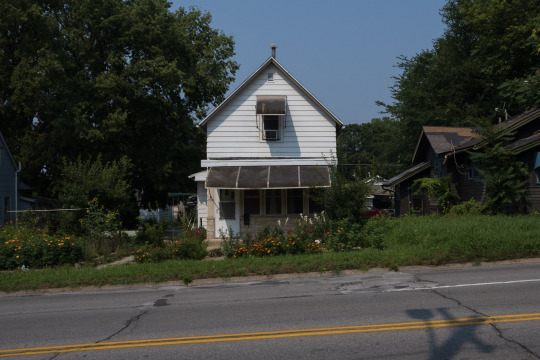
I’d never considered my walks to be hikes, so it made sense that I’d keep it in an urban setting. Walking to Philadelphia seemed like a no-brainer. What most people don’t initially realize is that most of my time was spent walking through New Jersey. I liked the idea of walking in a place that is commonly misrepresented as the “armpit of America” and typically deemed unwalkable. New Jersey is actually a very underrated state. It might be the densest state population-wise, but it’s called the Garden State for a reason. Oh yeah, I’d never been to Philadelphia and just really wanted to visit.
How did the walk go? Quite often trips or excursions can be a fair bit different to how you first imagine them… how did the reality of the walk differ from how you thought it was going to be?
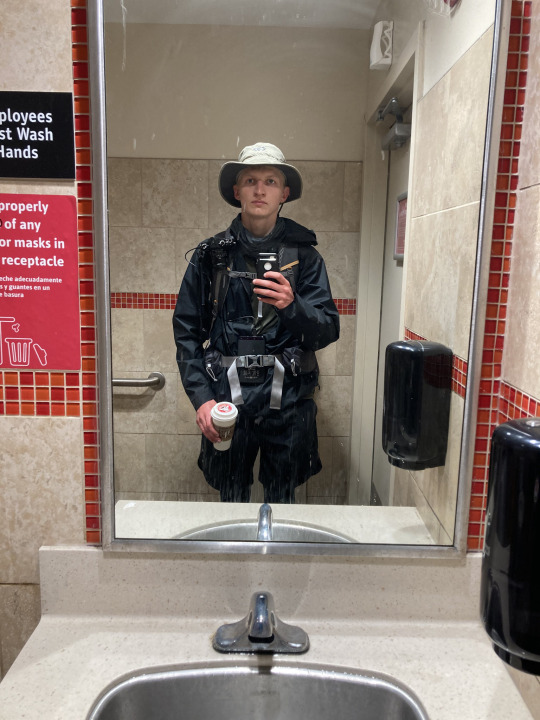
I was presented with a new challenge every day. Don’t get me wrong, the walk turned out better than I could have ever imagined, but you can never anticipate everything in advance. This was the first time I’d ever walked with a 25 pound bag on my back, let alone the first time I’d walked 9 days in a row. Originally I set out to average 17.75 miles per day, but thanks to my own curiosity, ended up waking 20 miles a day on average. I mapped the entire route a month or two before leaving, but would always deviate from the path in favor of exploring some neighborhood, road, or park that looked appealing. The first day alone ballooned into 27 miles because I got cocky and thought I didn’t need to use my map while walking in Manhattan. I learned my lesson and kept my eyes on the map for the rest of the trip.
Another thing I didn’t expect was the sensitivity one develops after walking 6-8 hours for days in a row. The smell of exhaust and gasoline becomes more potent. You realize how violently we’ve shaped the land to build huge highways and abysmal business parks. So much of our infrastructure is built in favor of the car, which makes being a pedestrian incredibly difficult at times. If the built environment didn’t present a challenge, it was always the weather, the gnarly blisters on my feet, or my gear malfunctioning. I quickly learned to accept these challenges. It was just another component of the walk.
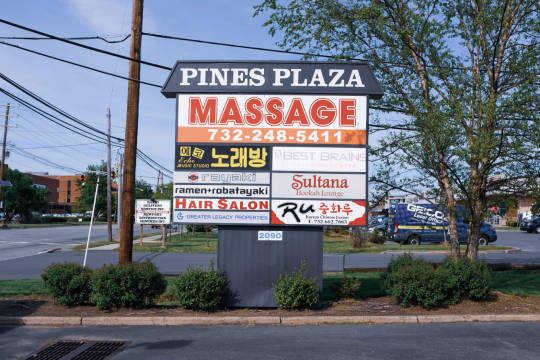
A lot of times people go for ‘a walk’, they’re seeking out beauty spots or nice scenery—maybe in nature reserves or the countryside, but your walk was cutting through some fairly overlooked places… industrial estates and small towns. Do people miss out by not seeing the whole picture of somewhere? Is just driving through these places to get to the destination sort of cheating?
I wouldn’t consider driving to be cheating – it’s just another way we alienate ourselves from the world around us. When we drive, we experience the world at a speed that makes it nearly impossible to pay attention to the fine details. Our relationship to place is abstracted, especially thanks to the rise of GPS. We no longer have to have a physical relationship to these towns. We don’t even have to remember how to get to them. Driving around in a car reduces these places to nothing more than a label on a map or a convenient place to stop for gas.
It’s important to have relationships with the places surrounding you. The walk has given me an intimate experience with the space between New York City and Philadelphia. I know what it looks like, I know how it feels to be there. I can tell you where residents stop hanging New York Yankees flags in favor of Philadelphia Phillies flags. If I’m watching the Soprano’s and Tony references Metuchen, NJ then I know exactly what he’s talking about. I think to understand a place, such as New York City, it’s just as important to understand the places around it. There are generations of people who once called the Big Apple home, but decided to plant their roots in Jersey for one reason or another.
I suppose you could have read about some of these places on Wikipedia, but being there is a completely different thing. Is experiencing stuff first hand important?
It’s very important if you actually want to understand a place. It’s too easy to create our own narratives without ever visiting a place. I still tried to do my share of research before heading out. I have friends from North Jersey or the Philadelphia Metro and tried to take their opinions with a grain of salt. I spent some time reading about certain towns along the way on Wikipedia or scanned Reddit to get a vibe. I even previewed chunks of the walk on Google Street View to mentally prepare and know if it was actually safe to walk near some of these roads. I could have spent months preparing, but it never would actually replace walking in these small towns and cities. It’s so much different when you’re on the ground.
I suppose the main reason we’re talking is that you make a magazine based around the idea of walking. How long have you been making Pedestrian? What started it off?
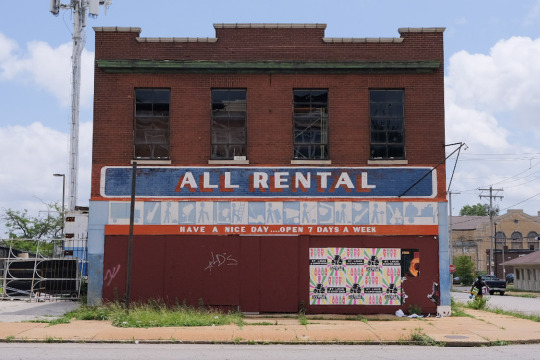
I released the first issue of Pedestrian back in March of 2018. I was living in Ridgewood, Queens at the time and made friends with a guy named Curtis Merkel (I actually met him while out on a walk). He ran a moving business for a few decades and retired. At 84 years old he opened up a tiny little bookshop to keep himself busy. I’d visit him every weekend to check out his books and eventually we’d just get to talking. He’d lived in Ridgewood his entire life and loved to talk about the neighborhood’s history. Moving to NYC also introduced me to a thriving community of zine makers. I wanted to share these conversations I’d had with Curtis in print form, so I decided to start a magazine. I invited a few friends to contribute and the rest was history.
Since then, the identity of Pedestrian has become quite fluid. While it started as a magazine, I would now describe Pedestrian as my own practice. It’s a platform that allows me to collaborate with others, produce magazines, write newsletters, go on these long multi-day walks, and produce t-shirts. I have found this configuration gives me the most creative freedom.
A lot of your magazine is about meeting people and striking up conversations. Is this a lost art these days?
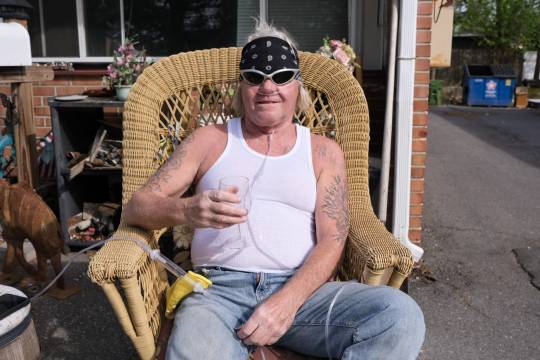
I don’t know if it’s a lost art per se, but there’s less incentive to reach out and talk with strangers these days. Thanks to the rise of social media it’s just getting easier and easier to stay within our own “bubbles.” Starting Pedestrian, in a way, was an excuse for me to speak with those I typically wouldn’t reach. It’s amazing how having a publication kind of takes the fear out of speaking with strangers. You can do anything when you have intention.
Although walking is something most people do, is it overlooked as an activity? It seems it’s mostly seen as an inconvenience, rather than a hobby in itself.
It depends where you live. In New York City, for example, walking is a part of the culture. The city is built in such a way that makes walking a viable means of transportation. And if you can’t walk to your destination, you’re likely walking to a subway or a bus. Where I’m from in Iowa, walking is very inconvenient. Everything is spaced out, which makes walking anywhere very difficult. It’s not that people don’t want to walk, it’s just the way we’ve built certain communities has made it very hard to enjoy. It makes people think walking is very inconvenient.
I’m here in Iowa until August and it’s been interesting to walk a place that is so reliant on cars. The other day I did a 13.5 walk around the city. There’s nothing here stopping you from walking (unless the heat gets you. Technically we’re in the middle of a drought. It’s been incredibly hot as of late), and there’s plenty of sidewalk. I think it’s mostly just a mindset people have to develop. It doesn’t matter how many miles you walk, it’s just about getting out there. Your mental health will thank you and you might even learn something new about your surroundings along the way.
Walking is maybe the antithesis to the internet, but Pedestrian also has a decent presence on the World Wide Web, and you regularly send newsletters and… er… partake in the digital world. How do you balance the real world with the matrix?
It’s a relationship I’m constantly reevaluating. I’m not a master of balancing the two yet, but I’m slowly building habits that will protect my time. I often daydream of abandoning social media altogether and picking up a flip phone. I obviously haven’t done that yet, so in the meantime, I’m investing a lot of time in my newsletter. Sending out a newsletter is a much more thoughtful, intimate, and slow experience…kind of like the way I approach my walks out in the world. I understand that the web is a tool and I’m not sure the Philly walk would have gotten the same amount of attention had I not had an Instagram account. It’s cliche, but everything in moderation, right? I try not to take it so seriously.
What next for Pedestrian?
The Philly walk was such a great success and I’d like to keep that momentum going. Later in September I have another big, big walk planned, but I have yet to announce the route. Look for an announcement sometime next month. This one will be a bit longer and involve 3 different cities. I can’t wait.
Once winter hits I’m going to buckle down and produce a proper book for the Philly walk that will include all my writing and photos I took along the journey. I’m already excited to share the finished product with the world. Stay tuned.
Final question, what are your walking shoes of choice? And what’s your soundtrack? Are earphones advised for long walks, or do you prefer the ambient sounds of the streets?
I’m a big fan of Hoka Clifton’s. I wore them throughout the entire Philly walk and have two pairs in my closet. At this point, Hoka should probably pay me for how much business I send their way. I’m always recommending them.
I prefer not to wear headphones and just listen to the ambient sounds of the street. More often than not, I find wearing headphones to be a bit distracting and it takes me out of the present moment. Although, I’ll admit I have been trying to introduce music into my walking once again, but few tracks make the cut. Lately Andrew Wasylyk’s Last Sunbeams of Childhood has been on repeat. There’s something about that track…
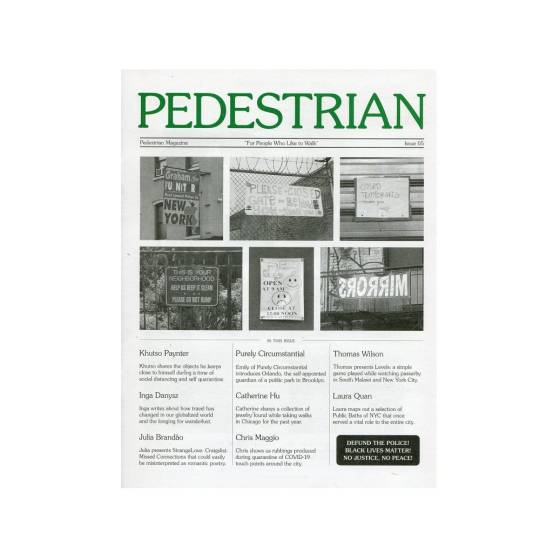
Find out more about Pedestrian here. Pedestrian is available in the UK courtesy of Central Library.
 Roman Candle Magazine