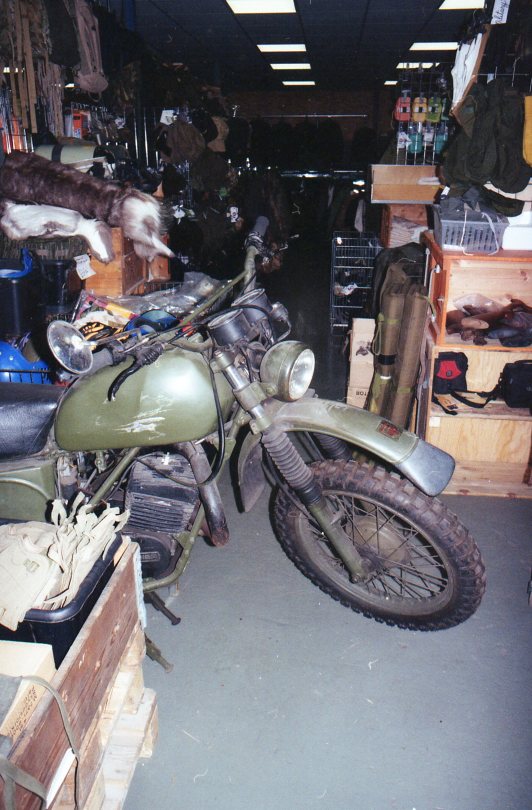
Army surplus shops are really something. Not only are they rammed full of dope military garb, but they’ve got a certain raw ’n’ raggedy flavour to ‘em which is missing from most places these days. Like the humble car boot sale or the British seaside town, they seemingly operate on their own axis, relatively untouched by the sanitised hand of modern life.
War-time wares are piled up all over the place… old sheepdogs snooze behind the counter… mysterious scents waft throughout… and amongst all this, the clothes look sick and will actually last for longer than five minutes.
Admittedly they can sometimes be a bit of a gamble, but it’s in that roll of the dice that lies the appeal. This isn’t lazily clicking the ‘add to basket’ button on some slick-looking website and then getting the garb delivered into your lap via drone the same afternoon. It’s an effort, and whether or not you even buy anything is besides the point… it’s an experience that you’ve got to earn. The ‘buying things’ aspect is just a small part of it.
From what I can gather, the blueprint for these fine establishments was first drawn up over the Atlantic after the Civil War. Up until then, most war gear was made in fairly short runs by each separate regiment… but with mass production added to the equation, military schmutter was churned out by the shedload. When the war was over, both sides had plenty of wares to spare, so they set about flogging it as a way to make back a bit of wedge. One of the big bidders was a 14 year old scrap-metal merchant called Francis Bannerman.
Francis sunk his sizeable scrap fortune into buying heavily-discounted surplus gear (guns included), and after a bit of shuffling up the ladder, bought a seven-story super-store in Manhattan to house it all. Aptly-titled ‘Bannerman’s Army & Navy Outfitters’, this shop attracted the attention of everyone from twiddle-tashed gentleman-explorer types to mercenary soldiers fighting in the Spanish Civil War, and at it’s height, needed a full island on the Hudson River, complete with custom-built castle, to store all its stock.

Bannerman’s eventually dwindled for various reasons (including constant explosions on its ‘surplus island’ caused by rusting artillery), and whilst it slowly faded away throughout the mid-20th century, it set the stage for countless other surplus shops to pop up in seemingly every small town around the globe.
From WW2 up until the Gulf War the constant stream of battle meant there was no short supply of hard-wearing clobber, and the growth of arduous leisure activities like camping, fishing and hiking meant that more people were after tough clothes that didn’t cost a fortune. And perhaps most importantly, unhinged small-town madheads who didn’t make it into the forces could now walk their Alsatian whilst draped in the clothing they dreamed about.
These days there are still a fair few of these wondrous establishments around, and whilst a few of them have been infiltrated by snide ‘military-esque’ gear seemingly designed for moody bouncers and paintball moshers, gems may still by found in the shape of old M-65s, ripstop BDU jackets or those US Army ECWCS Gore-Tex parkas (which cost a fraction of the price of usual GORE-approved garb).

As well as the yank stuff, also look out for Swedish military work pants, German cold-weather parkas, that wild Swiss Aplenflage gear and another other Euro anomalies (like the seldom-seen Irish ‘Paddyflage’).
Don’t hang about though—in the age of artificial intelligence and cyber warfare, less humanoid cannon-fodder is needed, and because swanky computers and high-flying drones don’t wear ripstop cotton, not as much gear is made in the first place. Obviously it goes without saying that the less people involved in combat the better… but still, this genuine surplus won’t last forever—snaffle it whilst you can and leave the real combat to the robots.
 Roman Candle Magazine