Hotels are strange places. Patterned carpets. Blank walls. Bibles in drawers. The glimpse of someone down a long corridor. The muffled sound of an argument next door. Even the swankiest establishments harbour a thousand secrets. And where do they buy those tiny bottles of shampoo?
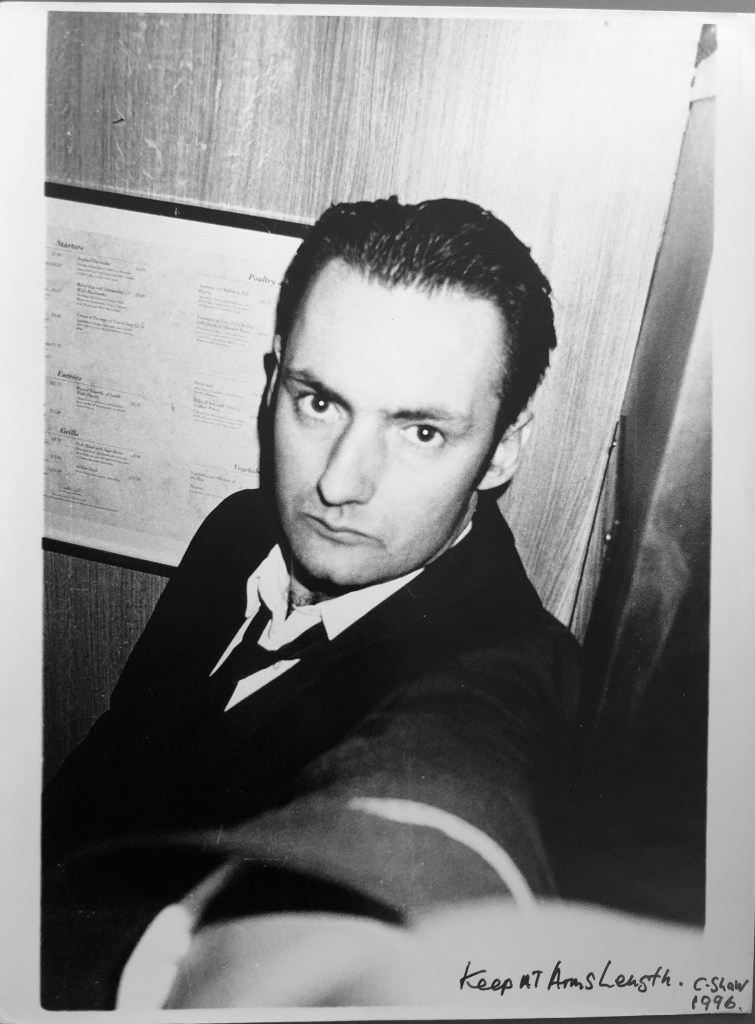
If they’re this weird to spend a single night in, think about what they’re like to live in. Chris Shaw did exactly that—spending most of the 90s working as a night porter in a gaggle of London hotels, living a blurred life in a nocturnal soap opera along with a cast of angry chefs, working girls and blind-drunk customers.
Amongst all this, he somehow managed to find the energy to take photos… and not just any photos either. Taking inspiration from the off-kilter work of Japanese photographers like Iko Nahraha and Daido Moriyama, he captured the reality of hospitality shift-work in a high-contrast, high-action style that firmly echoed the weirdness of the job.
The photos eventually became the book, Life as Night Porter, and since then he’s made a fair few more—turning his lens towards such subjects as his hometown of Wallasey, plants in Joshua Tree and the darker corners of the Thai tourist trade.
Here’s an interview with him…
From what I read, before you got into photography, and before you worked in hotels, you were over in Canada working as a machinist. How did a lad from Wallasey end up there?
I did an apprenticeship back when there was still people making things in Wallasey, but then it was the 80s—and there was a lot of unemployment, and places getting shut down, so I ended up going to Canada. There was a politician at the time called Norman Tebbit, and his phrase was get on your bike… but I ended up getting on a plane.
What was going on in Canada then?
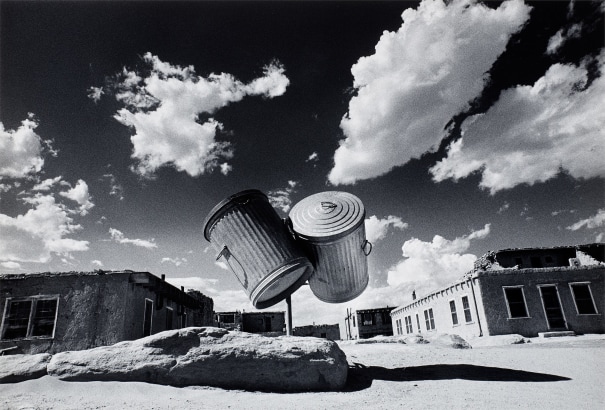
I went to a steel town called Hamilton, where I was supposed to be a lathe turner, but I wasn’t very good at it. I kept getting sacked, but there were loads of jobs, so I’d get another one. One day I’d got laid off, so I walked into a library. I picked up a photographic book—it was sort of like an American gadget book with all those different cameras in it—but it also had a section on fine art photography, and there was a little picture by this Japanese photographer Ikko Narahara. It was of two dustbins, suspended in mid-air. I just remember looking at this picture and thinking, “This is what I want to do.”
That was the spark?
Yeah, it was like when kids discover boxing or football—like, “This is going to save me.” In Canada, because I’d gone there and had all these jobs, it was the first time I’d money, but then I thought, “What am I doing to make the money? I have to do this for the rest of my life, and I fucking hate it.” In a way by going to Canada I had that experience in two or three years that it would have taken ten years to have in England.
How did you move from lathe-turner to photographer then?
I looked at going to college in Rochester—just south of the border from Hamilton—but it was so expensive. In the end I went back to Wallasey to do a BTEC in photography, and the first person I met when I was looking around was a photographer called Tom Wood.
Small world.
I developed my first roll of film with him. At the time Martin Parr was also living in Wallasey, doing the Last Resort project, so I was around these really great people, straight away. I was at the first exhibition of Last Resort, so it was kind of like being at the Cavern watching the Beatles, in terms of how successful he became.
I suppose you could see from them that being a photographer was a thing you could do. I imagine being working class in Wallasey, being a photographer was exactly an obvious option.
Yeah—the reaction I got from my family was like, “What are you doing? Why are you messing around with this?” After Wallasey College of Art I went to Farnham in the south of England where Martin Parr and Paul Graham were teaching. I remember when I graduated I phoned my father up and asked if he was going to come down to the graduation like all the other parents, and he just laughed at me and said, “Are you still doing that?”
At the time I thought it was kind of cruel, but now looking back thirty years later, I’ve realised it was just realistic, because the chance of having any success as an artist—having exhibitions and books published—was a bit like being a pop star. It’s a very difficult thing to do and sustain.
Going from working on a lathe in Canada to doing a photography course in Farnham must have been a bit of a shift.
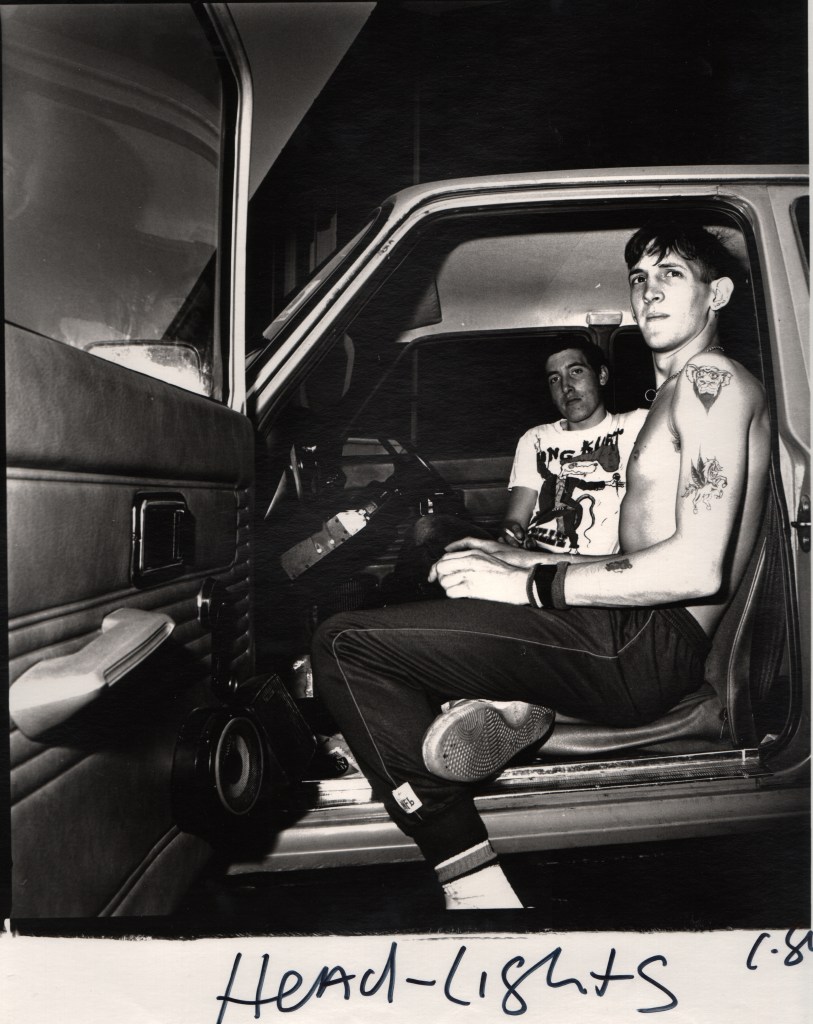
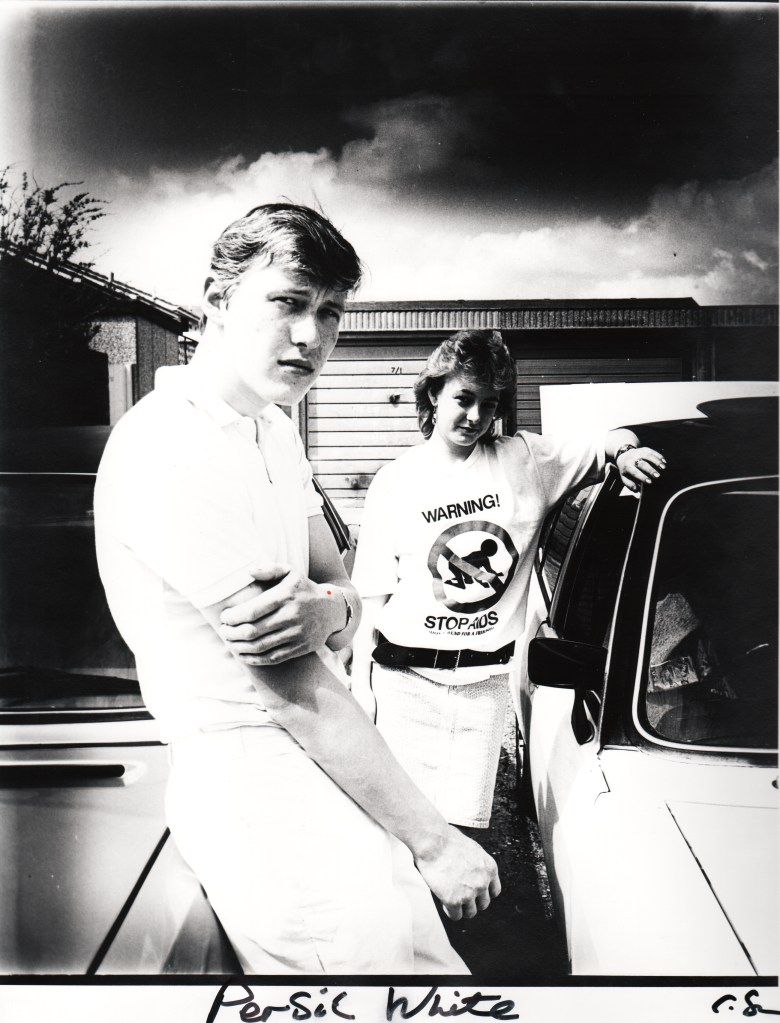
It was very difficult. I found it very difficult to mix with the other students. But I found this place near the college called the Sandy Hill estate—this housing estate nearby where I used to go and take photographs. I used to go there a lot—and first of all it was just to speak to normal people—they’d be working on their cars outside or in their garages.
That was an escape from the academic middle-class thing?
The other students were driving Range Rovers, so it was a bit of a contrast to the way I was scraping by. I remember after graduation I went straight into a shift working in a supermarket.
Those Sandy Hill photographs stand out for being documentary photographs of a working class spot—without that usual patronising feel.
I liked taking the photographs and I loved developing them and seeing what I’d got, but I kind of liked going there more for the banter. When I was taking the pictures there’d be this moment of magic—we’d be having a laugh and then later I’d give them the picture. I was giving them something for nothing.
And I imagine it would be a bit of a novelty for someone to have a camera with them.
Yeah. It was completely different to how it is now. Everyone’s taking pictures all the time now, but back then, I’d take pictures of someone I was interested in, and then print it at college and give them the print. They’d say, “This guy is giving pictures out for nothing,” so I’d meet somebody else and take their picture too.
But it wasn’t ‘til ages later that those photos ended up in a book.
It was 25 years later! In retrospect it looks like I’ve had a great career because I’ve made five or six books, but the narrative of the timeline is all mixed up. I wasn’t a photographer who had immediate success—I was out in the wilderness for ten or twelve years after I came out of college, in that night-porter subculture.
It’s very difficult with the class system in Britain. In the art world, like I was in Farnham, I was just around all these middle-class kids. It’s easier now because I’m older and I can talk to people, but then, depending on your accent it’s just very difficult.
It’s like fancy restaurants. I don’t know what’s going on in those places, but some people are really comfortable with it.
Yeah—which fork to use and which wine goes with what. I remember Martin Parr phoning me up. It was about six o’clock and I was eating, and he said, “Oh your working class! If you were middle class you wouldn’t be eating until half seven!” There’s all these rules.
Were you kind of at odds with Martin Parr and Tom Wood a bit? Your style of photography is very different.
I never really liked Martin, but I didn’t really allow myself not to like Martin, because I’d think to myself, “Am I not liking him because he’s successful? Am I being jealous?” But I saw him take those pictures in New Brighton and there was a bit of magic in seeing him do that. I was always aware of my reverse class prejudice.

I suppose there’s that contrarian thing too—he’s taking these colour photos, so you start doing these high contrast black and white photos.
It was commercial suicide to do what I was doing—these vertical black and white pictures—but I always felt that it would come back around. I was going to try and get little bits and pieces of work at magazines and they’d always say, “Have you got anything in colour?” What you’ve got to realise is that there’s a fashion for everything, and Martin’s large format colour photography was in fashion for a long time.
But I was influenced by Japanese photography right from the start. I was doing vertical photos, and I remember going to see somebody and they said, “The only other people who do this are the Japanese. Go and see their work.” So he told me about the V+A photo library and I could actually get to look at them. You’d ask for a book, and somebody with white gloves would bring it out.
I can’t imagine that stuff was easy to see back then. It wasn’t like now with the internet. When did you start working in hotels? Was that straight out of college?
I’d done some stuff in Budapest, and then I ended up in London. I got a job in a camera shop, but I got fired for asking for a contract of employment, so I was basically homeless. That’s why I started working in a hotel—the job came with accommodation.
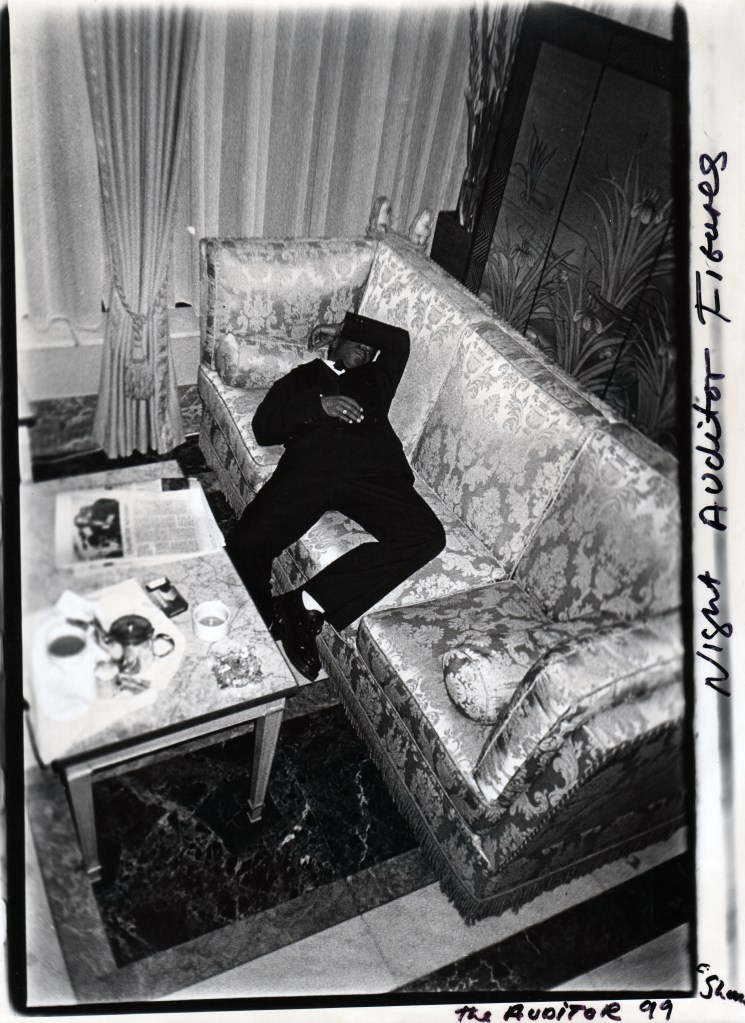
I remember applying for quite a few night porter jobs years ago—there’s a certain appeal to it. But what’s the reality?
It’s kind of a weird place. I was kind of delusional in the way I looked at it. I thought that if I worked at night I could do photography during the day. What I didn’t realise was that I’d be constantly jet-lagged, running on half a battery, for twelve years. It messes you up. You’re not fully there. It’s a bit like being drunk or high.
A lot of people get a job like that and the photography thing ends up falling by the wayside. What kept you going?
I kind of lost my art school artifice. During the 13 years I worked as a porter, I worked in eight different hotels, and I got sacked a couple of times for being asleep. So I was using photography as a way of keeping myself awake. Also, if I met somebody interesting, I’d ask to take their photograph, but quite often I’d forget about the whole thing. I had a bin-bag of film which I went through in 2001, and the Night Porter book came out of that. Occasionally during that time working as a night porter I’d go to a communal dark room and make some prints, but it wasn’t until 2001 that I actually put it all together.
Also there was some personal stuff happening at that time too—I stopped drinking at that time, and because I wasn’t drinking I turned into a bit of a workaholic.
Like chefs and cocaine, is drinking just something that comes with the territory of that job?
Oh yeah. One of the time I got sacked it was because I’d got in a fight with a chef. I had the keys to this store room where all the beer was kept—and one of the chefs was in the habit of going in there to help themselves to beer—so I locked the door. He was kicking the door down and the manager came—I eventually let him out and we ended up having a fight, rolling around the lobby of this hotel. When the manager fired me he said, “I can get somebody like you by snapping my fingers, but I can’t get chefs.”
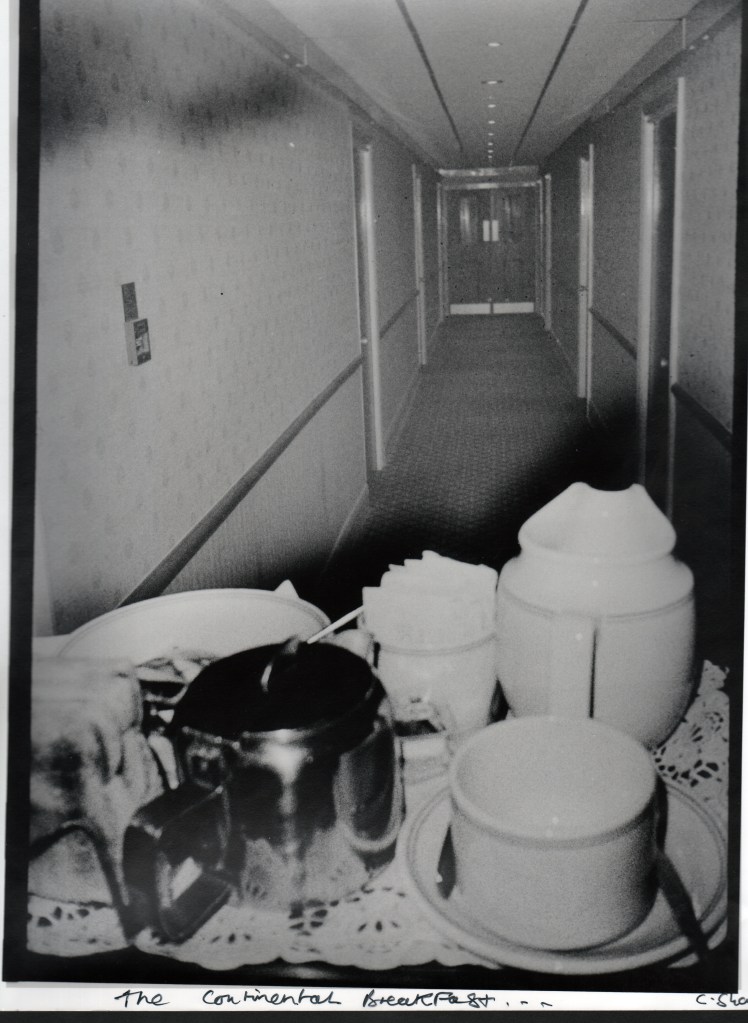
And that was just regular life as a porter? Hotels have a strange atmosphere to them. People might live one way on the outside, but in a hotel they get into all sorts of stuff.
Yeah—someone might come in wearing a suit, and then I’d go up to the room two minutes later because they hadn’t signed their registration form—and they’d come out wearing full camouflage gear. People go to a hotel and they become something else.
What did they think of you with your camera then? Snapping away with a flash.
First of all when I first started I had a proper camera, but later I had a point-and-shoot in my pocket. And that’s why I got some great photographs… because they thought I was a joke. They didn’t take me seriously. Also, I was part of it—I wasn’t a journalist—I wasn’t a tourist in people’s reality.
You weren’t coming for a week with a backpack to document it—it was your life.
It was a diary. It was just keeping me awake, taking photos of what I thought was interesting.

I like how it’s not too specific too. It’s not like you set out to document one hotel for a year or something contrived like that.
One of the mistakes people make with the Night Porter book is that they think that it’s all from one hotel, but really there were maybe eight different hotels. Because of the way the photos lead from one to another it looks like it’s in one place, and in a way it is—in my imagination. And if you went to some of those hotels they’re actually really nice places, but what happens is that if you work in a lot of hotels they tend to start to look the same. You become institutionalised.
There’s a look to them isn’t there… long corridors and patterned carpets. What was Norman Wisdom doing there?
My experience with hotels is that either everything happened in one night, or nothing happened at all. With Norman, there was a variety club shindig at the Albert Hall, and all the guests were staying at the hotel. Ten minutes before Norman came in I was standing near the window and a limousine pulled up. The door opened, but because the driver had parked right next to a street sign, the guy in the back couldn’t open the door fully. I looked to see who it was, and it was this guy from It Ain’t Half Hot Mum—Melvyn Hayes. As he tried to get out, our eyes caught—and he saw me looking at him. When he came in he immediately started shouting at me, “How dare you make fun of me! I’m going to get you fired! You don’t know who I am!” He was really screaming.
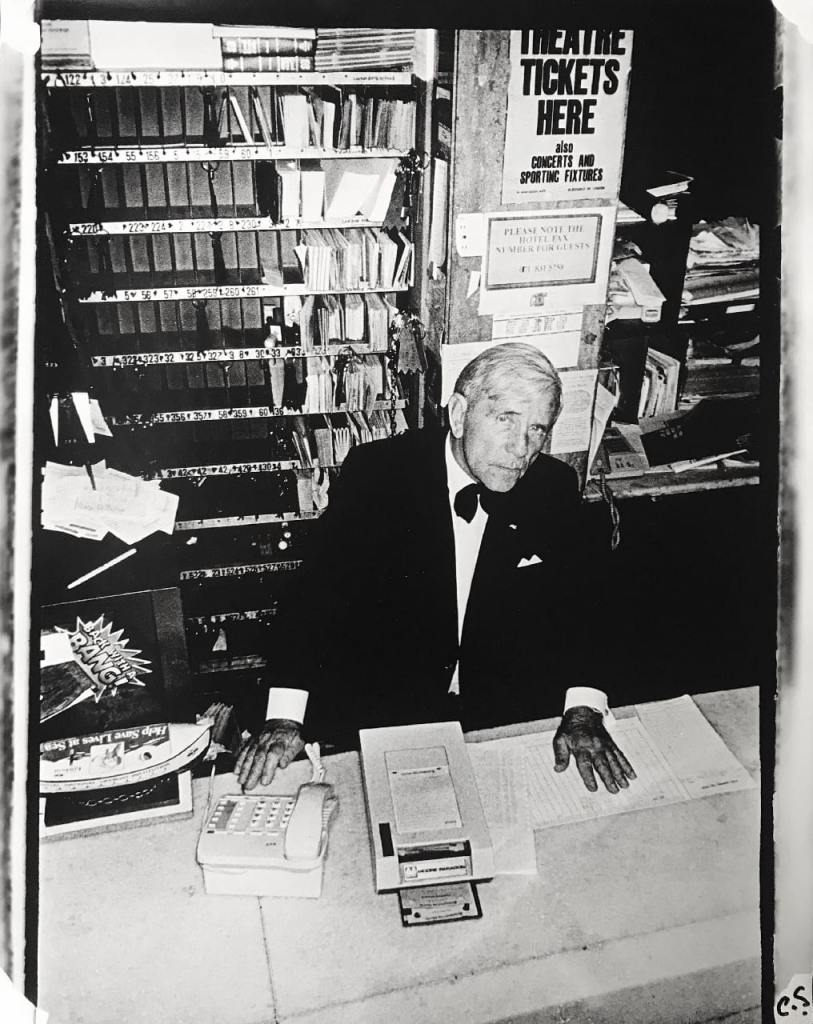
But two minutes after that, Norman came. He came in a black cab, saw me looking and did that thing where you pretend to trip and fall over. It was like magic. And then when he came in I said, “How are you Norman?” And he said, “No, how are you?” I told him what I did, and then asked him if I could get a photograph of him. I said I wanted to get a step ladder so I could get above him, so asked him to mind the desk while I went to get the ladder. Five minutes later I came back and he was giving the guests these keys. I heard them saying, “That guy looks like Norman Wisdom!”
He wanted to go up in the service lift because he used to be a page boy in a hotel and had fallen down a lift. He said that the service lift was safer. So I let him go up there, and then took him to his room, and he just lit up my night. It was just that contrast between him and this Melvyn Hayes guy.
They love him in Albania don’t they? He’s the underdog.
Yeah. He cared. His success was being the everyman and being interested in people.
Were these magic moments quite regular? Sometimes I think some people miss these things happening right in front of them.
A lot of it came from me deliberately trying to cheer people up. A lot of prostitutes would stay in the hotels, and they’d come down and ask for a taxi. I remember one came down one night and asked for a taxi. I told them we couldn’t get them one, but I said, “I’ll tell you what, I’ll get you a taxi if you jump in the air and shout ‘Outstanding’.” I did it first, then they did, and then after that, we were laughing. You just need to change the mood.
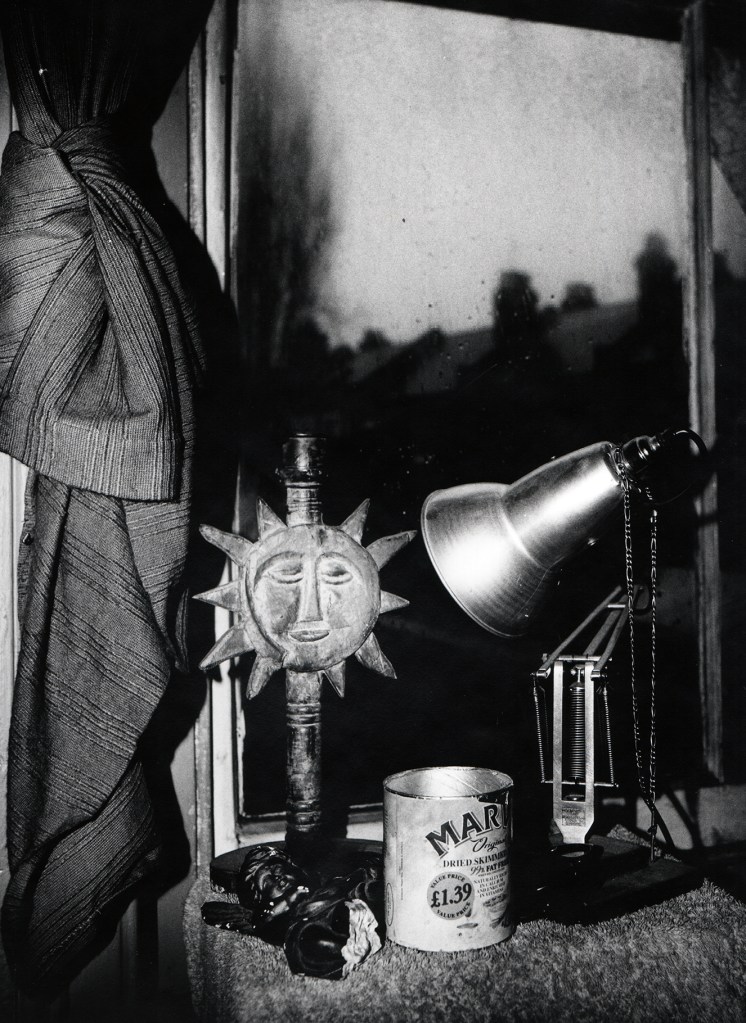
And all the while you were documenting life in Soho too?
Yeah, the Soho pictures were taken at the same time. Even at that time, London was a very difficult place to live unless you were a professional, but there was still a squatting scene and the housing association. It was never cheap… but there were alternative living opportunities—squats, or ex-squats that got turned into housing association houses. For example there was a whole bunch of people from Wallasey living in a squat in Elephant and Castle in the late 80s.
Then they changed the housing laws to make that illegal—in the historical perspective a lot of the laws being brought in in the early 90s were to stop raves too. People could move into a house to have raves, so a lot of the laws in terms of property rights were to stop that.
So when was it that this all became a ‘body of work’? When did you start to make the book?
As well as working nights, I was drinking everyday, so I was coming to a crash. It was difficult working nights anyway, but with the alcohol it was difficult to keep things together. So I stopped drinking and little by little I managed to get a portfolio together. I’d go to a darkroom to make prints, and by not drinking I could plan things. I was living very hand to mouth—I’d get money and then I’d spend it all—like a drunken sailor. So when I stopped drinking I could plan—the first thing I did was go to Arles in the South of France, which is a big photo festival. They had portfolio reviews there, so I showed the Night Porter work and managed to get half a grant. It was about 1500 euros, and that felt really good. It encouraged me.
And then in 2003 I decided to leave the hotels and try and make a go of it with photography, and almost immediately I won a prize. I’d entered these photographs in The Independent on Sunday’s fashion photography competition as a bit of a joke, and they won first prize. The judge was Alexander McQueen. And that was worth £10,000—which at that time of my life was really substantial. Suddenly I had time. I went to Houston Photo Festival, which was another portfolio review—and there were publishers there and magazines.
Almost like talent scouts?
Yeah. It was kind of weird, because there was a lot of money there—but compared to Europe there wasn’t much competition. Through that Aperture said they were interested in publishing a book, so I went to New York to see them. And then whilst I was there I saw another publisher who offered me more money. And they published the Night Porter book.
I imagine it was nice to get the recognition as a photographer after all those years.
Yeah—but it was very scary. I was used to getting paid every month, so I didn’t realise how difficult it was to make that step from getting a wage to working for yourself—mentally and physically. With the freelance thing you feel incredibly rich at some points, but you’re not getting as much money as if you were getting paid monthly. It seems like it’s all coming in at once and you’re rich, but then there’s nothing for months.
The money I got from the fashion photographer competition meant I had the time to do all this. There’s no way I could have been making prints and going to portfolio reviews if I was working 60 or 70 hours a week in a hotel.
The book was published in the United States, and it’s been exhibited in Australia and Russia and Hong Kong. And because of that success people wanted to see what I did before, or after. So that’s when the Sandy Hill Estate photographs became a book, and then some new work I took in my hometown of Wallasey became a book. All of it came from the recognition I got from making Night Porter.
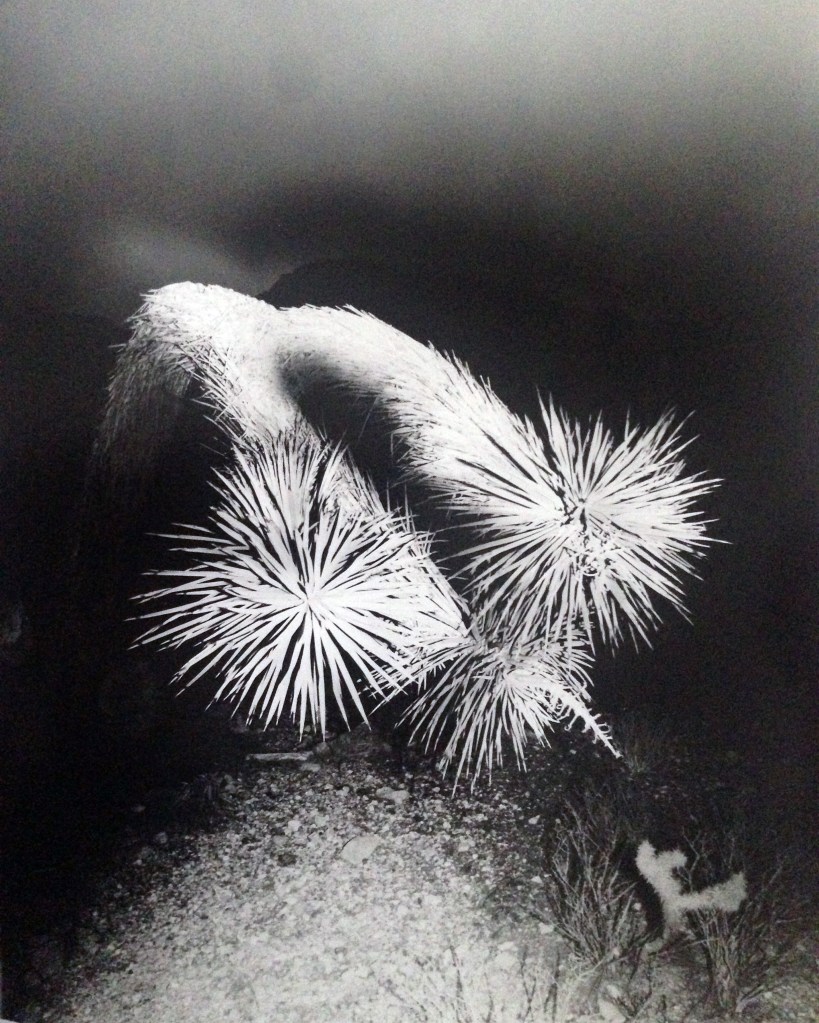
And there was the Joshua Tree book too, Horizon Icons.
There’s a really great story with that one. Basically I had an exhibition in Paris, but I was living in this housing association squat that I used to call the Tufnell Park Hilton. I’d been living there on my own under eviction notice, but I managed to fight them off in the courts and we kept getting it delayed. The council wanted to take back this property so they could sell it—nobody owned it but it was in a ‘des-res’ area. Eventually they changed tack and decided to move someone in with me—this real nutter.
So the night before I was about to go to Paris for the exhibition there was a knock on the door from a policeman. He said, “Does Leeroy live here? We’ve just arrested him down the road. He was shouting and screaming at the moon and he’s covered in blood, but we’re not sure if it’s his blood or somebody else’s.”
So I go to Paris and meet this French woman, and one thing led to another and I fall in love with her. So I moved in with her and married her three months later and came to Paris. If you asked me at the time why I came to Paris I’d say that it was because I was so in love with the French woman, but maybe it was because I was scared of the man I was living with? I wanted to get out of there, so I married this crazy French woman. It didn’t work out and a year later I went back to England. Then a few years later I came back to Paris—most of my success has come from living in Paris—fine art photography is much more of a business here. There are galleries where independent artists can exhibit, and everybody comes here for Paris Photo.
How does this link to that book then?
Anyway, during one of these Paris Photo things I got introduced to a collector who really liked my work—a Hollywood film producer [Willard Huyck, the director of Howard the Duck, no less] who produced American Graffiti. In the end he came to my flat and bought ten prints. I had some prints from a Japanese photographer we both liked, and he said, “I’ve got a collection of his work in Los Angeles, anytime you’d like you can come over and stay with us.”
Two weeks later I went to Los Angeles and stayed with Willard and his wife Gloria. While I was there he said, “Let me make some calls for you,” so these people would come over and have brunch and buy prints from me. And then he phoned this curator in Palm Springs and made an appointment for me to see him. I drove there and showed him the Night Porter photos, and he said “I love these photos, but it’d be great if you had some photographs from around here in Joshua Tree.”
When I came back to Paris I Googled Joshua Tree artists and this residency program came up where they’d give an artist a house for six weeks. Three months later I was there.

Just one thing after another.
I couldn’t invent something like that.
And the photographs you took there, even though they’re photos of trees, they’ve still got a lot of energy to ‘em. They’re not boring or static.
It’s the same photographer who took the Night Porter photos, but it’s just a different subject. I shipped an enlarger to the house and made a darkroom in the bathroom. I was there in July and August, which was the height of the summer and it was incredibly hot. The house belonged to a realtor who couldn’t let it out as it was so hot and nobody would go there, so that’s why he invented this art residency program. But anyway, it was so hot I could only take photographs for an hour as the sun came up. After that you were looking around for your water bottle—it was unbearable. So I’d then develop the film through the day and then print in this washroom. It was all something that I made there. A real creative moment.
That brings me to something I was going to ask about. How important is the darkroom to your photography? Some people are really clinical with printing—but your photos embrace all the accidents that can happen in a darkroom.
I don’t know whether it’s alchemy or magic that happens in a darkroom—that’s how it feels to me. A lot of the magic is getting something unexpected—the accidents are better than anything you can plan. It’s like, “Wow! How did I do that?” There’s one in the Night Porter book of a woman’s boots—and basically I’d forgotten that print was still in the developer, but as I was putting another negative in the enlarger I remembered it was there—so I rushed back to the tray and everything had developed except these little dots on her boots. I whipped it out and it looked like cocaine on the boots—and that was just a one-off print made in the darkroom that I could never ever repeat.

Was that from the Japanese photography influence?
I think it was a money thing. I wanted to make my own prints—and that was cheaper than paying somebody. But then it’s interesting when those prints that are made in a bathroom end up in a museum or in the Tate collection. Some of those prints were made in very dubious places.
It’s like you’ve entered a different world.
In a way it’s a good thing to be able to sell these things—and that’s now something I take for granted—but it’s a very difficult thing to do. I was making prints for years before I actually sold one. I started making my first prints in the 80s, and I didn’t sell one until 2001.
Do you think modern digital photography loses that mystery or magic?
People thought there was going to be this digital revolution, and we were going to get away from the senses of touch and feel—but the reverse has happened in a way. So many young people have gotten into making prints and photobooks. It’s like physical photography, the thing people thought was going to go out of fashion, has become even more fashionable.
It seems like now it’s not just photographers who’ll have photobooks on their shelves.
When I came into photography and started to go to exhibitions, there was no money in it. It was kind of like trainspotting in a way. It was like a secret club. You might get a couple of pictures in Creative Camera if you were lucky, but that whole thing changed when editorial photography disappeared. That’s when fine art photography became a lot bigger, and a lot of the photographers who were looking down on art photography came into it—the commercial photographers suddenly wanted to have exhibitions and sell prints.
That sort of brings me to my next question. How do you define your photos? I suppose they could be documentary photos, but they’re nowhere near as stiff and patronising as most documentary stuff. Was that a conscious decision?
I came out of that whole documentary thing—and the main thing about documentary photography is that the subject is important. Even the Joshua Tree photos are documentary photography in a way—they’re just documenting trees.
But then there is that whole thing with documentary photography—that classist thing. A Southern photographer coming to the North and discovering poverty. But as we know, the poorest place in England is actually London, but when it comes to photography, poverty only exists in the North.
Yeah, that ‘let’s go and find a little town in the North and make it look miserable’ thing.
Put some clogs on them! I remember speaking to people in London about Liverpool—saying, “You do know there’s mews housing in Liverpool.” And they’d be like, “What?” I think there’s actually more Georgian houses in Liverpool than in Bath, but to them the North is poor and the South is rich—and that comes from the history of documentary photography, with people like Bill Brandt.
There’s certainly a long history of patronising images. Moving back to your stuff, it seems like you take a lot of photos of different things. Do you have that thing where you just need to document what’s going on?
Yeah—my French isn’t very good, so quite often I’ll just go somewhere and start filming instead. Quite often I feel socially ill at ease, so if I’ve got a camera it’s like I’ve got something in front of me and I’ll feel more comfortable. It makes you feel like you’ve got a bulletproof jacket on or something. You’re not just there to get drunk, you’ve got a reason to be there. It’s a language as well.
I get that. What was going on in Pataya? You took some amazing photos there.
I was going to Hong Kong every year to do this photobook festival, and then I’d go to Pataya and take photos there for a week. And what I loved about Pataya was the amazing street life. There’s this street called Walken Street with six or seven music venues on it, maybe 25 go-go dancing places, and a massive crowd—kind of like Blackpool on steroids. I just wanted to photograph that—and because I had a bit of money and could buy film, I could do it properly and shoot 20 rolls of film a day, rather than what I used to do and shoot two films a month.
And it kind of captured a time of place, because after the pandemic and the advent of Chinese tourism, I think places like that have been cleaned up. I think that’s something that’s in a lot of my photos—the epoch is ending and you’ve got to grab it before it disappears. You might come back and it’ll be a shopping mall.

Is there a theme that runs through all this? Is it people? Or community?
It’s definitely about community—even if it’s a community of trees. Community is definitely the word that links all the projects together. It’s about being attracted to a community and what it looks like, being a part of a community, or not being a part of a community. It’s about all that stuff.
See more of Chris’s photos here.
Interview originally published in Roman Candle issue 2. Last few copies available here.
 Roman Candle Magazine