Vital viewing for anyone who enjoys spending their days wandering down canal paths and gazing at concrete fenceposts.
-
Los Thuthanaka – Self Titled
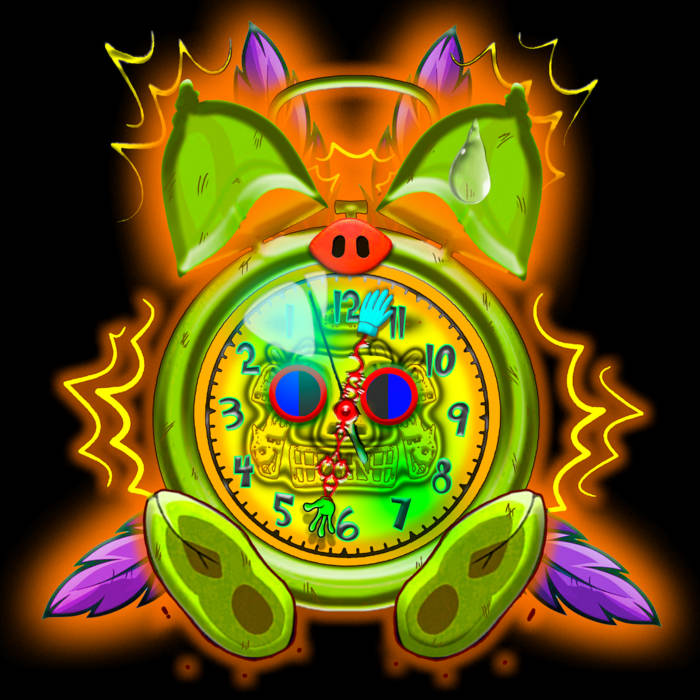
A true unmastered masterpiece courtesy of Chuquimamani-Condori and Joshua Chuquimia Crampton. The audio equivalent of licking a battery.
-
The Whistling in the Dark

Showing my Super 8 film The Whistling in the Dark as the warm-up act for Clarky’s latest Strangeways masterpiece in a few weeks. Roughly a decade of lurking around on bicycles, compressed into just over 20 minutes, shot on a camera from the early 80s. I’ll be glad to have this thing finally off my computer.
Saturday 15th March, Cultplex cinema, Manchester – From 7pm.
-
(SPN) – Segni Particolari Nessuno

Not sure if it still exists, but there used to be something in Manchester called ‘Flu Camp’ where you could sign up for being given the flu and then monitored for a couple of weeks in a closed-off ‘Big Brother House’ style environment. From memory I think they’d give you two grand for this ordeal.
Anyway, this new tape from Italy’s (SPN) gives a similar woozy heavy-headed sensation. There’s no big cash payout at the end, but it’s an enjoyable grogged-out ride. Stock up on Lemsip and embrace the zonk.
-
Klein – Thirteen Sense

New noise from Klein. Been listening to this tape a lot over the last week and I can confirm it’s pretty intense.
-
Nick Sanders in Manchester, January 2025

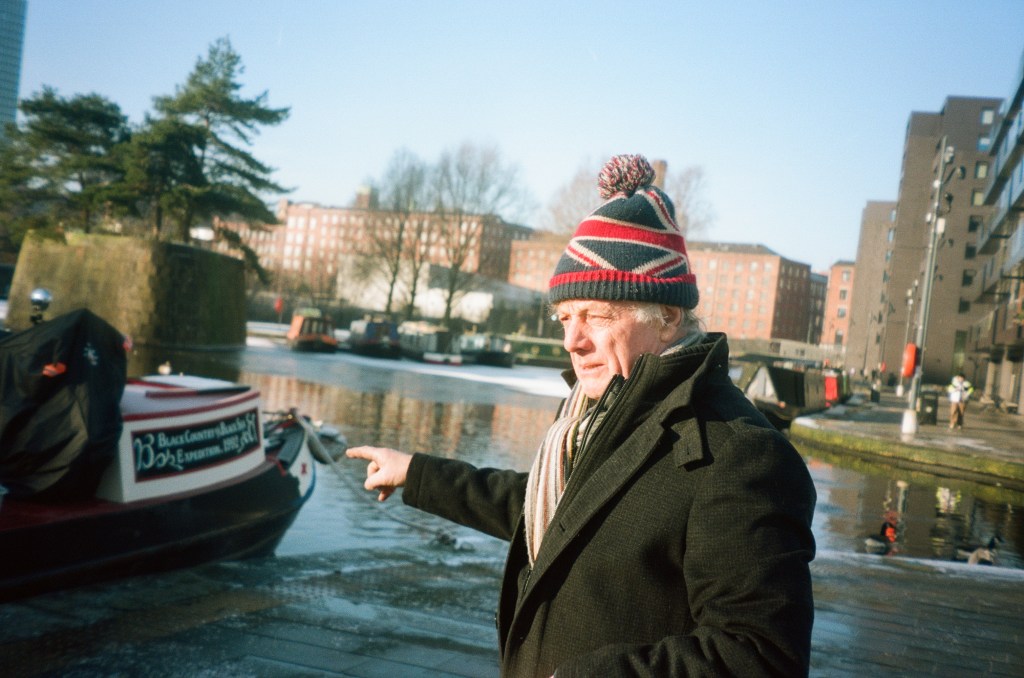
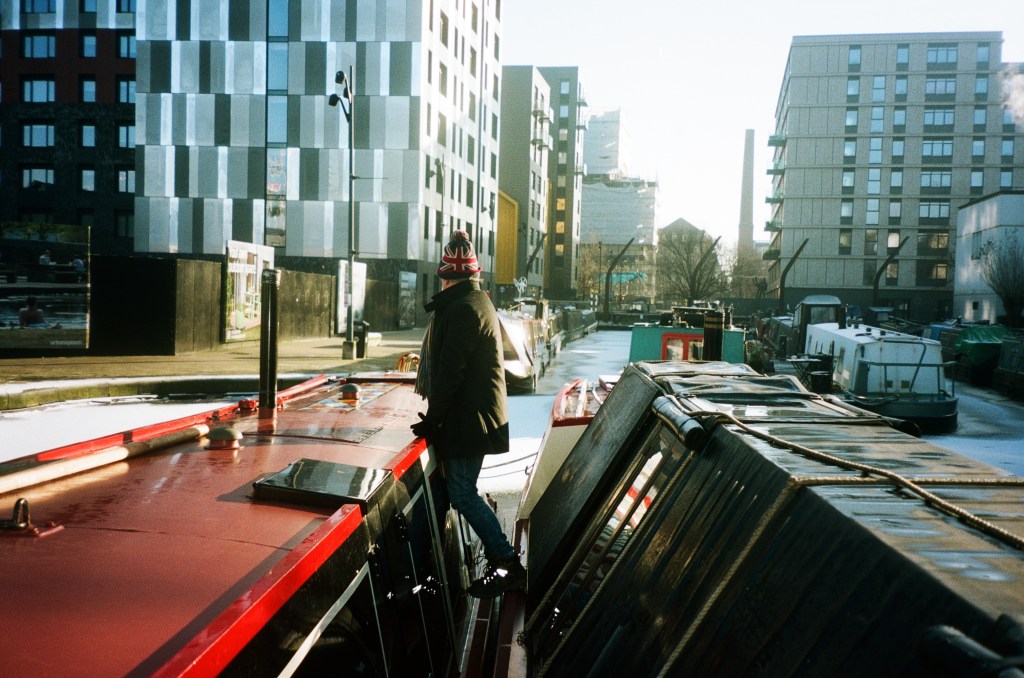
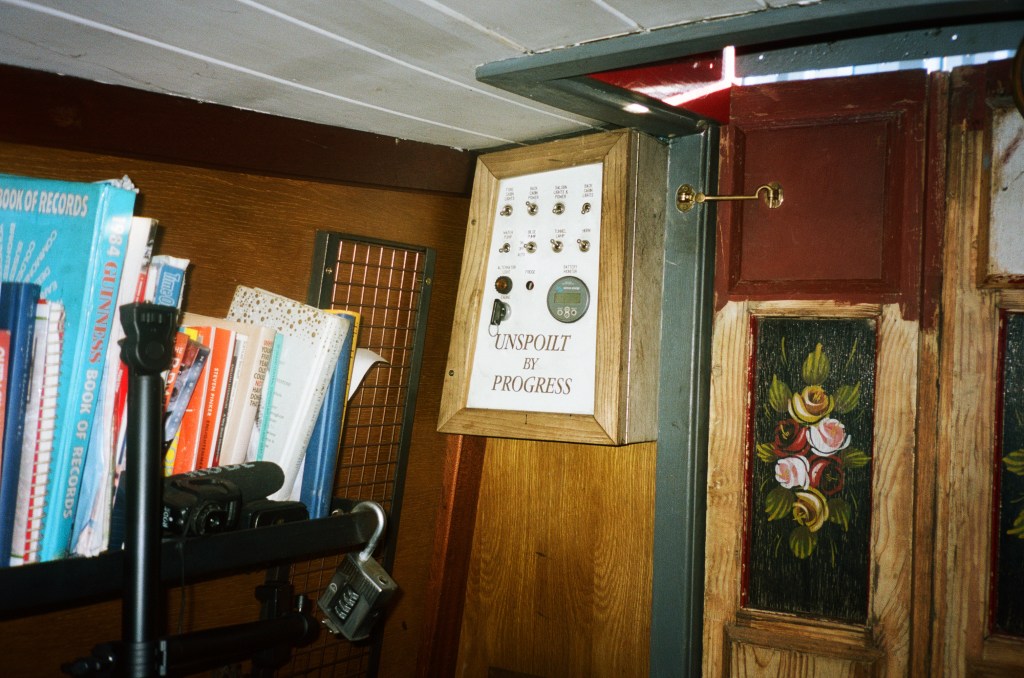


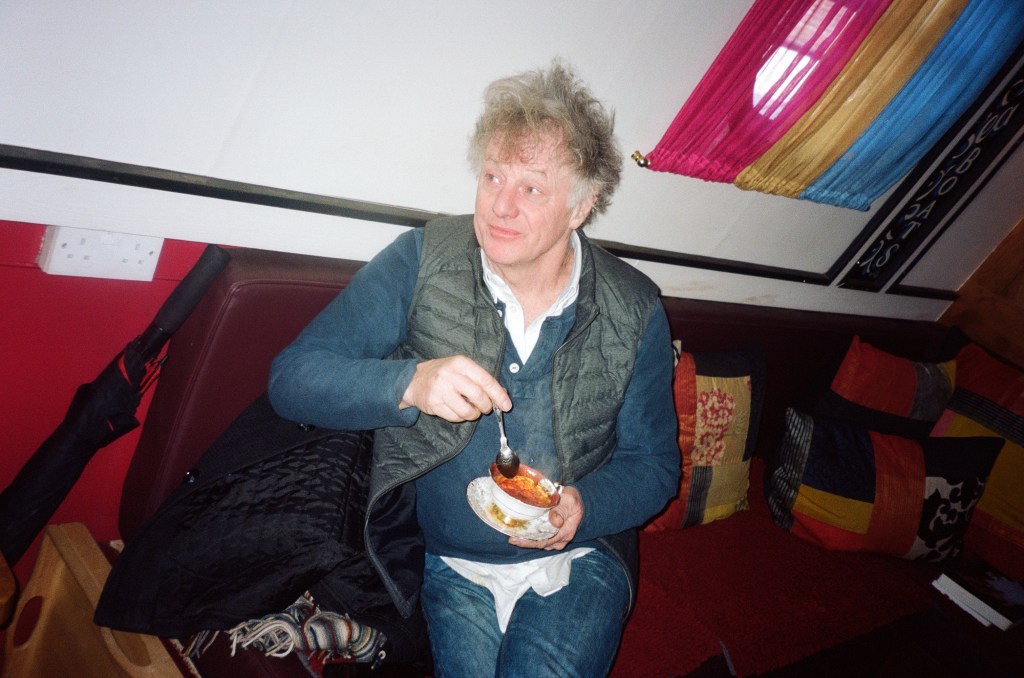


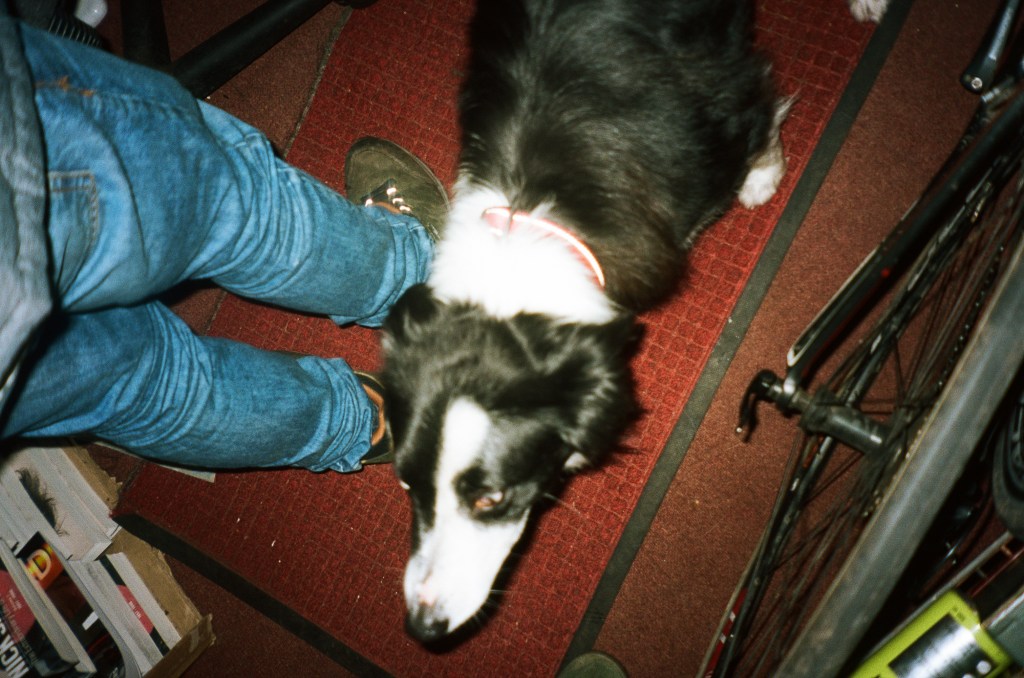
Nick Sanders on his barge in Manchester a few weeks ago. Since the early 1980s this cyclist, motorbike rider, author and narrowboat connoisseur has been revolutionising round-the-world adventure, adding a serious dose of speed to an often free-wheeling endeavour.
In 1981 at the age of 23 he set off from his home in Gamesley on the outskirts of Greater Manchester to ride his bicycle around the globe in just 138 days.
In 1984 he rode around the coast of Britain in a mere 22 days (setting a record that over forty years later still hasn’t been beaten) while a year later he went even further, outpacing Phileas Fogg to ride around the world in 79 days.
In the early 90s he traded pedals for petrol to become the fastest man to circumnavigate the globe, lapping the earth in 31 days—a time he whittled down even further in 2005 when he did it in just 19 days.
Read my interview with the man himself over on the Outsiders website…
-
Voice Actor and RenzNiro at the White Hotel
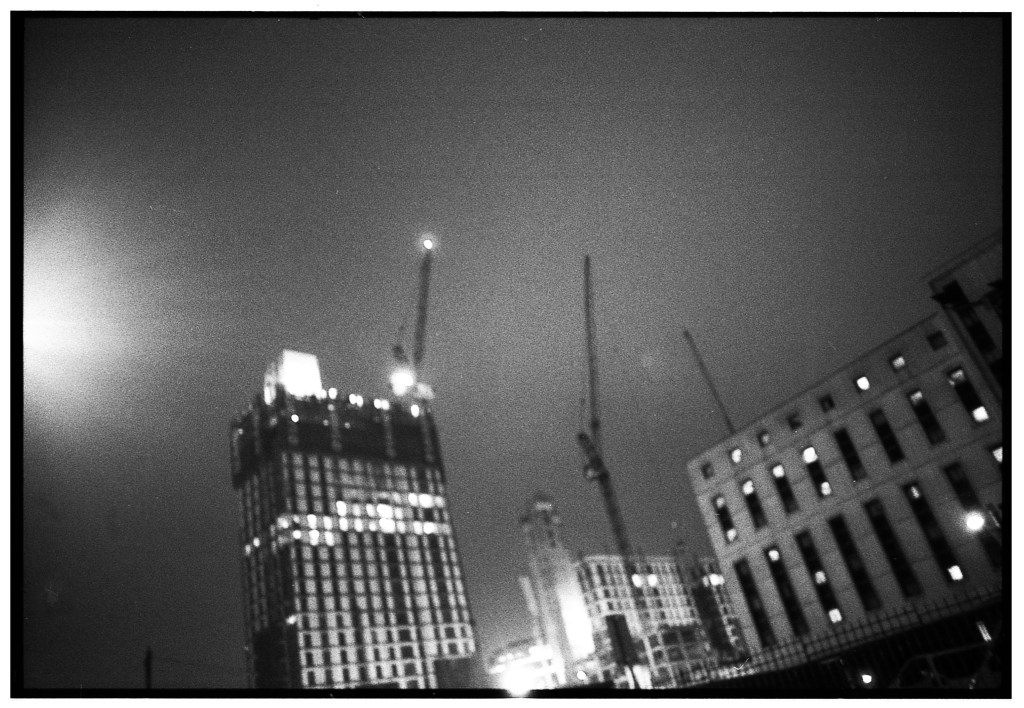

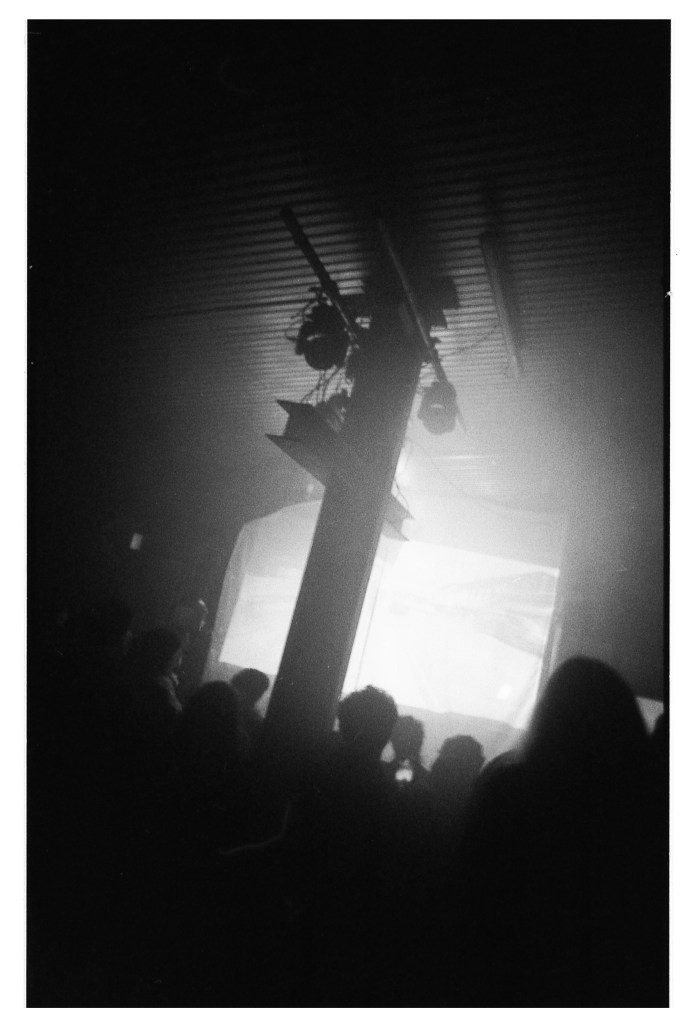

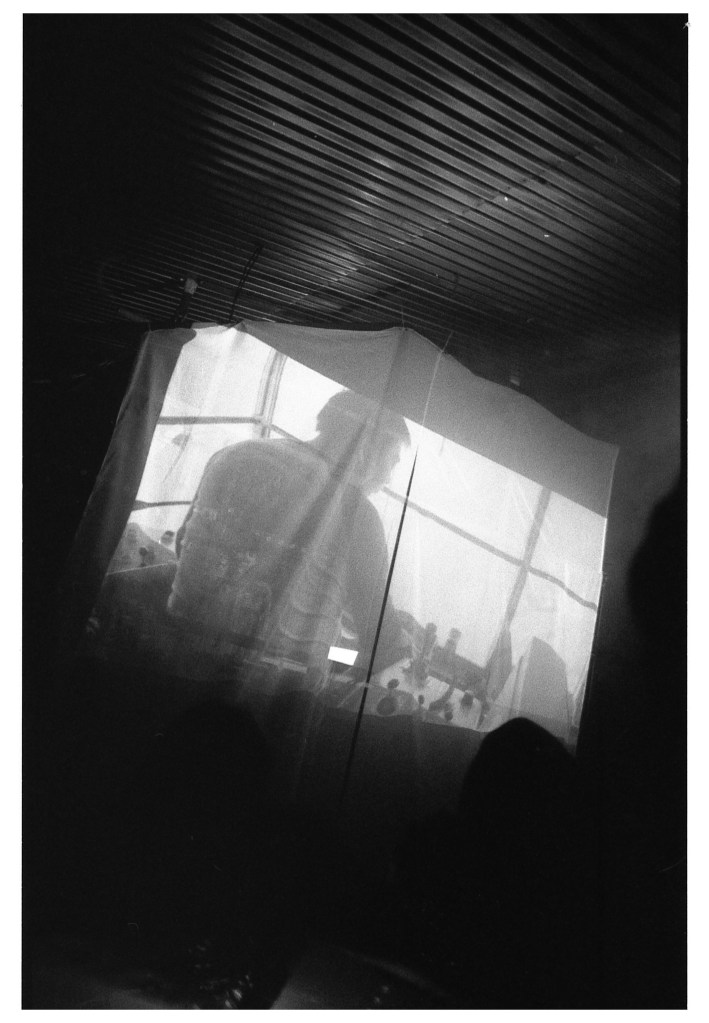

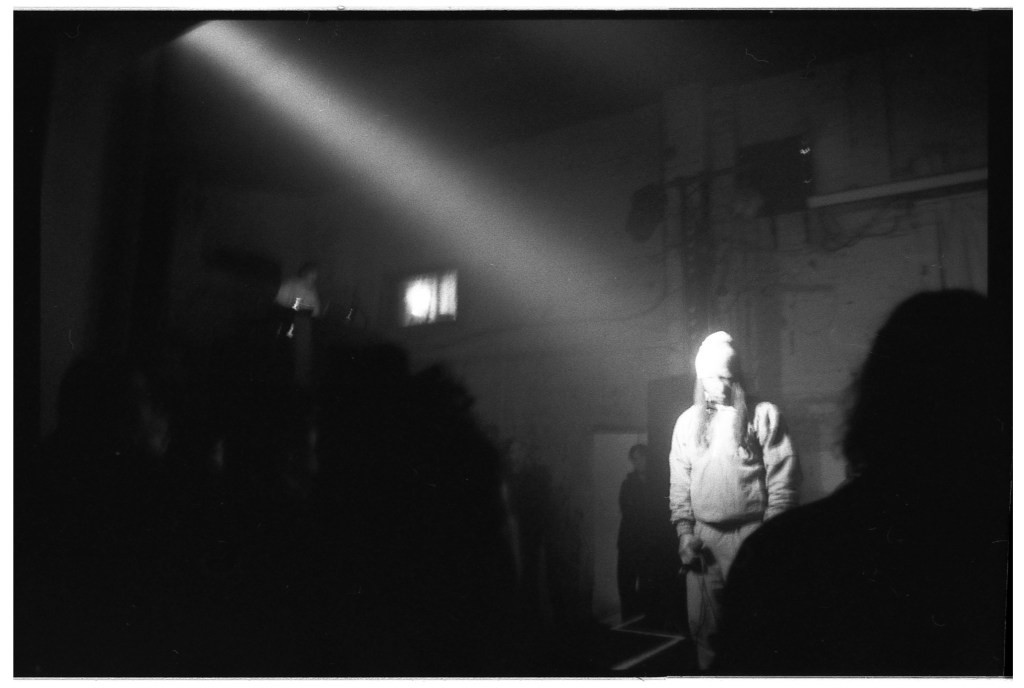

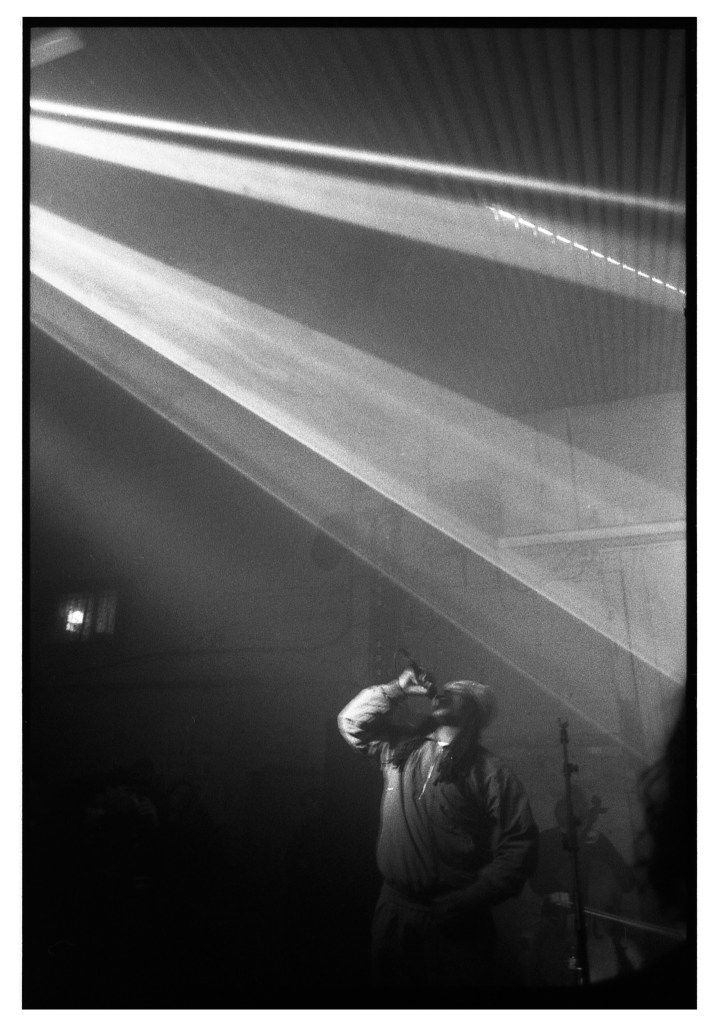
How do you translate a four-and-a-half hour audio offload of rainy day bus ride headphone music into the live setting? The answer is simple… Get a big sheet. Hang it down from the ceiling of an old car garage. Project video footage of container yards and Tottenham streets onto it. Stand behind it and speak slowly over the music.
-
An Interview with Dick Jewell

No idea is new. Chances are whatever groundbreaking idea blurts its way into your brain, the man named Dick Jewell already did it years ago and did it very well.
Make a book of found photos? Dick Jewell did it.
Film vital Super 8 documents of underground subcultures? Dick Jewell did it.
Start a record label? Dick Jewell did it.
Capture the London club scene with regimented precision? Dick Jewell did it.
Catalogue the fads and movements that find their way onto the internet? Dick Jewell did it.
Answer some questions for an interview in Roman Candle Magazine? Yep, you best believe Dick Jewell done did it…
The first thing I wanted to ask you about was your book of found photos which you made in the late 70s. How did that come about? What was it that drew you to hoarding these images?
Whoa, two questions in one; I’d started the salvage process in the summer of 1968, during my photographic pursuit of creating my “Passport Approved Photo Album’, a project that carried on for a few years, using the booths that output four black and white photos in a strip. Basically, none of the photos I was taking would be approved by the Passport Office, for instance referencing artist’s like Christo by posing behind the background curtain or Leonardo with a life size cutout of Mona Lisa in the booth.
I was regularly visiting a booth on Brighton seafront by the pier, where Mr Archer, who ran a café there, also installed one of the (then new) square format booths under the arches, and that’s when I became intrigued that people would put their 2X10p coins in the slot, pose and tear up the resulting pic, I was interested in the notion of not being happy with the photo of yourself, ie, having posed yourself in the mirror when the red light was on, and being captured by the machine and not a photographer.

Found Photos, 1978 What was your process for finding the photos? Was there a particular booth you frequented, or were they collected from a few?
At the time I was also regularly using another booth at the station and also picking up discarded ones there, and after my album discontinued, as the strip booths disappeared being replaced by the square ones, I still carried on with the salvage process over the coming years, I found booths, mainly at London Underground Stations, though not exclusively. For instance there’s a couple in the book from Charles de Gaulle airport, I even found one of a lady in Harrods.
With torn ones I collected as much of the pieces I found lying around and then washed them in the bath at home and reassembled them, like doing multiple jigsaw puzzles at the same time without knowing what the outcome would be, other pics merely bore the scars of being burnt or trodden on. The unscathed photos I mainly found thrown on top of, or behind, the booth, or in a couple of cases wedged in the display panel of the booth.
Did you start to notice similarities or common themes in the discarded photos? Why were these ones left behind?
The theme was there for me purely in the fact they were all shot by and discarded at the booth, this was way before the digital age of selfies and the memetic effect of people sharing pics online. I could surmise that some pics were discarded because maybe the subject was actually taking four identical shots for a passport and they couldn’t face living with the outcome, maybe others because they hadn’t wound the seat to an appropriate height, but I really got into the narratives of the four pics, often featuring couples together.

Found Photos, 1978 How hard was it to self-publish a book back then? I can’t imagine it was particularly straightforward.
Definitely not straightforward. I got a place as a student in the RCA print dept where they had an offset litho machine—the good news was they had technicians to operate it and make the plates, but the rest was my hands on, getting the paper, producing the artwork, guillotining, paginating, then taking the pages to a firm for perfect binding and slipping the covers on.
Now it seems like there’s a bit of interest in found photography—and people at least have an understanding of what it is—but what did people think of it back in the late 70s? How did people react?
I find the term found photos gets used very loosely these days, even referring to images researched online, purchased etc—where I don’t consider them ever having been lost; back in the 70’s it was pretty much unheard of and my book received a strong reaction.
When I dropped it out, it initially got a half page article in the Evening Standard, then among other revues, a couple of months later, Martin Schouten wrote a piece for HP magazine in Holland, by which time I’d sold all 500 copies, and it prompted me to print a revised edition, adding more photos that I’d found since publishing and adding his piece ‘The Secret of the Discarded Photograph’ as a forward.
Then the next year, 1982, shows ensued exhibiting the photos, initially ‘Instant Fotographie’ at the Stedelijk Museum in Amsterdam and then Reykjavík, and then Künstler Photographie in Hamburg, so word definitely got out about it. In 86 I was contacted by Centre National de la Photographie in Paris who wanted to include them in a show named Identitiés, and they asked me if I also had any other similar work for them to exhibit. I mentioned that I had 300 American Tobacconists M-Z and they said they’d be up for showing them too.

300 American Tobacconists M-Z – 1980. What was that?
Putting this piece together took time, I’d initially found them on the street in New York, they’d been dumped, stuck onto Rolodex cards, by some bureaux Americans had to register with to be a tobacconist. I remember well, when I spotted them and had started looking through them, I could feel rain starting to fall, and that was what had prompted me to grab them, as I hadn’t finished looking through them and they were about to get drenched, and so naturally they had ended up back in London with me; it took me time to put together for France because I was now faced with producing a montage of them in four sections (for a size to ship them) that would fit seamlessly together as one piece. I was glad to do the piece as apart from photobooth pics in it, the files seemed to convey a complete history of portrait photography up to that time, with everything from airbrushed studio shots to Polaroids to family photos with others faces scrubbed out etc.
Just thinking about it now, isn’t there a character in that film Amelie who collects photo-booth snaps? Was he ripping you off?
Totally ripped off: a few years before I’d been filmed for a documentary about the book and they’d asked me if they could shoot me out and about finding photos, so we’d gone to the booth at Earls Court station. They were filming me clambering on top of the booth collecting photos whilst my girlfriend was having a session inside it, when this bloke came over to ask me what was going on. It turned out he was the photobooth’s technician, so I showed him the book and he stopped at a double page spread of two photos of the same guy, and says, “I know him, he used to fix the booths at East Croydon!” He was correct in the location that I’d found them, and it now made total sense to me as to why there were two of them, the guy’s attitude in the pics and how they’d ended up thrown onto the pavement, of which the surface had been embossed by people walking on them before I’d found them.
How did all this sit with your own photography work? Was that something you were working on at the same time?
I’d been wearing a 35mm camera round my neck since my teens, mainly shooting people but at the same time loved looking at every type of photography, from books and magazines to advertising hoardings, and I’d got into the semiotics of images, which had led me into making photolitho narratives with images, to encourage people to think about what they were looking at; sometimes I’d do large editions and fly post them at bus stops and walls around London, so printing the Found Photos book definitely fitted in with my pursuits then.
What else were you doing around the time of the Found Photo book? Were you doing a day job too? Was being ‘an artist’ sort of an option for a young person in the late 70s?
Being an artist was definitely an option for someone in the late seventies—rents were minimal, and you could sign on for housing benefit, but I found it more beneficial to squat, in terms of having space to live and work.
I’ve never done a nine to five since leaving college; Peter Gabriel came to my degree show and asked me if I’d be up for doing his next album cover but when he introduced me to the boss of his record company Stratt (Tony Stratton Smith) he’d said that Peter’s next cover was under contract to be done by Hypnosis. Peter had then said that he wanted me to do any other singles covers or posters. Stratt then said, “Oh! Have you finished your album?” Peter replied, “No not yet”, so Stratt then asked me if I’d like to do any covers for his other artists. I said no as I wasn’t really into their music, and he’d asked “Oh, but if you were into the music, you’d be up for doing the artwork?”

Peter Gabriel Montage for the 1979 Reading Festival program So he offered to pay all my expenses to go and find and bring to him some music that I liked, and this led to me starting my own record label within his company, but I’d only go into the company on a Friday to pick up my expenses; in fact a couple of months later, I was in a group exhibition in New York and Stratt arranged for me to go into Phonogram, his distributer Stateside, and pick up my expenses from them, so that nicely took care of my wining and dining and going out, whilst I carried on with my artistic pursuits.
Sounds alright. Was it around this time you got into shooting films?
Well I’d been enjoying getting paid for shooting the artists of my favourite music that I was releasing, and then Gregory Isaacs ended up in gun court in Jamaica and Prince Far I was assassinated, so I didn’t feel committed to continue with the label.
I’d earnt enough to buy a Super8 camera and a shed load of film as I really wanted to explore how movement was captured and conveyed using various frame speeds, to which end I concentrated on filming two things that I was into—martial arts and dance. The first film I edited together was called Revolver and was purely about people spinning at different frame speeds.
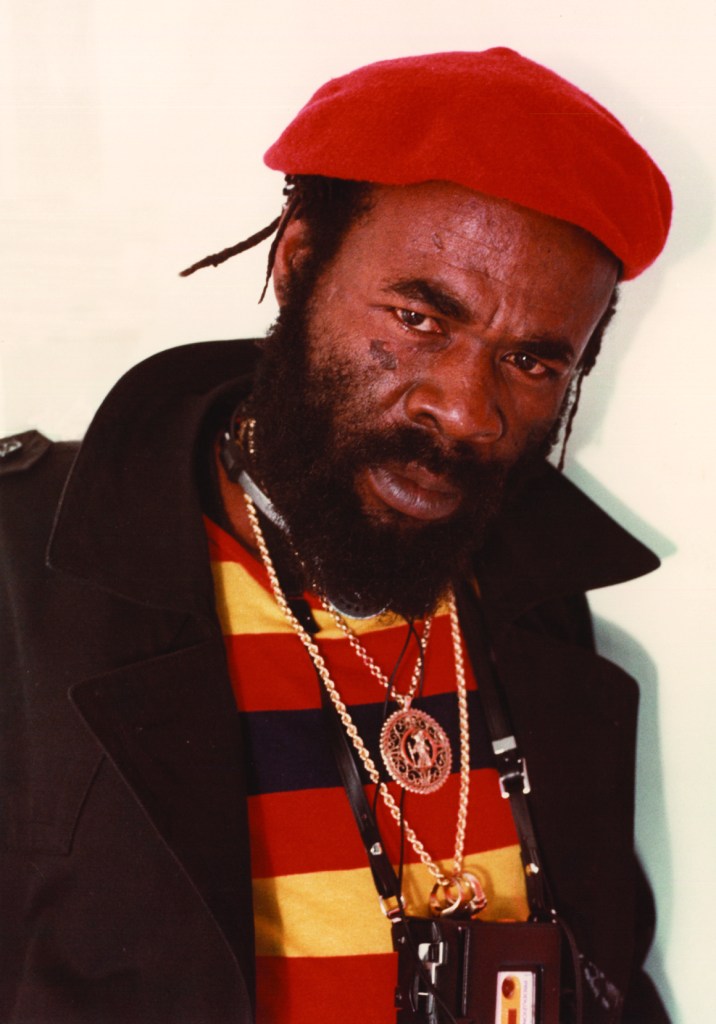
Prince Far I, Queens Gate, London, 1981. A lot of your films document different subcultures. Was that an intentional thing, like “I’m going to capture these people for posterity,” or did it just happen?
It was just my natural inclination to shoot things that I was into. For instance I’d been a South London mod as a youth and so it seemed natural when I’d met with Micky and Margaret, in 1979, who ran a shop in the East End, called The Last Resort, to document the skinheads that would meet up there on a Sunday to get cropped, booted and suited. The soundtrack for Skins harks back to the original skinheads that had morphed from mods ten years before, because I preferred that music; ironically, I hadn’t had a hair cut for about four years when I shot it…
How did you get involved with the jazz dance stuff? I sort of feel like compared with things like Northern Soul it doesn’t really get talked about much, but it was clearly a defined thing with its own music and style.
I was really into filming all variations of dance and my friend Emma said I should check out the Jazz Room, which at that time was a scene in a really confined space upstairs of The Electric Ballroom in Camden on a Friday night, and due to the dancefloor being small, the dance was very competitive. Paul Murphy was the DJ on the first two occasions that I filmed there and he was succeeded by Gilles Peterson.
My method of making this documentary hinged on creating an ongoing dialogue with the subject to produce a living document, to this end at the start of each night that I went, I would project the ‘film so far’ above the dancefloor, before continuing to shoot more material. This action was twofold, it prepared the crowd for the introduction of light into the space and created an interaction between the dancers and the film that informed the development of the dance style. The style was an amalgam of moves from ‘tip, tap and toe’ of the thirties with body popping and breaking that were developing at the time, the latter styles which I was also filming at Spatts on a Saturday lunchtime where Tim Westwood was DJ-ing as well as at other venues.
What are your thoughts on subcultures today? Do they still exist in the same way? Which ones interest you?
Subcultures continue to develop in much the same way, if you take the aspect of dance styles for example voguing, dancehall, house, locking, breaking, popping, bone breaking, vooking, krumping, twerking, cabbage patch, the running man, to name a few—it’s never ending, and yes they still interest me, and we find them well documented and shared on reels online; but my work evolved, my filmmaking agenda moved onto video, liberating me from the three minute reel.
My first video camera, a Video8, was financed by a commission to produce a documentary on my friend Neneh, and then another friend of mine Gerlinde said to me, “You like filming in clubs, why not come and film mine?”
That led me to filming 21 episodes of Kinky Gerlinky between 1990 and 1993. This series evolved from initially just my camera and lighting, to having three camera crews, editing the footage and selling VHS tapes of the club at the outlets where you could buy tickets for the club, which was every couple of months. This sharing of the footage had a similar effect of creating a living document in the same way as screening the ‘film so far’ at The Jazz Room; punters would refer to what had been said or done in previous recordings.
Though I was drawn by the opportunity of filming the dancefloor, this series was more about capturing a club culture in depth. Club culture is by nature a fleeting phenomenon, rarely recorded, I wanted to redress that as I’d always enjoyed clubbing. Above all Kinky was perfect for me, a club about self-expression and fashion, excess and enjoyment, where I could examine cultural and sexual politics of celebrity and glamour.
I’ve been digitally remastering all the episodes recently, in view of making them available to view online, as there’s certainly no club of this type in existence today, and I have also become aware that the relationship built between the camera and the revellers back then is also unique, as it was at a time before everyone having digital cameras on their phones, and they are instead selfie-ing to my cameras. My work has evolved a lot since then to involve subcultures, if we can call them that, on a broader scale, such as recording for example the music and dance of some of the few remaining Quoi San bushmen in the Kalahari desert on the Korridors of the border of Namibia and Botswana or the music of the Ariari clan of Grand Malaita in the Solomon Isles.
In regard to Kinky Gerlinky, did the cycle of filming, editing, displaying and filming again help the scene to evolve faster?
No—the club had been evolving and growing from the get go, migrating to ever bigger venues, and finally arriving at what was then the largest dancefloor in London, the Empire Ballroom, Leicester Square, where crowds of the general public would surround the entrance just to watch the arrivals, similar to the gatherings you’d see to witness celebrities arrive at a film premier or suchlike. I was just happy to be part of the scene and I never had any problems in terms of finding crews to volunteer their nights there with me.
What were the technicalities of filming at a club like that? Was it almost like being a wildlife photographer… honing your equipment…. knowing the best places to stand… pre-empting interesting moments?
In pure technical terms, I’d been liberated from the three-minute film reel of Super8 by the invention of Video8 in the 80s, and whilst I was recording Kinky, in 1990, Hi8 became available and I immediately switched to that. My other equipment honing was with batteries for cameras and lighting. Especially for lighting, filming all night you needed loads of batteries, and the only portable lights back then ran from motorcycle batteries, so I’d always carry at least half a dozen of them as they’d take at least an hour to recharge. As for the actual filming we were accepted as part of the wildlife, recording all its aspects of display and habits, including mating and courtship, wherever it might occur, whether on the way in, on stage, backstage, the dancefloor or transgender loos, as well as it’s migration outdoors in the early hours of the oncoming day.
As you say your club films were sort of like an early selfie. What are your thoughts on today’s obsession with the self? Was it inevitable?
I think it’s surely inevitable with the younger generations having grown up within the digital age when their interactions are as much on social media as in physical contact and the very aspect that the phone camera, at the touch of a button, flips to record oneself; we see now that this has even migrated onto sharing a pic of oneself and one of your surroundings simultaneously with the BeReal app.
What sort of state is your archive in? It sounds like you’ve got a lot of footage.
Physically it’s in good shape, and yes there’s a vast amount of film, video and stills, with much of it from pre 2000’s still only existing in my studio in an analogue state. Much of the moving images are on a variety of formats such as Umatic and BetaSP but thankfully I’ve still maintained contact with equipment to access it, and as for the technical glitches that occur to tape over the years, they can in the main be retrieved through the arduous process of digital remastering.
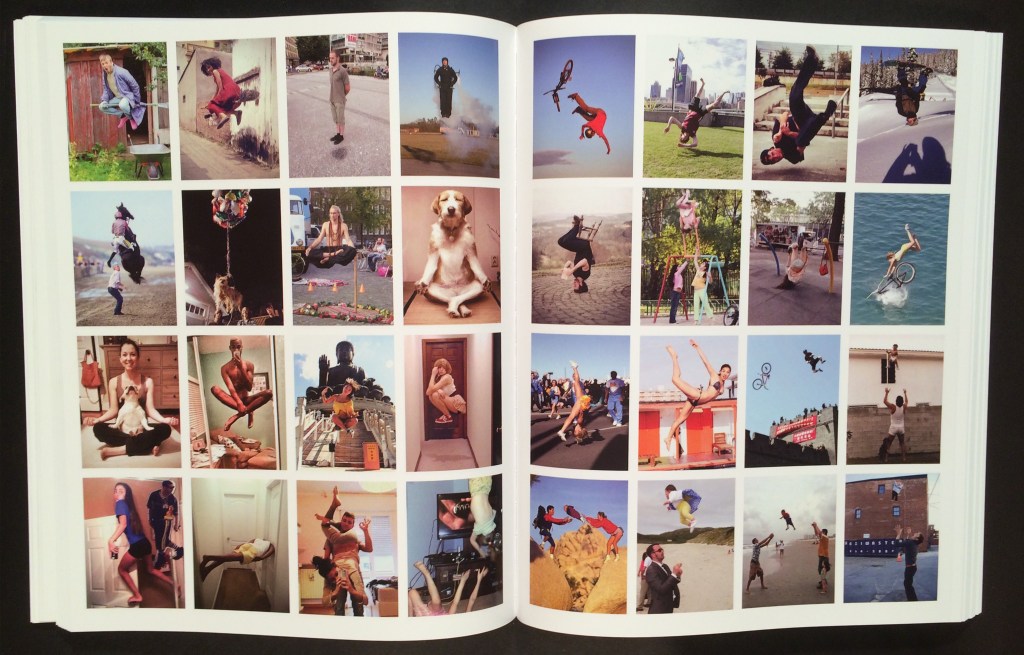
A spread from Four Thousand Threads, 2015 Is it hard to make new stuff when there’s so much old stuff to go through as well? What takes priority?
No, I’m always concentrated on making new stuff, for my sanity. I’ve always enjoyed bouncing between making collages and books as well as films. So say, during the recent lockdown, upon my finishing an 800 layer digital collage ‘One Blood’, a researcher contacted me for 80s Notting Hill footage for a Sinade documentary that’s just been released, and she encouraged me to digitise more footage.
She described it as a good pension plan, and that’s when I started digitising the 21 Kinky episodes, as at least they were all edited. Finishing that digital remastering coincided with Iaine and Jane contacting me regarding a show that they were curating for an exhibition at Somerset House. They inquired about a work to convey the vibe of entering a club, and so I found myself making ‘new stuff’ from the ‘old stuff’ as I decided to edit a film titled ‘Descending a Staircase’ (title inspired by Duchamp, and yes, it contains nudity) from the descensions of one staircase into Kinky Gerlinky, editing out all the stopping and posing and chat, creating an hour long flow of attitudes to me standing at the bottom of the staircase with the light and camera.
Last question… or questions… Where do you think this compulsion to document comes from? Is it a love of people? Looking through your work the human face seems particularly prevalent.
Yes, I have a lot of love for all our fellow humans and how we interact. I’ve always had an interest in recording cultures as I’m aware how quickly they come and go with little record of them. I’ve always simply recorded and not added any talk over, to simply create awareness and familiarity toward the possibility of lessening prejudice.
Another strand has been through creating narratives of similar poses and behaviour to widen an understanding of how we interact, and yes—the comparison of faces has always been a part of my practice to reveal aspects of personality and behaviour through the subjectivity of a lens.

One Blood, 2021. One of my most recent films, Faces, is hundreds of faces cut to the lyrics and music of Run DMC’s ‘Faces’. It merges our relationship with celebrity, face swapping, tribal and online culture, ageing and self-image with politics and advertising, employing the humour of the zeitgeist we encounter every day on social media platforms. From a baby we receive an instantaneous impression of someone from their face, irrespective of facial expression, so we can’t help but project our own individual opinions or relationships onto the themes that arise in ‘Faces’, as with perceiving any work, we all carry our own baggage.
‘Faces’ with its rapidity of images, shifts our perceptions and interrupts the processing of our personal preconceptions of every face we see; ultimately, towards promoting a harmony and unity amongst people, regardless of their circumstances or appearance.
-
Voice Actor + Squu – Lust (1)

It’s not raining anymore, but the pavement is still wet from earlier in the morning. The bins at the road end are overflowing so there’s scraps of litter dotted all down the street. On the other side of the road a man parked up in a silver hatchback is scrolling around on his phone. I’d like to think he’s listening to this…
-
Everything Must Go

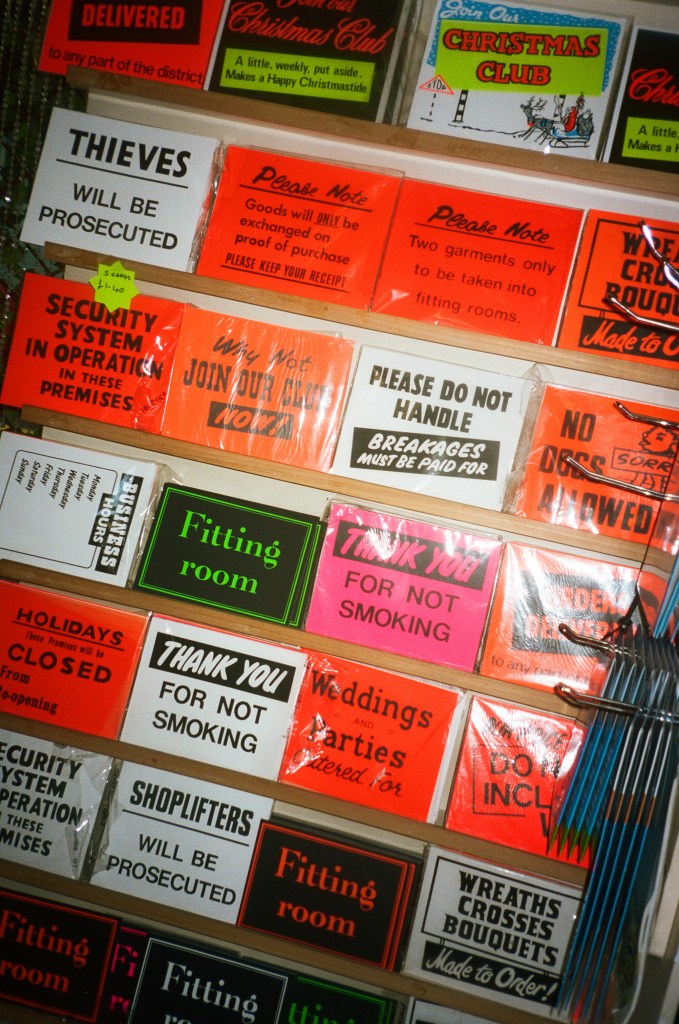
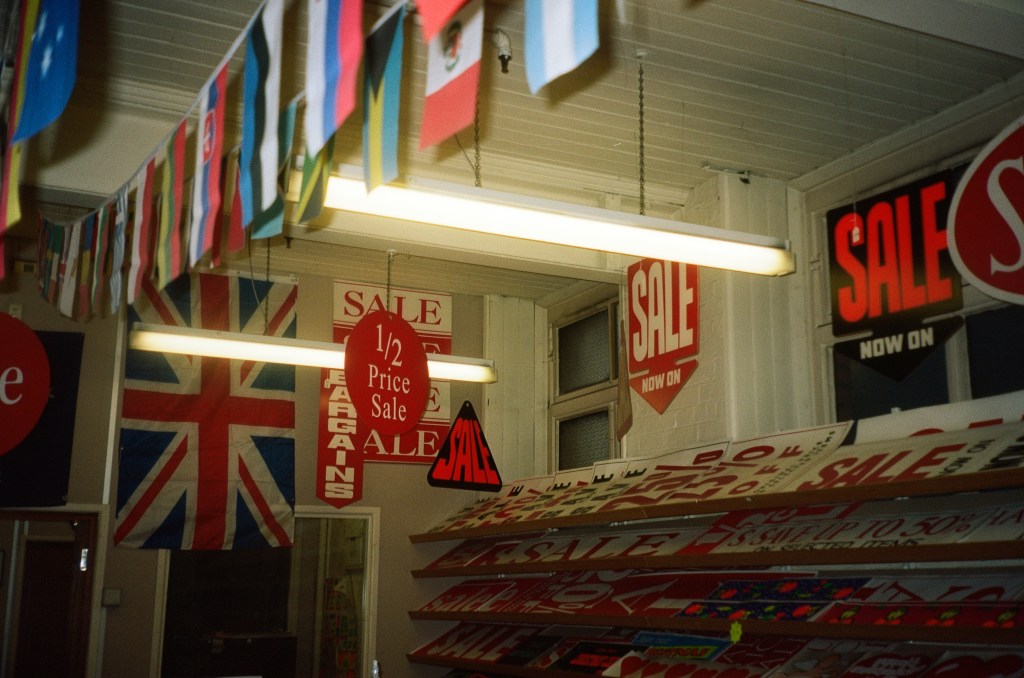
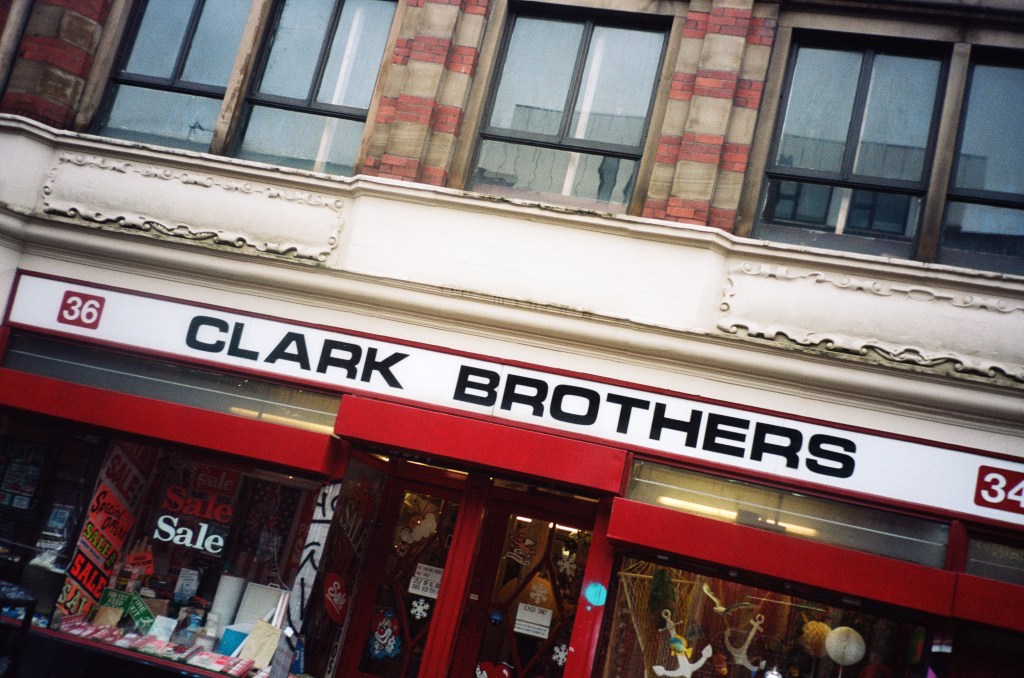
A few colour shots from Clark Brothers, the infamous ‘shop for shops’ on Thomas Street which is finally winding down after 60 years of high caliber graphic design excellence.



-
An Interview with E-Man from the X-MEN Bike Messenger Crew

Sitting somewhere between occupation and subculture, the role of the bike messenger is one of those rare jobs that extends beyond mere nine-to-five to become a fully-fledged lifestyle.
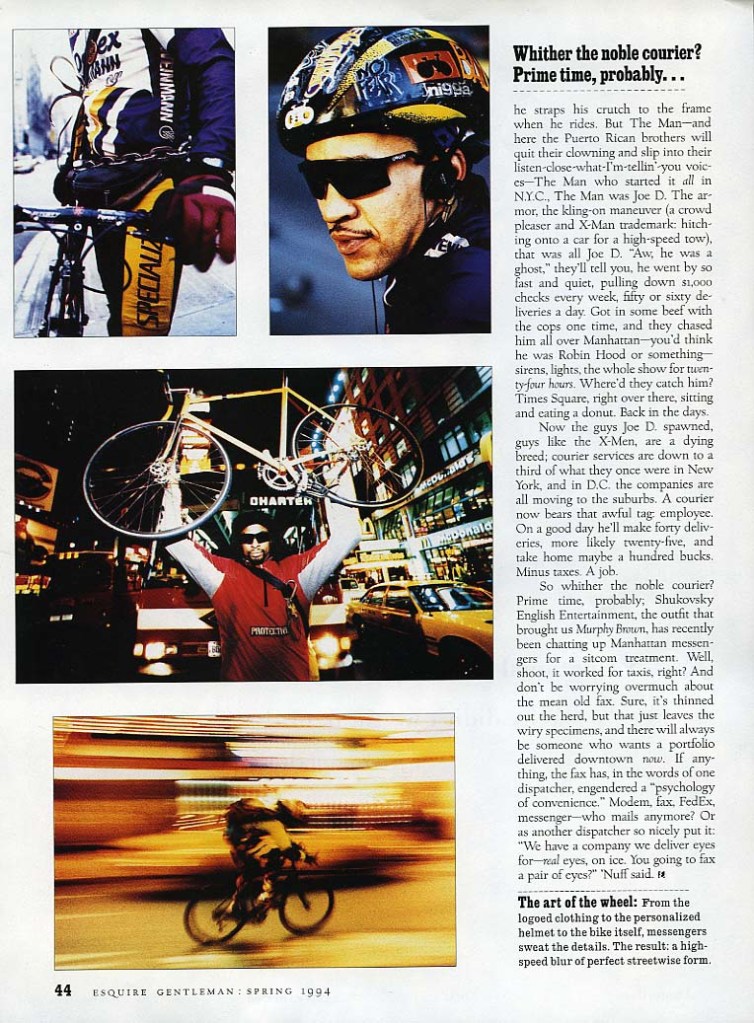
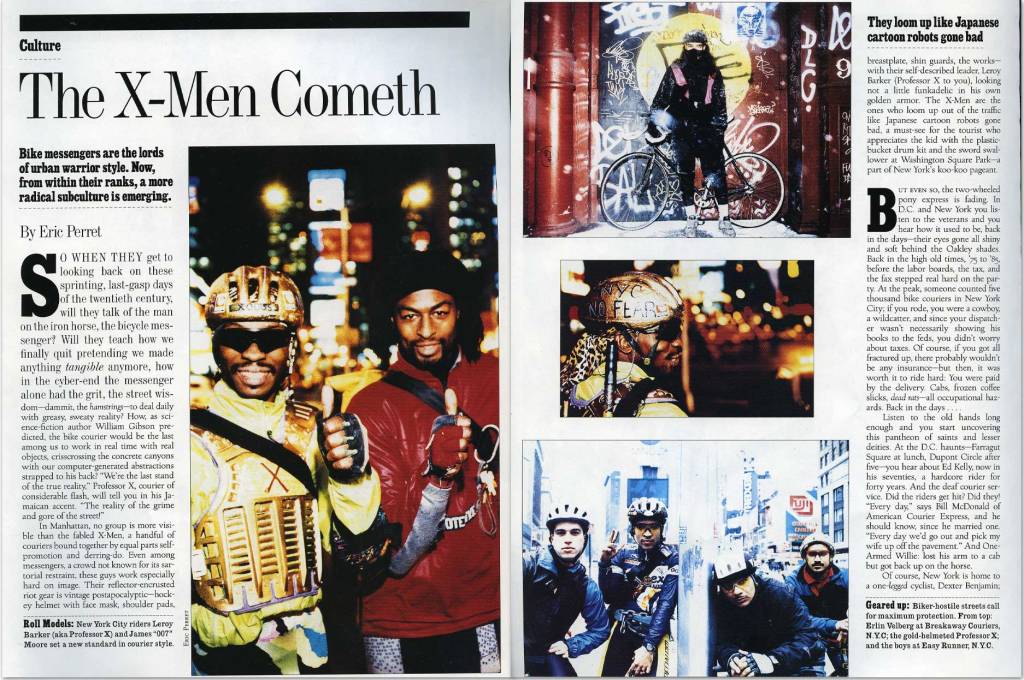
Few did it with quite as much flair as New York’s X-Men. Taking inspiration from a notorious messenger called Joey Love, this crew elevated the fine art of delivering packages into pure street theatre, skitching on taxis, weaving through traffic and leaping over pot-holes, all the while decked out like junk-yard comic-book superheroes.
Anyway—enough intro. Here founding member E-Man lays down his tips for making serious cash on two wheels…
You were just telling me you were in New York again. How was that?
I was there last week on business—I was riding through the city. Everytime I go there I get a bike from one of the bike shops, because everybody knows me out there. I had a great time, remembering my heyday of riding up and down Manhattan. Now I live in South Florida, but I still ride. I do a lot of trail riding now—and I rode all weekend. You ever been to South Florida?
No? What’s that like?
It’s like living on an island, but you’re still in the United States. There’s palm trees and beaches. It’s beautiful.
It sounds it. Going back a bit—can you tell us about the X-Men and what you guys were doing? Even now people talk about you.
There wouldn’t have been 15 film crews coming across the world to film us, if we weren’t doing something unique back then. We changed the landscape of that industry on how packages were delivered. There were many people who wanted to do what we did, and a lot of people who looked up to us and respected what we did.
We were risk takers—I don’t know if we were a group of guys who knew what was going to come out of it, but we just felt that if we wanted to make the most money in a 40 or 50 working week, the only way to do it is by delivering more packages. If the average messenger could deliver 30, then we could deliver 50. And if the average messenger could make $700 a week, then we could make $1200.

How did you make that leap from making $700 to $1200. Was that by skitching? Or going on the freeways?
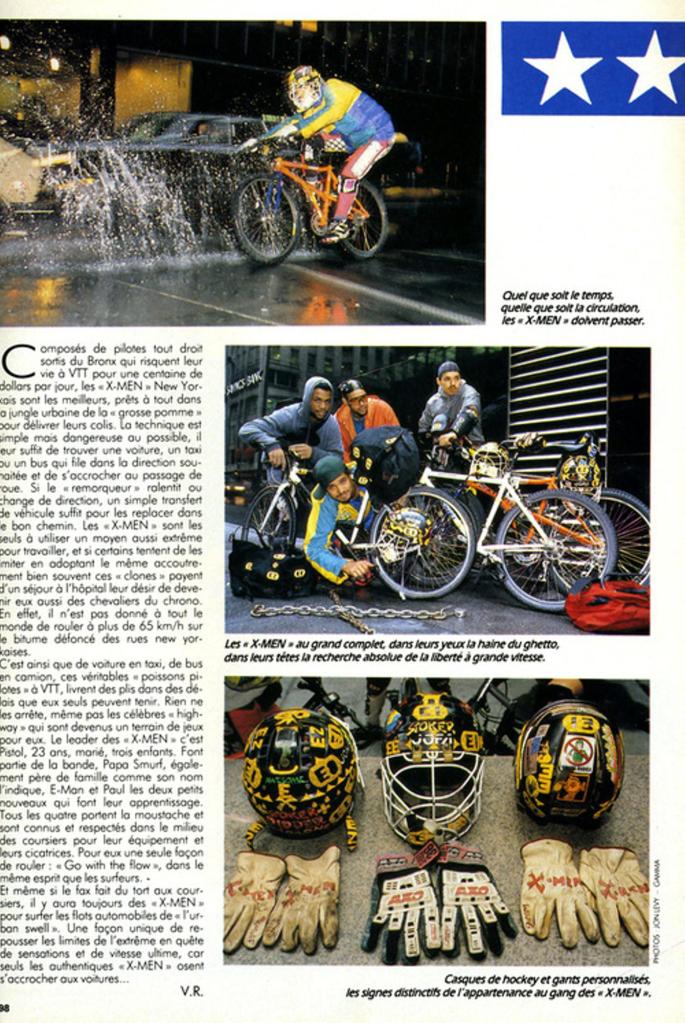
Absolutely. And there was the clothing—the gear that we wore was so that if anything happened, we could still walk away. If you have motocross gear on, and you’re doing 50 or 60 mph, you’re more likely to get up—you’re going to slide on the concrete and get back up—as opposed to if you’re just wearing regular bike gear.
Like just a t-shirt and shorts?
Yeah—some tight biking shorts. And then we wore hockey helmets to protect our faces—and we never rode without heavy duty gloves so that we could hold onto the wheel-wells of the vehicle. And that right there is what separated us from everybody else—we were clinging on to vehicles and swinging from car to car. The lights in Manhattan run simultaneously, so when you go from one street to the next, the lights change from red to green, and as you approach the next street, the lights turn green. It was like catching a street wave—like catching a wave in the ocean when you can get up on the surfboard and ride it though—we called it traffic surfing. So we’d surf through traffic and be able to get from Times Square 42nd Street to Wall Street in less than ten minutes, when it would take the average bike messenger at least 20 minutes or more.
Because they just weren’t taking the risks that you were?
Yeah, and why would they want to? What we did was extremely courageous and dangerous—we put our lives at risk every time we get on the bike.
Did it go wrong sometimes?
Yeah, of course. Obviously if you’re holding onto a car, people who are not nice will try to make you fall. They’ll swerve their car left and right to try and shake you off it. Or if the light is green, it turns yellow, then it turns red, and all of a sudden the pedestrians start crossing whilst you’re doing 45 miles an hour into a bunch of pedestrians, so you’ve got to navigate through that without hitting everybody. It was about beating the red lights, never stopping at a light, navigating all the pedestrians and all the oncoming vehicles that have the right of way.
And then there’s doors opening—people getting out of a cab whilst you’re riding the inside of the street. But that’s really a rookie way to ride through Manhattan. You don’t really ride on the inside lane—you ride in the middle, between all the vehicles, then when you get to your destination you veer off. But since then, they’ve created these bike lanes for all the riders throughout the city—bicycles are one of the main means of transportation throughout the city, so they created these lanes, and they’re pretty nice. But they have a lot of E-bikes out here now.
You rode mountain bikes—was that another conscious decision to get the edge?
We rode mountain bikes—and we rode them with slick tires.
What was yours? A Klein or something?
That bike you’ll see in pictures, that’s a peachy glow in the dark paint job on a Cannondale. It was quite interesting. The T-bar bike instead of the regular road bike with banana bars—they’re much better to control. It was just a much more comfortable bike… and then the front-suspension bike came out. They were more agile, and they could take the roads of New York City a lot better than a bike with thin tires.
Who was the first guy to get onto mountain bikes then for messengers?
We couldn’t take that kind of credit—that’d be me lying over the phone. What we did was that we saw what was out there, and we got innovative. We saw something that could make us stand out—and maybe receive some accolades from our fellow peers on the road, and more importantly, make more money than anybody else. It came with a lot of respect—we were known everywhere.
I suppose I’m calling you up now, over 30 years later, from England.
Yeah, you’re calling me up from Manchester. Back then we were known in the messenger community—in Amsterdam or countries that did messenger work—Chicago and maybe Washington DC. There are still big cities that do courier work. And those communities know who we are. If you mention the X-Men bike messengers, they’re going to be familiar with who we are.
When did you become the X-Men? When did you go from just being a few bike messengers, to being the X-Men?
Some of us worked for the same company. There was a place we hung out at in Midtown, on the east side on 48th street between Madison and Park—we called it the Living Room because there was a heated vent which came off one of the buildings. In the winter time we’d be there warming up and waiting for our next call. We smoked a lot of weed back then, so it was our meeting spot to hang out. At the end of the day we’d meet there then go home together.
The late 80s and early 90s was when we got our notoriety. We all had street names. My name’s Edwin, so I was E-Man, then there was Papa Smurph, the Flash and Pistol Pete. Pistol Pete is still out there—I believe he does Uber Eats.
There was an older X-Man too wasn’t there? Who was that?
Joey the Legend. He was the one who created the style of riding where you hold onto cars. And then we kind of copycatted it, with some more flair. He was a bit more reserved—he wasn’t the kind of person who wanted to be in the spotlight—but he’s on a couple of our documentaries. He was an older guy, and he looked like a jockey—he was tiny, with a small frame and he was the best.
What got you into being a messenger in the first place?
That’s a good question. I graduated from high school and I was a club kid at night in Manhattan. I hung out with this famous DJ in New York—I’d help carry his records—so I had this nightlife thing going on at a young age—but I didn’t know what I wanted to do with myself. Living in Manhattan I always saw these bike messengers ripping up and down the streets, and I said, “You know what, that looks like a job where there’s a lot of freedom.”
It seemed like you could make decent money too—the classifieds were saying you could get $1000 a week. And there were bonuses as well. So what drew me to it was that sense of freedom, and the challenges of getting through traffic on a bicycle, and the money. The money was a motivator.
Being a bike messenger in Manhattan is probably one of the most dangerous jobs you can have. You’re risking your life every time you get on your bike and ride through the city. It was a demanding job. This was pre-internet, and pre-fax machine. If an attorney needed a signature, or a business needed a document delivered from point A to point B, that was the quickest way to get it to someone. We’d deliver a lot of blueprints from architects—we delivered anything.
One time I went to Andy Warhol’s studio and picked up a painting and delivered it to Madonna. It was a pretty interesting job. We’d all meet at Washington Square Park after work—we’d hang out, talk about our day—drinking beer and smoking weed. We were rebels.

I suppose it’s one of those occupations that’s more than a job. It’s a subculture.
Absolutely. That was the thing that attracted me to it. It was a 1099 which is considered contractor work—I was my own boss.
Which is pretty cool for an 18 year old.
Right! I wasn’t working for corporate America. That was pretty cool, and I really enjoyed that part of the job. We knew that we weren’t like everybody else. The nine-to-five people walking through the city. They were all corporate. They were all suits walking through midtown Manhattan. You’re essentially delivering to corporate America.
How did they look at you?
I don’t really know. I didn’t really care. I wasn’t worried about what people thought of me. What worried me the most was making sure that I got home every night in one piece. It was a job that required a high level of skill on a bicycle—you had to know how to read the grid—how to read traffic and the streets—and many people have died as bike messengers in the city.
What else was going on around at this time? What’s life like for you back then?
Back then because my friend was a famous DJ I was in clubs like Danceteria, the Limelight, the Tunnel, Studio 54, Palladium—these were the clubs back then. As a messenger you created your own time. You could be at work at 7:30am, or you could stroll in at 1 in the afternoon and work until 8 at night. You stood out as long as you wanted to, or left as early as you wanted to. And the more notoriety and reputation we gained in the messenger world, the easier it was for us to do whatever we wanted to do. Companies wanted to have someone like us on their roster—if you’ve got an X-Man or two, you’ve got one of the best in the business.
We took our job pretty seriously, and although we may have done things like drink beer or smoke weed throughout the course of the day—when the beeper went off, that was it. The beeper would display the office number, so you’d shoot over to a telephone booth—back then they were on practically every corner—and you’d call into the office. The dispatcher would dispatch you anything from one to five runs in one shot. They’d geographically give you the runs so you’d pick them all up in the right order, all relatively close to each other and all in the same direction.
You could get a rush, a double rush or a triple rush. The more the ‘rush’ the package was, the more it cost to deliver it. So a triple rush was going to cost you $70. That’s a lot of money to deliver a package from point A to point B—and you’d get 60% of that, you got the lion’s share.
But you’ve got to do that faster?
Yeah—triple rush was less than 10 minutes. Double rush was less than 15 and a rush was less than 20. And then for a regular package you got it there within the hour. If you can make 150 or 200 dollars a day, all you need is two triple rushes and you’ve got 90 dollars right there—along with whatever else you make through the day—so you could make 150 to 200 dollars a day if you averaged things out. Back then that was good money. If you made 1000 dollars a week back then, you were considered a great messenger.
When did you stop? Was there a point when the X-Men faded away?
I lived in Manhattan—in a very affluent neighborhood on the Upper East Side—but the other guys lived in the Bronx. I had a whole different lifestyle than they did. My whole thing was a lot different to my friends—I was a club kid at night, so that came with a lot of different things. So I did it for maybe five or six years—and by the age of 24 I was done. I moved on. I knew that I didn’t want to be a messenger for the rest of my life.
That particular moment in my life was about being great at what I was doing, and getting the most out of it. There were about 14 documentaries on us, along with interviews on the radio and articles in newspapers and magazines. We were on the front cover of the Sunday edition of the New York Times magazine. MTV interviewed us too, but they decided to go in a different direction because they didn’t want the liability of someone holding onto a vehicle after seeing it on their show—but that was no big deal. We had film companies from all over the world document our story.
And although you’re not a messenger, you’re still riding now.
I found the love for riding as a bike messenger—I always loved that feeling of pushing my body to ride as fast and as hard as I can. Cycling is a way to stay young. I’ve never seen a person overweight on a bicycle! I love food, and I’ve been overweight before—but the only thing that helped me lose weight was riding. At one point I was obese, but I got down to where I am now because I got back on the bicycle. I love riding because it keeps you young—and that’s important to me.

Definitely. Okay, rounding this off now, money and fame aside, what is your fondest memory from your time as a bike messenger?
My fondest time as a messenger was meeting the people that became my life long friends. So many memories and great times as a messenger but one that stands out would be jumping on the west side highway while a film crew was filming a documentary on us and jumping from the express lane to the local lane over a cement divider at 60 miles per hour.
Like I mentioned, the friendships and brotherhood of the bike community by far the best thing that came from that experience. Being able to accomplish something that till today has never been duplicated is a great feat in itself. Leaving a legacy in the bike community around the world is something to be proud of. The bike community has shown us much love throughout all the years. 30 plus years later and we are still talked about around the world. X-Men for life!
-
Dean Blunt + Elias Rønnenfelt – Lucre
‘Here we are, back on the guitar’.
-
World Force Artifacts Decent Albums / EPs / Releases of 2024

In no particularly particular order… decent music from the year 2024.
Cindy Lee – Diamond Jubiliee
Dean Blunt + Joanne Robertson – Backstage Raver
Milan W – Leave Another Day
Gyeongsu + June – All to None
Lolina – UNrecognisable
Julie – My Anti Aircraft Friend
Nourished by Time – Catching Chickens
Crying Nudes – Crying Nudes
Molina – When You Wake Up
Mk.Gee – Two Star and the Dream Police
-
High Contrast: An Interview with Photographer (and Ex-Night Porter) Chris Shaw
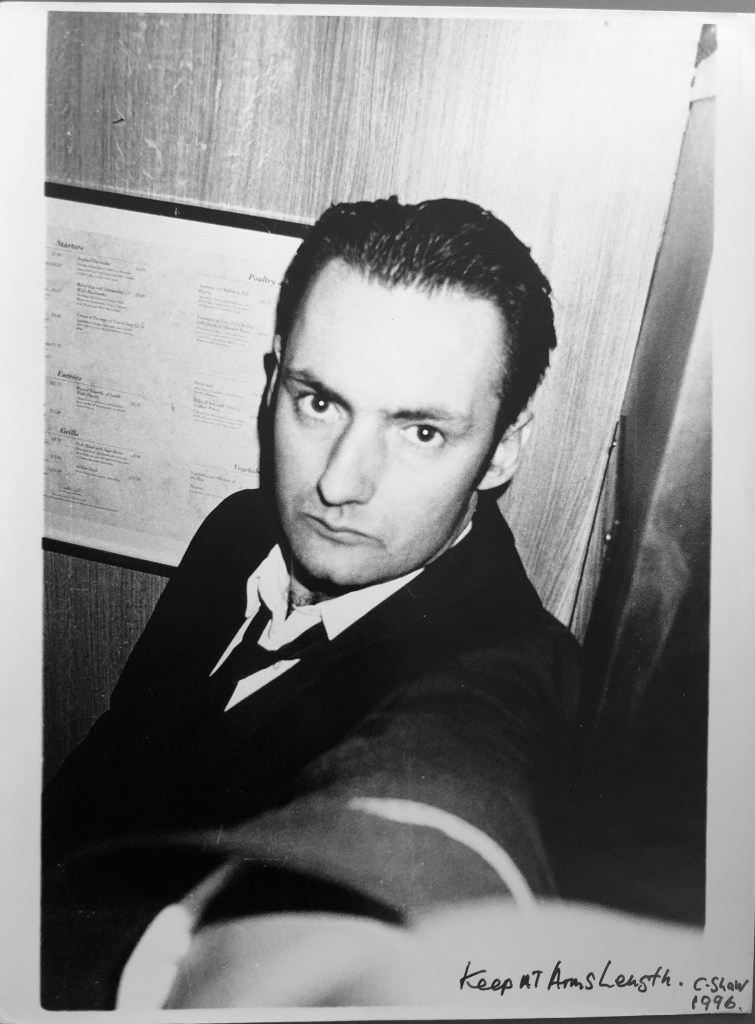
Hotels are strange places. Patterned carpets. Blank walls. Bibles in drawers. The glimpse of someone down a long corridor. The muffled sound of an argument next door. Even the swankiest establishments harbour a thousand secrets. And where do they buy those tiny bottles of shampoo?
If they’re this weird to spend a single night in, think about what they’re like to live in. Chris Shaw did exactly that—spending most of the 90s working as a night porter in a gaggle of London hotels, living a blurred life in a nocturnal soap opera along with a cast of angry chefs, working girls and blind-drunk customers.
Amongst all this, he somehow managed to find the energy to take photos… and not just any photos either. Taking inspiration from the off-kilter work of Japanese photographers like Iko Nahraha and Daido Moriyama, he captured the reality of hospitality shift-work in a high-contrast, high-action style that firmly echoed the weirdness of the job.
The photos eventually became the book, Life as Night Porter, and since then he’s made a fair few more—turning his lens towards such subjects as his hometown of Wallasey, plants in Joshua Tree and the darker corners of the Thai tourist trade.
Here’s an interview with him…
From what I read, before you got into photography, and before you worked in hotels, you were over in Canada working as a machinist. How did a lad from Wallasey end up there?
I did an apprenticeship back when there was still people making things in Wallasey, but then it was the 80s—and there was a lot of unemployment, and places getting shut down, so I ended up going to Canada. There was a politician at the time called Norman Tebbit, and his phrase was get on your bike… but I ended up getting on a plane.
What was going on in Canada then?
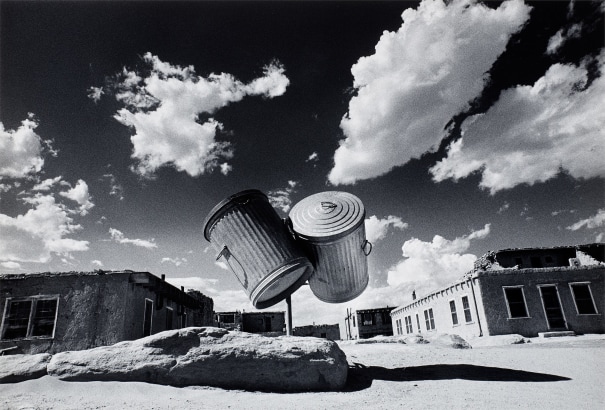
I went to a steel town called Hamilton, where I was supposed to be a lathe turner, but I wasn’t very good at it. I kept getting sacked, but there were loads of jobs, so I’d get another one. One day I’d got laid off, so I walked into a library. I picked up a photographic book—it was sort of like an American gadget book with all those different cameras in it—but it also had a section on fine art photography, and there was a little picture by this Japanese photographer Ikko Narahara. It was of two dustbins, suspended in mid-air. I just remember looking at this picture and thinking, “This is what I want to do.”
That was the spark?
Yeah, it was like when kids discover boxing or football—like, “This is going to save me.” In Canada, because I’d gone there and had all these jobs, it was the first time I’d money, but then I thought, “What am I doing to make the money? I have to do this for the rest of my life, and I fucking hate it.” In a way by going to Canada I had that experience in two or three years that it would have taken ten years to have in England.
How did you move from lathe-turner to photographer then?
I looked at going to college in Rochester—just south of the border from Hamilton—but it was so expensive. In the end I went back to Wallasey to do a BTEC in photography, and the first person I met when I was looking around was a photographer called Tom Wood.
Small world.
I developed my first roll of film with him. At the time Martin Parr was also living in Wallasey, doing the Last Resort project, so I was around these really great people, straight away. I was at the first exhibition of Last Resort, so it was kind of like being at the Cavern watching the Beatles, in terms of how successful he became.
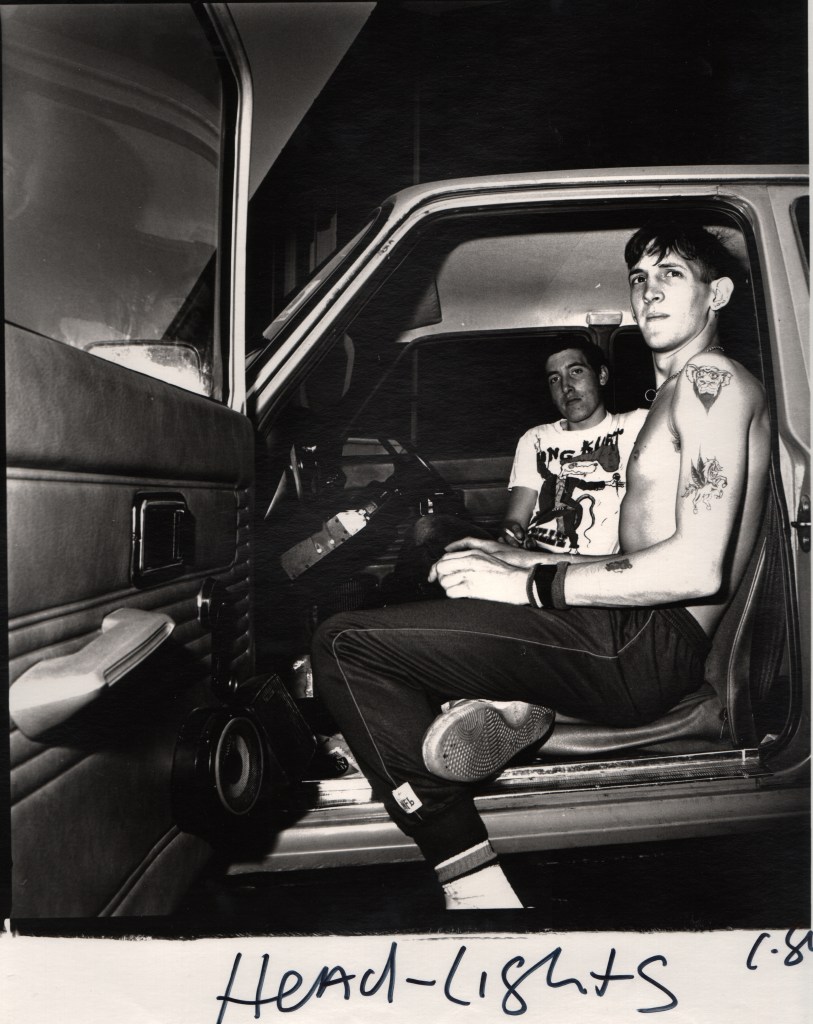
I suppose you could see from them that being a photographer was a thing you could do. I imagine being working class in Wallasey, being a photographer was exactly an obvious option.
Yeah—the reaction I got from my family was like, “What are you doing? Why are you messing around with this?” After Wallasey College of Art I went to Farnham in the south of England where Martin Parr and Paul Graham were teaching. I remember when I graduated I phoned my father up and asked if he was going to come down to the graduation like all the other parents, and he just laughed at me and said, “Are you still doing that?”
At the time I thought it was kind of cruel, but now looking back thirty years later, I’ve realised it was just realistic, because the chance of having any success as an artist—having exhibitions and books published—was a bit like being a pop star. It’s a very difficult thing to do and sustain.
Going from working on a lathe in Canada to doing a photography course in Farnham must have been a bit of a shift.
It was very difficult. I found it very difficult to mix with the other students. But I found this place near the college called the Sandy Hill estate—this housing estate nearby where I used to go and take photographs. I used to go there a lot—and first of all it was just to speak to normal people—they’d be working on their cars outside or in their garages.
That was an escape from the academic middle-class thing?
The other students were driving Range Rovers, so it was a bit of a contrast to the way I was scraping by. I remember after graduation I went straight into a shift working in a supermarket.
Those Sandy Hill photographs stand out for being documentary photographs of a working class spot—without that usual patronising feel.
I liked taking the photographs and I loved developing them and seeing what I’d got, but I kind of liked going there more for the banter. When I was taking the pictures there’d be this moment of magic—we’d be having a laugh and then later I’d give them the picture. I was giving them something for nothing.
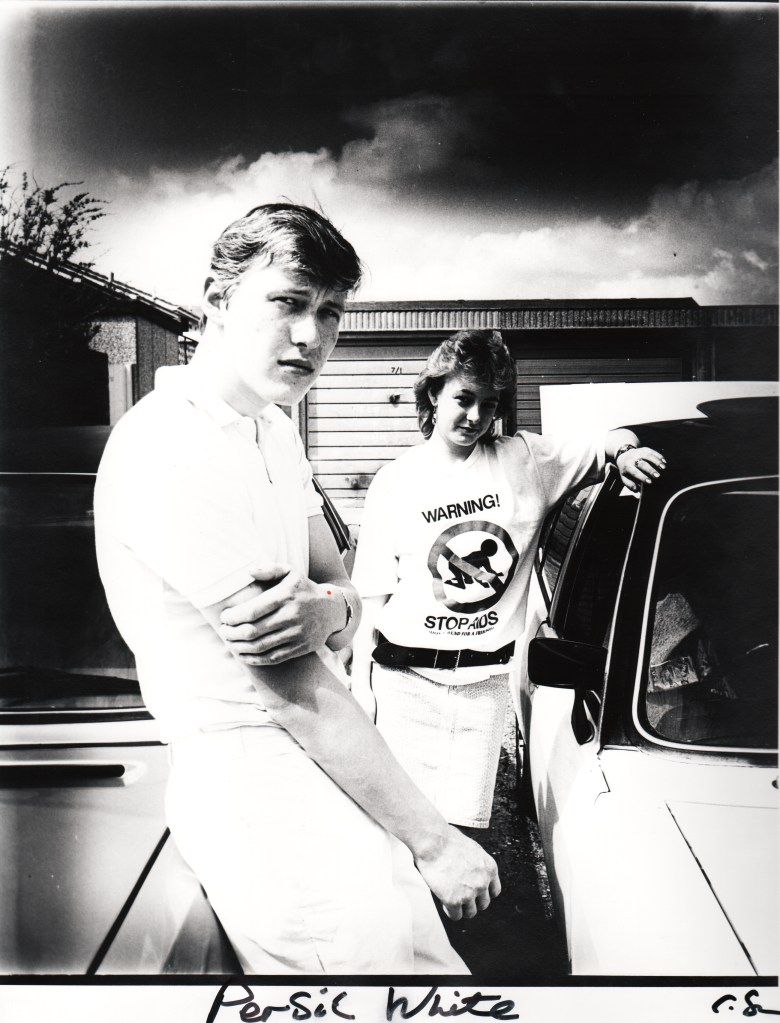
And I imagine it would be a bit of a novelty for someone to have a camera with them.
Yeah. It was completely different to how it is now. Everyone’s taking pictures all the time now, but back then, I’d take pictures of someone I was interested in, and then print it at college and give them the print. They’d say, “This guy is giving pictures out for nothing,” so I’d meet somebody else and take their picture too.
But it wasn’t ‘til ages later that those photos ended up in a book.
It was 25 years later! In retrospect it looks like I’ve had a great career because I’ve made five or six books, but the narrative of the timeline is all mixed up. I wasn’t a photographer who had immediate success—I was out in the wilderness for ten or twelve years after I came out of college, in that night-porter subculture.
It’s very difficult with the class system in Britain. In the art world, like I was in Farnham, I was just around all these middle-class kids. It’s easier now because I’m older and I can talk to people, but then, depending on your accent it’s just very difficult.
It’s like fancy restaurants. I don’t know what’s going on in those places, but some people are really comfortable with it.
Yeah—which fork to use and which wine goes with what. I remember Martin Parr phoning me up. It was about six o’clock and I was eating, and he said, “Oh your working class! If you were middle class you wouldn’t be eating until half seven!” There’s all these rules.
Were you kind of at odds with Martin Parr and Tom Wood a bit? Your style of photography is very different.
I never really liked Martin, but I didn’t really allow myself not to like Martin, because I’d think to myself, “Am I not liking him because he’s successful? Am I being jealous?” But I saw him take those pictures in New Brighton and there was a bit of magic in seeing him do that. I was always aware of my reverse class prejudice.

I suppose there’s that contrarian thing too—he’s taking these colour photos, so you start doing these high contrast black and white photos.
It was commercial suicide to do what I was doing—these vertical black and white pictures—but I always felt that it would come back around. I was going to try and get little bits and pieces of work at magazines and they’d always say, “Have you got anything in colour?” What you’ve got to realise is that there’s a fashion for everything, and Martin’s large format colour photography was in fashion for a long time.
But I was influenced by Japanese photography right from the start. I was doing vertical photos, and I remember going to see somebody and they said, “The only other people who do this are the Japanese. Go and see their work.” So he told me about the V+A photo library and I could actually get to look at them. You’d ask for a book, and somebody with white gloves would bring it out.
I can’t imagine that stuff was easy to see back then. It wasn’t like now with the internet. When did you start working in hotels? Was that straight out of college?
I’d done some stuff in Budapest, and then I ended up in London. I got a job in a camera shop, but I got fired for asking for a contract of employment, so I was basically homeless. That’s why I started working in a hotel—the job came with accommodation.
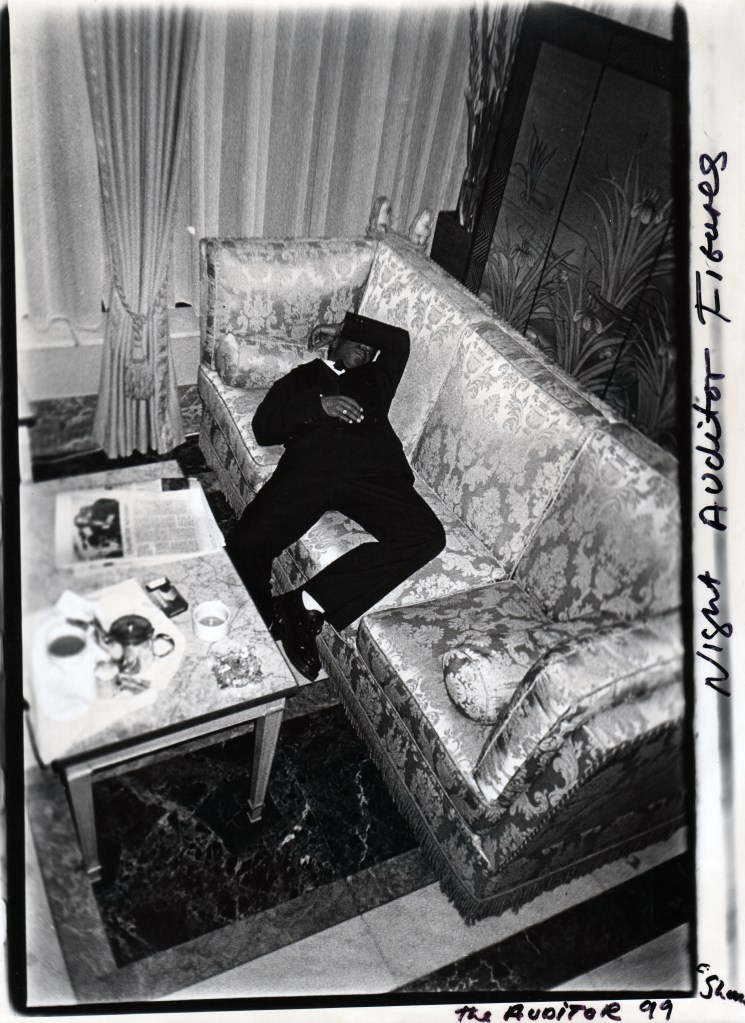
I remember applying for quite a few night porter jobs years ago—there’s a certain appeal to it. But what’s the reality?
It’s kind of a weird place. I was kind of delusional in the way I looked at it. I thought that if I worked at night I could do photography during the day. What I didn’t realise was that I’d be constantly jet-lagged, running on half a battery, for twelve years. It messes you up. You’re not fully there. It’s a bit like being drunk or high.
A lot of people get a job like that and the photography thing ends up falling by the wayside. What kept you going?
I kind of lost my art school artifice. During the 13 years I worked as a porter, I worked in eight different hotels, and I got sacked a couple of times for being asleep. So I was using photography as a way of keeping myself awake. Also, if I met somebody interesting, I’d ask to take their photograph, but quite often I’d forget about the whole thing. I had a bin-bag of film which I went through in 2001, and the Night Porter book came out of that. Occasionally during that time working as a night porter I’d go to a communal dark room and make some prints, but it wasn’t until 2001 that I actually put it all together.
Also there was some personal stuff happening at that time too—I stopped drinking at that time, and because I wasn’t drinking I turned into a bit of a workaholic.
Like chefs and cocaine, is drinking just something that comes with the territory of that job?
Oh yeah. One of the time I got sacked it was because I’d got in a fight with a chef. I had the keys to this store room where all the beer was kept—and one of the chefs was in the habit of going in there to help themselves to beer—so I locked the door. He was kicking the door down and the manager came—I eventually let him out and we ended up having a fight, rolling around the lobby of this hotel. When the manager fired me he said, “I can get somebody like you by snapping my fingers, but I can’t get chefs.”
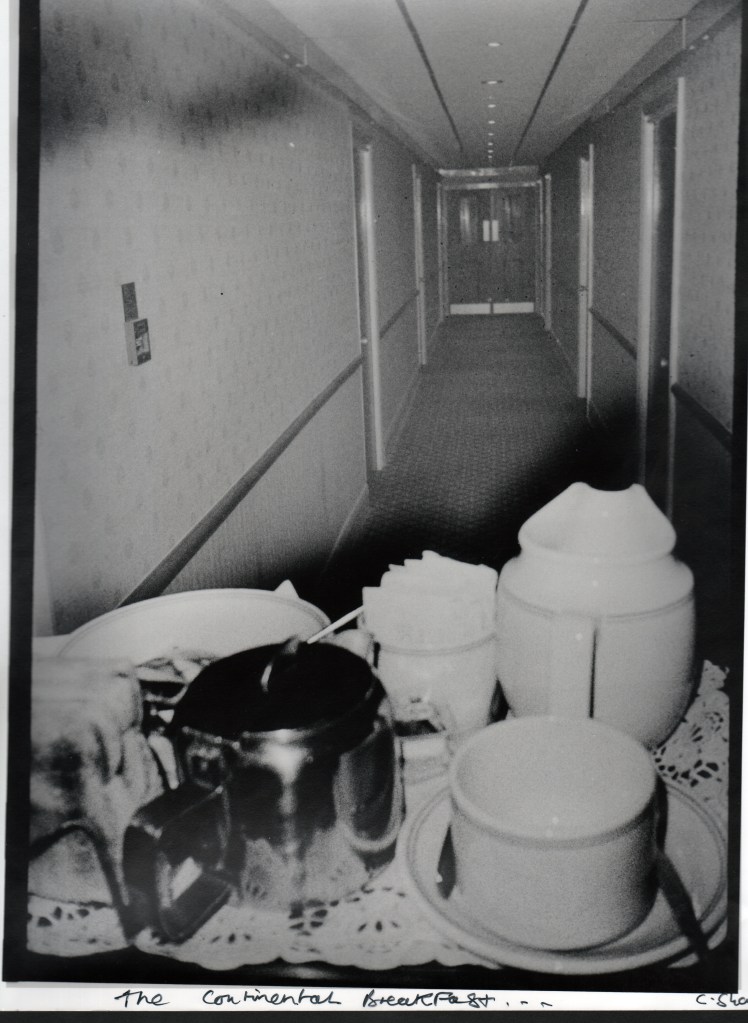
And that was just regular life as a porter? Hotels have a strange atmosphere to them. People might live one way on the outside, but in a hotel they get into all sorts of stuff.
Yeah—someone might come in wearing a suit, and then I’d go up to the room two minutes later because they hadn’t signed their registration form—and they’d come out wearing full camouflage gear. People go to a hotel and they become something else.
What did they think of you with your camera then? Snapping away with a flash.
First of all when I first started I had a proper camera, but later I had a point-and-shoot in my pocket. And that’s why I got some great photographs… because they thought I was a joke. They didn’t take me seriously. Also, I was part of it—I wasn’t a journalist—I wasn’t a tourist in people’s reality.
You weren’t coming for a week with a backpack to document it—it was your life.
It was a diary. It was just keeping me awake, taking photos of what I thought was interesting.

I like how it’s not too specific too. It’s not like you set out to document one hotel for a year or something contrived like that.
One of the mistakes people make with the Night Porter book is that they think that it’s all from one hotel, but really there were maybe eight different hotels. Because of the way the photos lead from one to another it looks like it’s in one place, and in a way it is—in my imagination. And if you went to some of those hotels they’re actually really nice places, but what happens is that if you work in a lot of hotels they tend to start to look the same. You become institutionalised.
There’s a look to them isn’t there… long corridors and patterned carpets. What was Norman Wisdom doing there?
My experience with hotels is that either everything happened in one night, or nothing happened at all. With Norman, there was a variety club shindig at the Albert Hall, and all the guests were staying at the hotel. Ten minutes before Norman came in I was standing near the window and a limousine pulled up. The door opened, but because the driver had parked right next to a street sign, the guy in the back couldn’t open the door fully. I looked to see who it was, and it was this guy from It Ain’t Half Hot Mum—Melvyn Hayes. As he tried to get out, our eyes caught—and he saw me looking at him. When he came in he immediately started shouting at me, “How dare you make fun of me! I’m going to get you fired! You don’t know who I am!” He was really screaming.
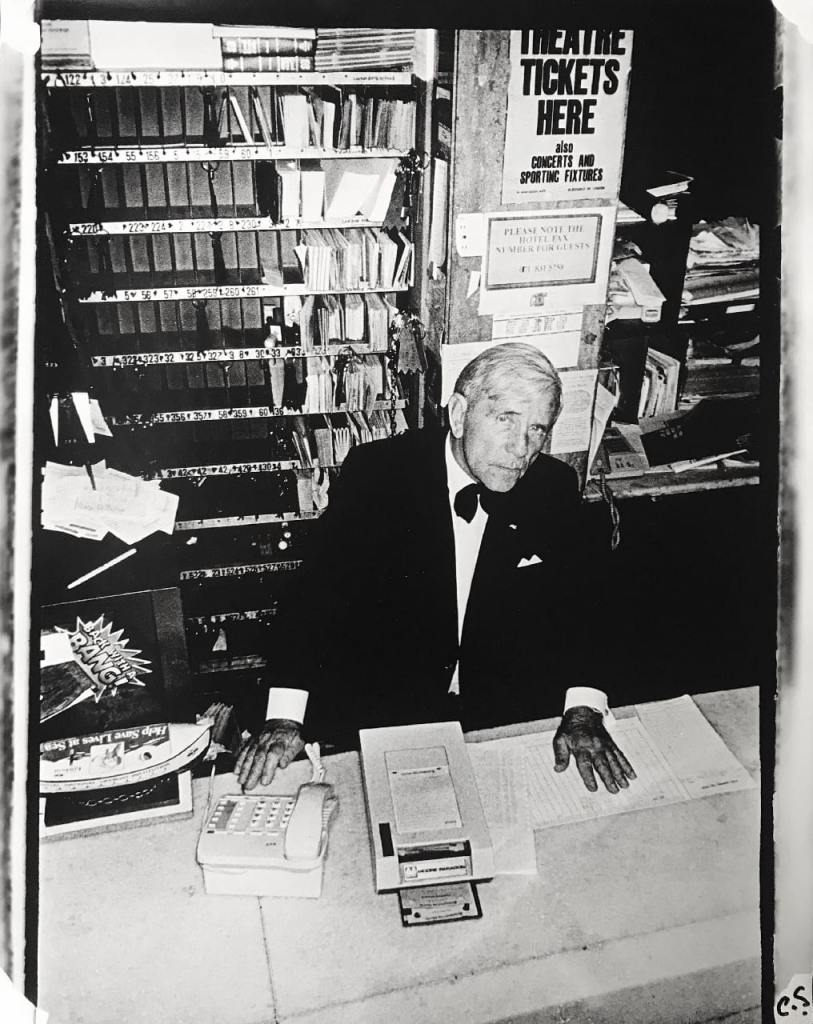
But two minutes after that, Norman came. He came in a black cab, saw me looking and did that thing where you pretend to trip and fall over. It was like magic. And then when he came in I said, “How are you Norman?” And he said, “No, how are you?” I told him what I did, and then asked him if I could get a photograph of him. I said I wanted to get a step ladder so I could get above him, so asked him to mind the desk while I went to get the ladder. Five minutes later I came back and he was giving the guests these keys. I heard them saying, “That guy looks like Norman Wisdom!”
He wanted to go up in the service lift because he used to be a page boy in a hotel and had fallen down a lift. He said that the service lift was safer. So I let him go up there, and then took him to his room, and he just lit up my night. It was just that contrast between him and this Melvyn Hayes guy.
They love him in Albania don’t they? He’s the underdog.
Yeah. He cared. His success was being the everyman and being interested in people.
Were these magic moments quite regular? Sometimes I think some people miss these things happening right in front of them.
A lot of it came from me deliberately trying to cheer people up. A lot of prostitutes would stay in the hotels, and they’d come down and ask for a taxi. I remember one came down one night and asked for a taxi. I told them we couldn’t get them one, but I said, “I’ll tell you what, I’ll get you a taxi if you jump in the air and shout ‘Outstanding’.” I did it first, then they did, and then after that, we were laughing. You just need to change the mood.
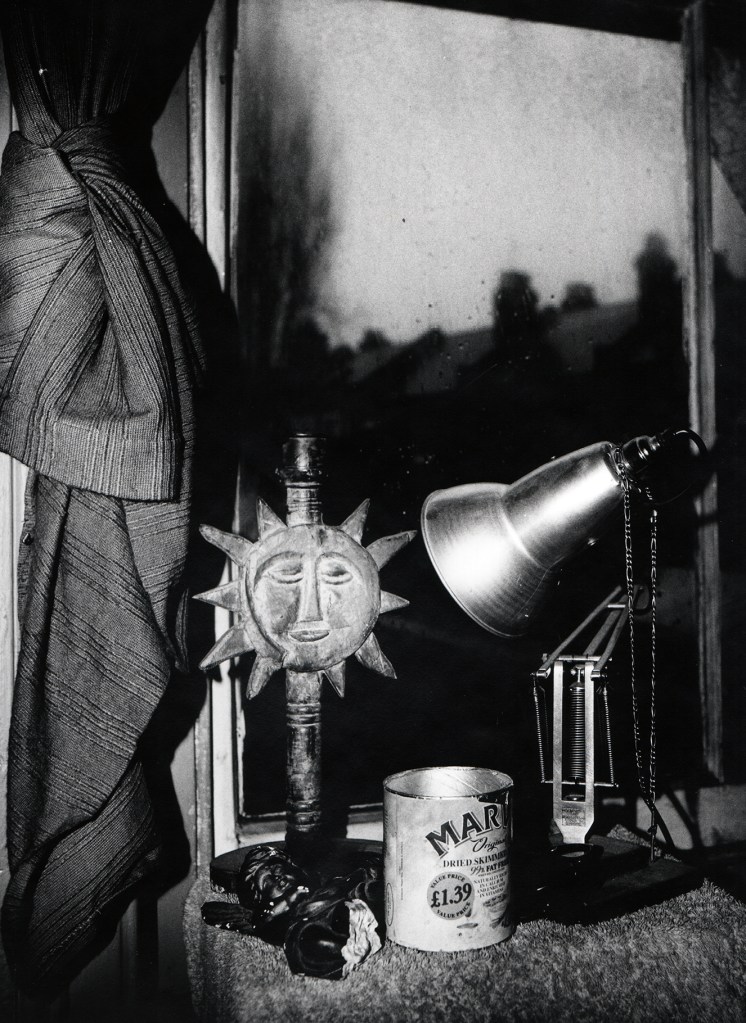
And all the while you were documenting life in Soho too?
Yeah, the Soho pictures were taken at the same time. Even at that time, London was a very difficult place to live unless you were a professional, but there was still a squatting scene and the housing association. It was never cheap… but there were alternative living opportunities—squats, or ex-squats that got turned into housing association houses. For example there was a whole bunch of people from Wallasey living in a squat in Elephant and Castle in the late 80s.
Then they changed the housing laws to make that illegal—in the historical perspective a lot of the laws being brought in in the early 90s were to stop raves too. People could move into a house to have raves, so a lot of the laws in terms of property rights were to stop that.
So when was it that this all became a ‘body of work’? When did you start to make the book?
As well as working nights, I was drinking everyday, so I was coming to a crash. It was difficult working nights anyway, but with the alcohol it was difficult to keep things together. So I stopped drinking and little by little I managed to get a portfolio together. I’d go to a darkroom to make prints, and by not drinking I could plan things. I was living very hand to mouth—I’d get money and then I’d spend it all—like a drunken sailor. So when I stopped drinking I could plan—the first thing I did was go to Arles in the South of France, which is a big photo festival. They had portfolio reviews there, so I showed the Night Porter work and managed to get half a grant. It was about 1500 euros, and that felt really good. It encouraged me.
And then in 2003 I decided to leave the hotels and try and make a go of it with photography, and almost immediately I won a prize. I’d entered these photographs in The Independent on Sunday’s fashion photography competition as a bit of a joke, and they won first prize. The judge was Alexander McQueen. And that was worth £10,000—which at that time of my life was really substantial. Suddenly I had time. I went to Houston Photo Festival, which was another portfolio review—and there were publishers there and magazines.
Almost like talent scouts?
Yeah. It was kind of weird, because there was a lot of money there—but compared to Europe there wasn’t much competition. Through that Aperture said they were interested in publishing a book, so I went to New York to see them. And then whilst I was there I saw another publisher who offered me more money. And they published the Night Porter book.
I imagine it was nice to get the recognition as a photographer after all those years.
Yeah—but it was very scary. I was used to getting paid every month, so I didn’t realise how difficult it was to make that step from getting a wage to working for yourself—mentally and physically. With the freelance thing you feel incredibly rich at some points, but you’re not getting as much money as if you were getting paid monthly. It seems like it’s all coming in at once and you’re rich, but then there’s nothing for months.
The money I got from the fashion photographer competition meant I had the time to do all this. There’s no way I could have been making prints and going to portfolio reviews if I was working 60 or 70 hours a week in a hotel.
The book was published in the United States, and it’s been exhibited in Australia and Russia and Hong Kong. And because of that success people wanted to see what I did before, or after. So that’s when the Sandy Hill Estate photographs became a book, and then some new work I took in my hometown of Wallasey became a book. All of it came from the recognition I got from making Night Porter.
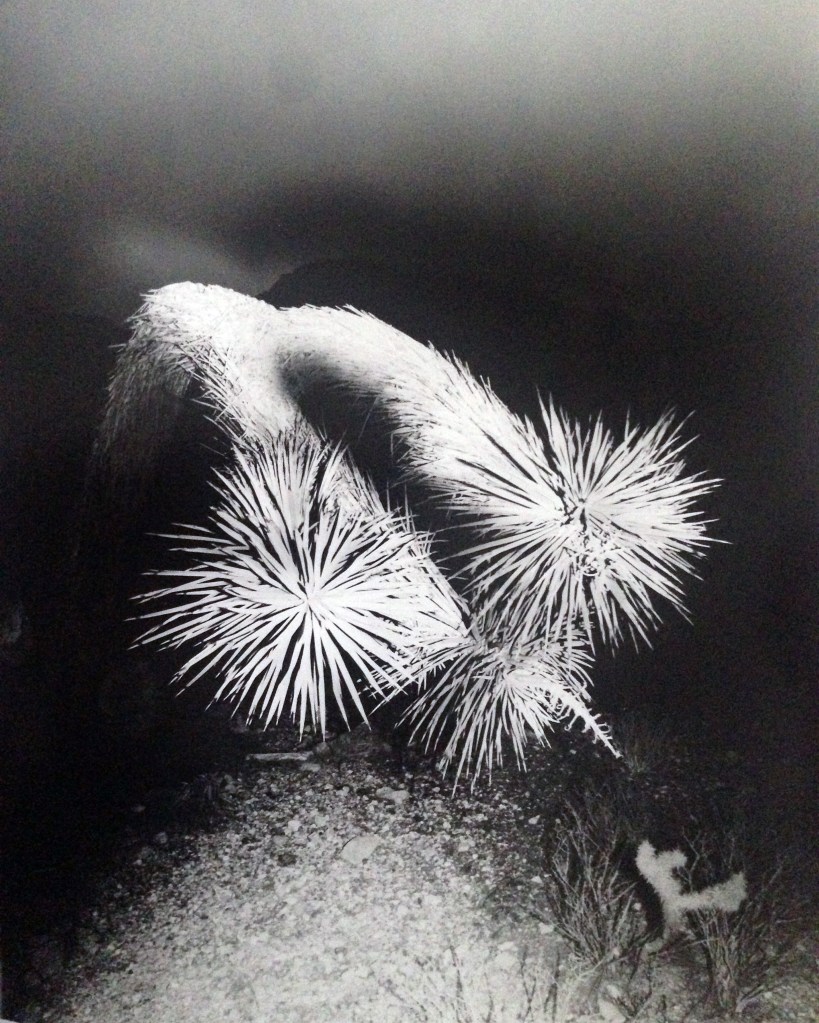
And there was the Joshua Tree book too, Horizon Icons.
There’s a really great story with that one. Basically I had an exhibition in Paris, but I was living in this housing association squat that I used to call the Tufnell Park Hilton. I’d been living there on my own under eviction notice, but I managed to fight them off in the courts and we kept getting it delayed. The council wanted to take back this property so they could sell it—nobody owned it but it was in a ‘des-res’ area. Eventually they changed tack and decided to move someone in with me—this real nutter.
So the night before I was about to go to Paris for the exhibition there was a knock on the door from a policeman. He said, “Does Leeroy live here? We’ve just arrested him down the road. He was shouting and screaming at the moon and he’s covered in blood, but we’re not sure if it’s his blood or somebody else’s.”
So I go to Paris and meet this French woman, and one thing led to another and I fall in love with her. So I moved in with her and married her three months later and came to Paris. If you asked me at the time why I came to Paris I’d say that it was because I was so in love with the French woman, but maybe it was because I was scared of the man I was living with? I wanted to get out of there, so I married this crazy French woman. It didn’t work out and a year later I went back to England. Then a few years later I came back to Paris—most of my success has come from living in Paris—fine art photography is much more of a business here. There are galleries where independent artists can exhibit, and everybody comes here for Paris Photo.
How does this link to that book then?
Anyway, during one of these Paris Photo things I got introduced to a collector who really liked my work—a Hollywood film producer [Willard Huyck, the director of Howard the Duck, no less] who produced American Graffiti. In the end he came to my flat and bought ten prints. I had some prints from a Japanese photographer we both liked, and he said, “I’ve got a collection of his work in Los Angeles, anytime you’d like you can come over and stay with us.”
Two weeks later I went to Los Angeles and stayed with Willard and his wife Gloria. While I was there he said, “Let me make some calls for you,” so these people would come over and have brunch and buy prints from me. And then he phoned this curator in Palm Springs and made an appointment for me to see him. I drove there and showed him the Night Porter photos, and he said “I love these photos, but it’d be great if you had some photographs from around here in Joshua Tree.”
When I came back to Paris I Googled Joshua Tree artists and this residency program came up where they’d give an artist a house for six weeks. Three months later I was there.

Just one thing after another.
I couldn’t invent something like that.
And the photographs you took there, even though they’re photos of trees, they’ve still got a lot of energy to ‘em. They’re not boring or static.
It’s the same photographer who took the Night Porter photos, but it’s just a different subject. I shipped an enlarger to the house and made a darkroom in the bathroom. I was there in July and August, which was the height of the summer and it was incredibly hot. The house belonged to a realtor who couldn’t let it out as it was so hot and nobody would go there, so that’s why he invented this art residency program. But anyway, it was so hot I could only take photographs for an hour as the sun came up. After that you were looking around for your water bottle—it was unbearable. So I’d then develop the film through the day and then print in this washroom. It was all something that I made there. A real creative moment.
That brings me to something I was going to ask about. How important is the darkroom to your photography? Some people are really clinical with printing—but your photos embrace all the accidents that can happen in a darkroom.
I don’t know whether it’s alchemy or magic that happens in a darkroom—that’s how it feels to me. A lot of the magic is getting something unexpected—the accidents are better than anything you can plan. It’s like, “Wow! How did I do that?” There’s one in the Night Porter book of a woman’s boots—and basically I’d forgotten that print was still in the developer, but as I was putting another negative in the enlarger I remembered it was there—so I rushed back to the tray and everything had developed except these little dots on her boots. I whipped it out and it looked like cocaine on the boots—and that was just a one-off print made in the darkroom that I could never ever repeat.

Was that from the Japanese photography influence?
I think it was a money thing. I wanted to make my own prints—and that was cheaper than paying somebody. But then it’s interesting when those prints that are made in a bathroom end up in a museum or in the Tate collection. Some of those prints were made in very dubious places.
It’s like you’ve entered a different world.
In a way it’s a good thing to be able to sell these things—and that’s now something I take for granted—but it’s a very difficult thing to do. I was making prints for years before I actually sold one. I started making my first prints in the 80s, and I didn’t sell one until 2001.
Do you think modern digital photography loses that mystery or magic?
People thought there was going to be this digital revolution, and we were going to get away from the senses of touch and feel—but the reverse has happened in a way. So many young people have gotten into making prints and photobooks. It’s like physical photography, the thing people thought was going to go out of fashion, has become even more fashionable.
It seems like now it’s not just photographers who’ll have photobooks on their shelves.
When I came into photography and started to go to exhibitions, there was no money in it. It was kind of like trainspotting in a way. It was like a secret club. You might get a couple of pictures in Creative Camera if you were lucky, but that whole thing changed when editorial photography disappeared. That’s when fine art photography became a lot bigger, and a lot of the photographers who were looking down on art photography came into it—the commercial photographers suddenly wanted to have exhibitions and sell prints.
That sort of brings me to my next question. How do you define your photos? I suppose they could be documentary photos, but they’re nowhere near as stiff and patronising as most documentary stuff. Was that a conscious decision?
I came out of that whole documentary thing—and the main thing about documentary photography is that the subject is important. Even the Joshua Tree photos are documentary photography in a way—they’re just documenting trees.
But then there is that whole thing with documentary photography—that classist thing. A Southern photographer coming to the North and discovering poverty. But as we know, the poorest place in England is actually London, but when it comes to photography, poverty only exists in the North.
Yeah, that ‘let’s go and find a little town in the North and make it look miserable’ thing.
Put some clogs on them! I remember speaking to people in London about Liverpool—saying, “You do know there’s mews housing in Liverpool.” And they’d be like, “What?” I think there’s actually more Georgian houses in Liverpool than in Bath, but to them the North is poor and the South is rich—and that comes from the history of documentary photography, with people like Bill Brandt.
There’s certainly a long history of patronising images. Moving back to your stuff, it seems like you take a lot of photos of different things. Do you have that thing where you just need to document what’s going on?
Yeah—my French isn’t very good, so quite often I’ll just go somewhere and start filming instead. Quite often I feel socially ill at ease, so if I’ve got a camera it’s like I’ve got something in front of me and I’ll feel more comfortable. It makes you feel like you’ve got a bulletproof jacket on or something. You’re not just there to get drunk, you’ve got a reason to be there. It’s a language as well.
I get that. What was going on in Pataya? You took some amazing photos there.
I was going to Hong Kong every year to do this photobook festival, and then I’d go to Pataya and take photos there for a week. And what I loved about Pataya was the amazing street life. There’s this street called Walken Street with six or seven music venues on it, maybe 25 go-go dancing places, and a massive crowd—kind of like Blackpool on steroids. I just wanted to photograph that—and because I had a bit of money and could buy film, I could do it properly and shoot 20 rolls of film a day, rather than what I used to do and shoot two films a month.
And it kind of captured a time of place, because after the pandemic and the advent of Chinese tourism, I think places like that have been cleaned up. I think that’s something that’s in a lot of my photos—the epoch is ending and you’ve got to grab it before it disappears. You might come back and it’ll be a shopping mall.

Is there a theme that runs through all this? Is it people? Or community?
It’s definitely about community—even if it’s a community of trees. Community is definitely the word that links all the projects together. It’s about being attracted to a community and what it looks like, being a part of a community, or not being a part of a community. It’s about all that stuff.
See more of Chris’s photos here.
Interview originally published in Roman Candle issue 2. Last few copies available here.
-
Manchester Half-Life

New zine. 88 pages of photos taken on a half-frame camera while lurking around the streets of Manchester back in the winter of 2012/2013. This camera was great—Not only was it small and silent, but because it took 72 snaps per roll it meant I could just fire off shot after shot without caring too much about the cost. This was back when I worked in town so every lunch I’d stroll around Oldham Road snooping around the back-streets and seeing what I could find.
Not sure why it’s taken me so long to do anything with these photos, but they’re here now.
Also available via Central Library, Village Books, Good Press and BOOKS.


-
Nourished by Time – ‘Hell of a time’
Late to the party with this guy but this song is great. Cool video too.
-
An Interview with Arlene Blum




 Roman Candle Magazine