From staircases that lead to nowhere, to doors that open out to fatal drops, ‘Thomassons’ are architectural oddities generally described as ‘useless, but still maintained’. I wrote a bit about them for the Sabukaru site. Read the full thing here…
Finally got round to offloading some photos from a trip to Tokyo in 2018 off the computer and into the real world. Auto Focus 8 is 124 pages of cats, dogs, owls, humans, taxis, trains and pretty much everything else. Available via Central Library worldwide, Rare Mags in Stockport, Good Press in Glasgow and Unitom in Manchester. Also down for trades if anyone’s got photo zines (or CDs for my car stereo) lying around…
It probably goes without saying that bike riding relies pretty heavily on ‘spots’. Whilst some strange folks are content with the reliable, safe-play environment of the local pre-fabricated skatepark, anyone with anything about them will soon hanker for new surfaces to touch tyres (and occasionally pegs) on.
But unlike more accepted (and slightly mumsier) pursuits such as hiking or whale-watching which are aided by exhaustive guide-books and extortionately-priced package tours, there’s little information out there to help you in your quest for banks, benches, banisters, hubbas and hitching posts.
Magazine captions give away slight clues, as do landmarks and road signs lurking helpfully in the corners of fisheye footage – but outside of that, you’re mostly just left to pedal aimlessly and hope for the best.
Having said that, there is one seldom-talked-about tool out there that’s helped countless riders, skaters and moody teenagers in the United Kingdom find somewhere to while away their time – the Knowhere Guide.
Launched back in the early, frontier days of the World Wide Web, this simple, text-based website allowed the general public to recommend (or slate) the spots in their local town. And beyond just telling riders and skaters where to find stair-sets and smooth floors, it extended into a guide for everything that’s often overlooked, from the best chip shops in town to the finest bus stops to sit and drink a bottle of White Lightning in.
The site still exists today, and whilst it’s maybe a bit dated in the current age of high-speed virtual reality streaming, it remains a pretty fascinating time capsule of the late 90s in Great Britain and a glimpse at the early promise of the internet.
Tim Leighton-Boyce and Paul Sanders were the masterminds behind the guide. Here’s what they had to say on the matter…
How did the Knowhere Guide start? Am I right in thinking it was originally just for skate spots?
Tim: Yes and no. Knowhere itself was never just about skate spots. But its origins date back to a paper-based directory of UK skate spots which first appeared in a newsletter published by a skateboard retailer, Alpine Sports at the start of the 80s. That listing was created at a time when all the skateboard magazines had collapsed. I ran the skate mail order department of Alpine Sports and was aware, from letters mostly, of all these skaters who had been cut off from any form of mass communication but wanted to know what was going on. And where to skate. So I started to expand the mail order price list into something a lot more.
The printed version of the listing had many different names. But the original data was carried forward and expanded as a continuous process. The Alpine newsletter evolved and expanded. It changed its name to Alpine Action. The company folded but before it collapsed they sold off the skate (and by now BMX side) to some of the people who ran it and the new shop adopted Alpine Action as a name. I did not join them. One of my great mistakes. But they were all friends and I was very close to them.
I ended up concentrating on photography with a side-line in digital stuff. I gradually got more involved in BMX Action Bike magazine. I think we may have started publishing a version of the guide in BMX Action Bike and then R.a.D. It may sound odd that I can’t remember clearly, but it was a long time ago. I would need to check the magazines for dates and for what it was called at that point. It’s had some very cheesy names in its time ‘Concrete Corner’ was one of them, I think. Or is that just a bad dream?
A critical point in the evolution of Knowhere was the brief flash and burn which was Phat magazine. R.a.D magazine was sold out from under the editorial team yet again, so we tried to launch our own magazine called Phat. The distributors were insistent that it must not be ‘just’ a skateboard magazine. We had to be very careful to avoid the skate content dominating, even though our motive was to produce a skate magazine. So as part of that, the ‘where to skate’ guide dutifully started to include other types of listing. If I remember correctly the name also changed in a relevant direction and it was now called “Where?”
Phat exploded after three issues in 1993 and I had nothing to do. Gavin Hills said he knew some people I would find very interesting. He took me along to Brick Lane where there was an empty old brewery. There were three businesses in it at the time, if I recall correctly. A car park, a music hall and, in one big office with big windows and a very big table, Oscar Music. The interesting people were Paul and Phillip who ran Oscar Music and certainly did interesting things. The interesting things were to do with music. And they were exploring digital things such as broadcasting MIDI files via TV on Tomorrow’s World (or something like that) and interactive disc-based media like CDi.
The timing of that meeting was perfect. The web had just been invented and the earliest graphical browsers such as Mosaic and Netscape were about to appear. The great thing people said about the web then was that suddenly “everyone had a printing press” – the distinction between publisher and consumer had been removed. And it was true.
Paul: I was doing some music projects at the time, but thinking that online technology would have a big impact on lots of things. When it became possible to make a website, we decided to try and were having ideas about who we wanted to be looking at it. The descriptions of the places in the guide had all been sent in by readers of the magazines, and Tim organised them into a database and edited them so they read well. We started off by doing an output of the database and using some code to chop it up into web pages. Then I thought we should let people contribute directly.
There were a few categories other than skate spots – newsagents where you could buy skate mags, cheap food, hook up spots (meeting your friends rather than dogging – that came later…), and I think the notorious best and worst were already there.
So the main influence was what Tim was already doing, but with some changes for the Internet age. We were looking at some online bulletin boards too, and the alt.* internet newsgroups which were pretty wild. And communities like the Well in California.
When did it first go online? What was the internet like back then?
Tim: I think it probably went on line in 1994, not 1993. The internet had been around before then, but this was the point when general use started to take off. The invention of the web and browsers with graphics and sound, combined with commercial organisations like AOL making access relatively open, triggered an explosion. It was very exciting. Very new. It felt like a whole world was opening up. Which it was. I’m so glad I got a chance to experience that.
Outside of the guides you’d already done in R.a.D and the like, was it influenced by anything else?
Tim: It seemed like a natural progression from those guides. In my case it was also an extension of the free classified adverts which we used to publish in R.a.D. I was very keen on those. They were like a public bulletin board for readers. Those messages were also a precursor of what was about to happen. I wanted to level the playing field so everyone could have their voice heard.
The guide didn’t just focus on big cities, and there’s pages on pretty much every town in the country. Was it important for these places that are often ignored to have a presence?
Tim: It was extremely important. That was more important to me than the big towns and cities because the big places are always well-served. R.a.D had always been about covering what was happening in as many places as possible. Everywhere was just as important.
Paul: When it started to take off it got us thinking about a whole lot of things. One of them was how sometimes a place might be called all sorts of things by local people, and might even be considered to be in a different place. My view was that people’s opinions were more true than the official data – which you couldn’t get anyway because the government controlled it and wouldn’t let us use it.
We let people suggest new places to add, and took the names and locations they gave us rather than checking on a map. So even the geography itself was user generated.
I also thought it was very important to be vague rather than trying to give every curb or wall a latitude and longitude. Local people knew where things were without looking at the OS map, and we didn’t want to make it too easy for the authorities to use Knowhere to organise patrols or for dodgy people to target young people.
There’s some pretty wild stuff on there, with a few people getting named and shamed. Did anyone ever have to step in and delete anything?
Paul: Yes. We’ve had big and small vendettas, and a few times the police have been involved either to keep the peace or because someone posted information about crimes. It’s very hard to get the balance right and we try very hard to go for free speech, so we’ve had a few moments. When we added message boards it got wild. But it also got really creative and we had some strong communities inhabit Knowhere for a while. There’s no need for that now with Facebook and Twitter.
Was it annoying that something that was set up as something helpful eventually become a forum for small-town beef… or did you anticipate that all along?
Tim: This is something that mostly happened after I was involved. I did not anticipate it because I had not really experienced it before. In retrospect my life during R.a.D magazine was like being in an echo chamber. The people working on the magazine and the people reading it shared a common interest and that was the focus of our dialogue. For example the free classified messages sometimes contained a slight element of local rivalry, but not much more.
Once the listing went on line and started opening up for other content things started to change. The thing which also started to happen when I was around was people trying to get in touch with old school friends. In retrospect we might have spotted the user need for something like Friends Reunited and then Facebook. But at the time I certainly didn’t.
Paul: It’s still much, much more than a forum for small town beef, but I didn’t find it annoying – and I still don’t. The language people use is amazing, so they are obviously putting some thought and effort into the helpful and informative stuff as well as the complaints and insults.
What happened as well is that the users got much more diverse, and we encouraged that by adding many more categories of information. When small towns still had record shops and music venues we had quite a big community of musicians and gig-goers.
Adding pubs also took the average age up a bit, and adding clubs brought in another group – the Saturday night lads and lasses, and some boy racers. We knew these moves would have their downsides but they also added a lot of depth that keeping it pure would have missed out on.
What’s the Knowhere Guide’s current status?
Paul: It’s still up – you can still add stuff, and people do every day. We’ve had a few ideas over the years for ways to change it, and we have something in the works now. There’s no way that Knowhere can compete with the combination of Facebook and Wikipedia though.
I think there is something relevant Knowhere can do today, especially as we can see the downside of social media.
The guide was based around sharing information – what are your thoughts on people keeping their cards close to their chest and being secretive about spots?
Tim: I accepted that as a reality of life. There were places which we never listed or kept the details very vague. I think Droitwich banks were an example. We didn’t want to be the instrument which wrecked a place.
I’m not really sure if there’s a question here, but the guide really captures a certain time in England – there’s a lot of flat-rails behind supermarkets, damp bus shelters and kebab shops.
Tim: I really liked that aspect of it. I wince that you use the word ‘England’ because R.a.D was very keen to cover more of the UK. One of my favourite entries was for Tayvallich and there was someone who used to get in touch from Stornonway. I liked hearing about the scenes in places like that, where the fewer people and less choice of where to skate. I also liked the edgelands of the cities, like you say they would be round the back of somewhere – places other people ignored.
Do you think the entries would be much different today?
Paul: Yes – very different. For a start when we put Knowhere online nobody could just post stuff on the internet – we were one of the first wave. So the language people used was very different. Plus there was a general lack of information available about the sorts of places we had – a massive gap between the tourist guides and the Yellow Pages basically.
The local papers also felt they had the monopoly on local opinions and were often outraged by the fact that their own readers could express themselves on the Knowhere Guide. I think the views and the way they are expressed were more direct and less self-regarding too, but that might be me over-interpreting. It was really obvious however when we got a contribution where the writer was trying to write a proper review, and those were quite rare.
I think we captured in public some of the stuff that now goes on privately through phones, private groups, and social media. But the strong instinct to share is still very much there. I suppose it was a precursor to social media and the current age of everyone airing their opinions.
What are your thoughts on the internet today? Has it lived up to the expectations you had back in the early 90s?
Tim: Yes. And the most important aspect of that is outside the big ‘western’ countries. Phones have changed everything. The real liberation is what’s happened to people in very different worlds from mine. But you mention ‘social media’ and when I think back to the early days of that, when they called it ‘Web 2.0’, I remember thinking at the time that this was not new. It was just like the early days of the web when everyone tended to assume that they could put content out there and that they could email companies and bands (we were working for record labels) and get a reply.
That was suppressed for a bit when commercial organisations upped their game and produced slicker content and tried to restore the ‘few to many’ publishing model.
Social media was the same user need (I want to say something and I will) bubbling back up again. It turns out that things were not quite that simple. Big business pushes back. The big platforms are now being viewed with suspicion and hostility. It’s like the tide flowing in and out. The tide is immensely powerful and the shape of the coast changes.
Paul: I knew in 1992 that the internet was a revolution, and that’s what drove me to develop my business (mostly music now, but broader back then) at a time when there was not much money in digital media.
It’s interesting that the fundamental technology is still very similar to what it was in say 1996 – it’s just faster and more ubiquitous. Maybe we’re due another revolution. I don’t know what my expectations were other than that we would be connecting one to one and many to many around our shared interests, and that seemed to me a creative opportunity as much as anything.
I did expect that the trivial would be right there alongside the bigger and more important stuff, and that was one of the things I really still love about Knowhere.
Definitely. There’s a lot of ‘everyday’ things on there that most people overlook. As someone involved with the internet fairly early, how do you see the web going in the next few years? Should people be worried?
Tim: I think the thing called the ‘web’ and concepts like ‘web sites’ have become less and less important. I spent the first years of my digital work trying to explain to people what web sites were, and for the last few years I’ve been trying to explain that they’re not a useful concept any more. The internet is being used to communicate and share knowledge in so many different ways, and I believe that expansion will continue. As with medicine and electricity, I think the ever-wider use of the internet is transformative and mostly in an extremely positive way.
There have been several different waves of attempts to make use of the internet conform to earlier non-digital models and then to earlier versions of itself (assuming an ‘it’ as viewed from various perspectives). What actually happens is always slightly new and different. People want to communicate. Some of what they want to communicate has always been very divisive and repugnant to different people, but broadly speaking I think that will sort itself out over the generations as it always has.
Paul: I’ve got a deep optimism that, given the right information and the ability to choose, people will generally do enough of the right thing. What is hurting now is that the owners of the platforms are hiding so much, and controlling the choices we have so that our friendships and family connections are hostage to their greed and irresponsible spying on us.
You could look at the last ten years as one huge experiment on humanity, and what’s good is that the subjects of the experiment are learning from the results. I’ve written about this in the context of music and I think the same forces and principles apply everywhere.
So yes, we should be worried enough to look for the right thing and do it when we can, but I’m not predicting dystopia or internet-induced fascism. We need to find a better way to contextualise what we see and experience online, so we don’t give the harmful things the momentum they’d otherwise lack.
But the original skaters who were part of Knowhere in the early 90s, and I’m sure your readers now, don’t think of themselves as helpless victims of online sociopaths, and will call out bad behaviour when they see it, and that is all that it takes to get us through this phase. One thing I am very sure about is that we’re not going to deal with our problems by becoming less connected to each other.
INTERVIEW ORIGINALLY PUBLISHED IN RED STEPS ISSUE 4
Peter Bergman is an artist from America. Throughout the 90s he did all manner of boundary-pushing performance pieces—like sending postcards to random people for a year before turning up at their doors, just to see what happened… or posting notes in the windscreens of white convertible VW Golfs offering to take the owners out for dinner.
Probably the most strenuous of all these pieces was his attempt to walk the 2,653 mile Pacific Crest Trail in his graduation suit. Things didn’t exactly go to plan, and after having to call it quits 900 miles short, he made a pact with his hiking partner to finish the trail when they were twice as old… 23 years later, in 2019, they managed it.
I recently talked with Peter about the trek—along with such other important subjects as failure, ageing, rites-of-passage, the random nature of life and cheap suits—over on the Outsiders website. You can read the full conversation here.
When most people get misty eyed and nostalgic about old cars, they usually end up rattling on about old Volvo estates and maroon Saab 900s. Smug car dweebs might regard these as ‘design classics’ (and they probably are), but surely it’s a bit of a cop-out to buzz off such obvious stuff?
Meanwhile, a completely overlooked box-shaped wonder with a strange badge that hardly anyone recognises can still be spotted in damp towns around the north of England—the Proton Saga.
I’ve got no knowledge of whether these things are actually good or not—but I’ve always been into these mysterious Malaysian oddities—mainly because they always remind me of a great afternoon back in the late ‘90s…
Due to the fact that my primary school was dead small (there were only 16 pupils by the time I left), hiring a coach for a school trip would have been overkill, so every time we went out somewhere we’d just be driven around by whichever parents happened to around that day. This led to loads of slightly sketchy stuff going on, like my mate’s drongo dad treating us to handbrake turns in the school car-park (in a Lada estate if I remember rightly), and ten of us being bundled into space in the back of a Land Rover usually reserved for barking sheepdogs.
Back to the original point, the chunky-necked grandad of two sisters who lived on a farm drove a Proton. This was the vehicle that was to take us to a dull college building in Kendal for an afternoon of what might be known as ‘hazard awareness’.
This basically consisted of us lot being shuttled from room to room to be told various potentially-lifesaving-yet-very-boring tips such as ‘don’t swim in reservoirs’ and ‘be sure not to overload plug sockets’. For the grand finale, they wheeled out a massive TV which was deeper than it was wide, and our attention was instantly grabbed—television reigns supreme over laminated fact-sheets and overhead projections onto walls covered in Blu-tac marks, so we knew we were in for a treat.
The treat in question was a particularly high-concept public information film themed around farm safety. Whereas most of these films follow a pretty basic plot usually involving grubby 1970s kids with flares getting their kites stuck in power lines, this one was a 20 minute opus telling the tale of a group of kids who’d recently relocated to a farm. After vandalising a gravestone they found in a bit of wasteland, a curse was placed on them and they each fell-foul of farm-based hazards.
Suffice to on the way back to school the sisters I was sharing a lift were too traumatised to talk, and in the months that followed the younger one repeatedly had nightmares relating to the harrowing public safety vid. Not ideal, but as far as I know she is still alive, and wasn’t involved in any farm-machinery-based disaster, so at least the film did its job.
I think I first Manchester mosaic master Mark Kennedy in 2014. He was working with adidas on some project which involved making large-scale tiled depictions of Stan Smith’s moustachioed mug, and the shop I worked at back then was somehow involved the project. For a good few weeks Mark was a regular face in the office—a definite breath of fresh normal air when compared with the shameless ‘brand managers’ who used to wander in trying to peddle their wares. From what I remembered Mark even went to the effort of making a particularly catchy song, complete with music video, about Stan Smith, to go with the mosaics—but for some reason adidas didn’t use it.
Eight years later, I interviewed him and snapped a few photos for an opticians. Mark wears some pretty swanky glasses. Read it here…
Finally got around to printing a zine of photos from two trips to France a few years back. I constantly have about five InDesign files of fully laid-out zines 98% finished, but actually exporting them and doing something with them seems to take years. Anyway, this one finally made it off the hard-drive, and is now available via Central Library worldwide, Unitom in Manchester, Catalog on Oxford Road, Rare Mags in sunny Stocky and Good Press up in Scotland (who now have pretty much the full range of Auto Focus zines).
In the words of one of those promotional videos used to promote 6th form colleges—’MANCHESTER IS CHANGING’. Nowhere is this more evident than in the harsh molten core of the city centre.
Shops peddlin’ pet food and porn have been phased out in favour of chain bars cunningly disguised as independent establishments—whilst the humble phone-box, a proven shelter for the vagabond, is being eradicated in favour of open-air digital nodes.
Amidst all this, Empire Exchange remains—its outdoor speakers still blaring out forgotten classics of the hit parade straight into the ears of passing shoppers.
Reportedly opened in the Corn Exchange back in 1988 (and now located within acrid spitting distance from Piccadilly Gardens), this majestic cesspit of ephemera is a compacted car-boot sale of wondrous detritus—one last stronghold for damp books, broken cameras and chipped commemorative plates before they’re lugged to the landfill.
This place sometimes gets attention due to its old time charm, but it’s important to state that Empire Exchange isn’t just some tourist attraction window into ‘historic Manchester’—and it actually sells decent, interesting stuff that can’t be bought anywhere else. I can’t vouch for the quality of the aged smut it stocks in the shady hidden aisle beyond the far wall, but I’ve uncovered countless gems whilst poring through the plastic tubs of old music magazines in the shop’s main room—from xeroxed horror fanzines to plastic bags full of family photos.
It might be said that 99% of the stuff sold here is pretty useless (unless you enjoy reading mould-ridden copies of Q Magazine from the mid-2000s), but if you can be bothered to put the time into scouring through the rubbish, ye shall be rewarded (providing you enjoy reading mould-ridden copies of Speedway Star from the mid-70s).
I think some of the appeal of this place lies in the fact you’re never sure what you’ll find once you stroll down those stairs. I read somewhere that gambling is so addictive due to its random nature—and maybe searching through crates of old tat offers a similar bizarre buzz? Is the brain flooded with dopamine when you manage to score a copy of The Face in a box full of Dr Who mags? Quite possibly.
In the wide spectrum of possible addictions, hoarding old magazines doesn’t seem too bad.
On the subject of Manchester second-hand emporiums, respect must also be given to Paramount Books on the other side of town—a second-hand bookshop ironically owned by a man with two plastic hands. Long may these fine establishments remain and long may they reign.
Whilst coming up with a list of people who would be interesting to interview for issue 1 of Roman Candle, Bill Daniel was one of the first names that came to mind.
For starters, he’s the man behind the highly enjoyable documentary, Who is Bozo Texino? Pieced together over 16 years of serious trans-Am rail-riding, this loose masterpiece is a 16mm window into the relatively undocumented world of railroad monikers—proto-graffiti tags drawn on the side of freight-trains across America by bored rail-workers and the occasional hobo.
There’s no stiff intellectual talking heads sat in front of a book-shelf here… and instead you’re treated to a fast-moving view from the box-car door, as Bill traces the origins of one of the most frequent tags—a cig’ smokin’ chap with a figure-eight cowboy hat by the name of Bozo Texino.
And that’s just the tip of the high-contrast black-and-white iceberg. From his photos of the early 80s Texas punk scene to his images of San Francisco bike messengers, Bill had the foresight to point his Nikon at countless subterranean subjects, when they were still very much fringe subcultures. For some reason, he agreed to this fairly long-winded interrogation…
PART ONE: JUNE 2020
Where are you at now Bill?
I’m in the middle of a big life change. I’m moving out of my studio of seven years down here on the Gulf Coast of Texas. I tend to bounce back and forth between Texas, San Francisco and Portland, and I was recently thinking I was going to move to Upstate New York. I’ve got some rad friends up there doing all kind of cool projects and was planning on moving up there. But then Corona virus hit, and I was like, “I’m not going to be moving up there for a bunch of reasons.”
But I still had this plan to move out of my studio, so now it looks like I’m moving to this small town in rural Texas and getting involved in some projects there.
Has this big move put a point on your work as well to an extent? From what I’ve seen on the internet it looks like you’ve been whittling off a lot of darkroom prints lately.
Yeah definitely. The clock has been ticking for at least the last year or two so I’ve been sprinting to use the studio before it shuts down. It’s 1,500 square feet, and the whole place can be made light-tight so I print murals in this space… and it’s cheap, because I’m very far from Brooklyn and Los Angeles. It’s been great—being here has been like a production retreat—a sabbatical to just work.
But it’s also geographically a cool place because I’m close to the Gulf of Mexico—I’m 50 minutes from Galveston, and then 20 minutes from some beaches right on the bay, so everyday I sneak out after my post office run, and if it’s windy I’ll do a windsurfing session, and if not, I’ll go out on the paddle-board.
That sounds alright.
It’s cool. It’s near the ship channel, where ocean-going ships come across the bay, and then there’s fifteen miles of oil refineries in a row, and that’s basically my neighbourhood, so when I head out in the water, there’s also these ocean-going tankers, container ships and fuel barges chugging along, and one of the funnest things to do is go out in the channel, find a gap between ships you think you can make, and dart across to the other side of the channel—make some ship pilots nervous.
It’s cool just being out in the middle of the day. I’ll get a couple of miles off-shore and it’s this incredible sensation of almost being at sea, just standing on a board.
I suppose there’s not many opportunities for raw experiences like that.
Part of the attraction of moving down here was to be near here all this oil refining infrastructure—it’s a negative fascination. I guess a lot of people have a weird attraction to industrial infrastructure—it’s kind of an end-of-the-world backdrop. There are fires burning and they literally blow up all the time. It’s a weird, stimulating environment to look at, both as a playground and as a subject for my photography, so I moved down here to shoot this landscape close-up.
That’s a fairly strong theme with your photographs isn’t it? I read somewhere you’d been shooting industrial stuff since the 80s.
Yeah, in the early 80s I got totally into industrial music. Things like Hunting Lodge, SPK and Zoviet France. I’d put Zoviet France on the Walkman and then walk around with my Super 8 camera, and allow the song to compose the camera—physically react to the music with the camera on. We’d then gather up in this artist’s warehouse called 500X in downtown Dallas where there was a little core of us shooting Super 8 films and showing them together.
This one guy Roger Justice who had just moved back from New York. He’d lived the total life on the Lower East Side, and he turned us onto a bunch of crazy music and shooting film. He was kind of the Pied Piper of our experimental film club.
And that work led over and inspired my still photography. I started making these film strips—I’d expose the entire roll of film with these overlapping multiple exposures to create patterns, and then print the whole strip—representing a section of a film or a passage of time. Lots of time I thought of them as a score of music. The print would be almost like the aspect ratio of a composition—like experimental music notation.
It’d be sequential, rather than just a still.
Yeah, it had a sense of time to it. But I haven’t done specifically that since then. In a lot of my landscape photography, I’m thinking about using super-imposition and multiple images, maybe breaking the horizon or using multiple horizons to create abstraction. You know when you look at a piece of art, and you make a noise when you look at it? Or maybe bounce or tap your foot? I’m trying to get an image that imparts a physical feel.
Something more than just a straight-up documentary image?
Yeah, I feel that my work is halfway between documentary and experimentation. It’s a weird thing to aim for. The hybridity of experimental work and documentary work was really going on strong in San Francisco. San Francisco always had an experimental film background, coming from the Beats, and Bruce Bailey and Canyon Cinema, and then there was a tradition of great, socially-active documentary work there.
And when I got there in the late 80s and through the 90s, the film scene was just rich with this connectivity and hybridity, an ‘experimental documentary’ basically described what everybody was doing, in one way or another.
I watched that film, Sonic Outlaws, that you made with Craig Baldwin, and I suppose that’s a perfect example of the kind of thing you’re talking about. It’s a document of something, in that case those artists like Negativland, but then it’s got all this found footage in there.
Exactly. Craig Baldwin looms large in my story. He was the first person I met in San Francisco.
Was that ‘cos you were hunting down, or was it just by chance?
No, I didn’t know of him. I knew that Valencia Street was the cool street because I’d toured with The Big Boys in ’82 and we played a show there at Tool & Die between 20th and 21st Street, so the first day I was in San Francisco I borrowed a bike and rode down into the Mission, locked the bike up at Valencia and 16th and started walking up the street, looking at telephone poles.
This was the era of posters on every pole for every imaginable kind of event or cause or thing, and I saw a poster for Eyes of Hell Cinema. It had a schedule for the next couple of weeks, and it was the most incredible line-up of films that I’d seen—such an unlikely mix of experimental and exploitation films and art films. So I pulled the poster off, and marched up to the door, and it opens, and there’s Craig Baldwin with a Jolt Cola in each hand. A week later I was helping him make films.
I was Craig’s cinematographer, his editor, his co-producer. I got involved with his weekly cinema, Other Cinema, which was a Saturday night cinema which has been going for 37 years.
What was San Francisco like back then?
Those were the days of living in a city with cheap rent. So the neighbourhood was lousy with artists, of all kinds. There was so much different work being done… murals, graffiti, performance art, every kind of music, every kind of film—and it still had a bit of a small town feel to it, it wasn’t like New York, it was just this little neighbourhood. The level of stuff that was going on was just incredible.
And all the while you were working there with Craig, were you doing your own stuff too? Was that when you started making Who is Bozo Texino?
Bozo Texino really came out of learning film-making in that environment. I didn’t go to film school, I just learned by hanging out and being in the middle of all that, and I learned a lot about film-making, making art and how to approach making new forms of art, from Craig.
I worked on it for 16 years, and it started out as a little Super 8 film. I was making these little Super 8 documentaries—there was one on bike messengering, or maybe a three-minute portrait of a spare change guy doing a performance on the corner, and Bozo Texino was originally going to be one of these little Super 8 mini documentaries. But then it just grew and grew.
Its gestation was in this ecology of experimental film-making and documentaries—we lived in both worlds at the same time. So the film really was always this thing that didn’t have a specific form in mind.
At one point I was aspiring to be a documentary film-maker—like a real one who had stuff on PBS, so I was applying for humanities grants with visions of having the film going on a more mainstream channel, but the film really follows a path that’s closer to that core that I lived in at Artist’s Television Access. That was the name of the store-front and gallery at 992 Valencia Street.
You said the film took 16 years. Was there any point you thought it wasn’t going to happen?
Yeah, there were definitely periods where I thought it was never going to get finished. My friends were making fun of me, and certain ambitions I had started to fall away. At one point I really thought I’d use a lot of historical footage—working for Craig, he used a lot of found footage, so that was a natural impulse. I was going to have a chapter on the Wobblies, and a chapter on the expansion of the railroad in the West, but at some point all those ideas fell off. I thought, “The film has to be made out of what I gather on my trips.” And that was liberating.
You’d given yourself a limitation.
Just go with the core, drop all of the accessories and trust there’ll be a material integrity. I was in total abject fear for a lot of that time, just thinking there wasn’t enough material to make a film. I’d been shooting for so long, and the case that had all the film in it was huge, but by the time I’d transferred all the footage to digital to edit it, there wasn’t that much material. It was like a jigsaw puzzle where you only have a third of the pieces. And then you find out that you can compose with whatever parts you have.
I suppose it wasn’t like it had to be a certain length to fill a TV slot… or it had to be in colour for a specific channel to use.
Yeah. As I was editing it felt like I was making a found-footage film out of footage that I had shot. There was no shooting script. All the years working from Craig taught me to look at it and think, “Alright, what can you make out of this? What does this pile of stuff want to become?” I was working from the material up. One of Craig’s tenets is ‘available-ism’—here’s what’s available, we can’t go out and buy anything, we’re just going to use what we’ve got here.
Like making a meal out of what’s in your cupboards.
Fully. Completely. We can’t make a proper curry if we don’t have spice! But we’re not making a proper curry.
16 years is a fairly long time. How was it going through that footage to edit? There must have been stuff you’d forgotten you’d filmed.
The fact that it was a life project made it feel a little bit of a scrapbook of my life. With certain shots that were ruined for one way or another it was like, “I know why that shot is sideways, it’s because I dropped the camera and the viewfinder was bent. It’s full of this personal, interior history—all the things that happened in order for it to get made.
And then there was footage that I shot and audio that I recorded that, by the time I sat down to edit, I couldn’t find. I might still have them in the piles of stuff I’m standing around in now, and I sometimes think I might find them sometime and remaster the film.
I have this absurd idea that I want to make a 35mm negative and print of the film, because a core part of my obsession, and my project of being on earth for this period, is to make work in a long timescale. I’m interested in the ability for material to speak across generations. We can time travel—we can communicate with the past, and if we’re lucky, we can communicate with the future. If we make something that’s physically robust and retrievable, and interesting and resonant to the future, we can talk to people in the future, and tell them the stories that we’re telling each other now, because it’s on a DVD, or they can come to a show… but what about 150 years from now?
The way you get to 150 years from now is film… silver emulsion embedded on a base. Besides sculptures and stone tablets, that’s how you get media into the future. So a dream project is at some point to remaster all the material for Bozo Texino, recut it and make a 35mm negative to then make prints.
That sounds like quite a slog.
But here’s the question for you Sam—in doing that, should I reconstruct the film exactly how it is now, with the faults and the missing parts, or should I take the opportunity to put the lost shots in, and maybe fix a couple of things?
I don’t know. I sort of think that the finished article at the time it was released is the ‘finished thing’. It’s tough though—because you’ll always watch it thinking it’s missing things.
There’s a huge danger in killing the magic in something. The things that make something good are often beyond your intent or control. It’s like those early ZZ Top records they remastered—they completely cleaned them up too much. It was tragic.
Like ET?
Oh, I don’t know.
They remastered ET in the early 2000s and they gave him some bizarre CGI face.
Oh, awful.
It looked rubbish.
I’d definitely have to make sure I went in there in the right headspace, and not make the mistake of fixing it too much. The film never got mixed—it never went in for an audio mix as I had to finish at the studio I was working at. And I like it. It’s totally wrong. So I’d have to make sure I wouldn’t polish that insanely rough mix.
Going back a bit, where did you first notice those railroad monikers in the first place?
It was in ’83. It was at that same warehouse studio space me and my Super 8 friends were living at in Dallas. It was right next to a Santa Fe freight yard, and that’s where I saw the drawings. This is before aerosol moved onto the freight, or certainly down here at least. The only aerosol would be a band-tag—Led Zeppelin was popular. If you stood close, you’d see the monikers. They’re small and they’re not very flashy.
I wasn’t a graffiti artist, and there wasn’t any in Dallas, but I was reading about it in the magazines because it was really blowing up then with Keith Haring and all that stuff in New York. I ended up working in New York for a month, and I saw all the stuff in the streets, so I was turned onto graffiti. So when I saw the stuff on the trains, I was like, “What’s is this? This is graffiti, but what the fuck is it?”
Even at that point was it something you thought about documenting?
I started taking stills of it, but I didn’t know what I was going to do with them. I looked at it as something that was so sacred that I didn’t tell anybody about it. And that impulse went through the whole project. With the idea of making a film about it, I was like, “Am I going to snitch this out?” Am I going to really show the identity of buZ blurr?” What a terrible thing to do: kill this mystery. The film grappled with that—it was well aware of that and it realised that it needed to still hold the mystery.
It certainly doesn’t answer all the questions.
Yeah, hopefully it poses as many questions. But of course I want you to see who buZ blurr is, he’s brilliant. And Grandpa—I want you to meet him when he’s still alive.
I suppose you sat on it all long enough and made a finished film. It’s not like you just blew it up with some cheap, quick thing.
For sure. I think what the film was able to do, and I attribute this to being schooled as an artist by living in the Mission District in those years, was be a piece of folklore, about folklore. And it functions as folklore—most people have encountered it through an actual proximity… a friend gave them a copy, or they saw a poster in a record store and they went to a show that night.
Was that something you intended? You were driving around in a van, touring it like a band.
Because I was originally turned on by punk rock and touring bands, that was the light bulb idea. It was like, “Aha! This is how culture works.” Somebody gets in a van and brings it to you because you live in a place where there is none. They perform it, and you learn all the things they’re imparting. So I always knew that as soon as the film was done, I was getting in the van and touring it.
When did that punk rock thing hit for you then?
Around 1980 in Austin, which had a really fantastic scene. I grew up in the late rock ’n’ roll era, with Aerosmith and all that shit, and it was awful. I was into a lot of blues, and ‘hippy country’, like Jerry Jeff Walker, and so the first time punk bands started playing in Austin, it was a revelation.
The first show that I photographed was this all-girl band called The Foams. They weren’t musicians at all, they were pure performance—they’d read the ingredients of a bag of potato chips for a song. And then the second band was The Big Boys, and that was it. They were the beacon. I was like, “This speaks to me, these are my people.”
I can’t imagine many people were taking pictures in clubs back then. Was it a conscious thing to document these bands?
At first, I was just taking some photography classes. I didn’t know what I wanted to do with my life. I was a business student. But quickly, within a couple of a months, I could see this punk thing was amazing, and my pictures were good.
Within that first year I was definitely operating with the idea that the future was going to want to know what this looked like. Like with Black Flag, I just thought, “I have to document this, because the people in the future would never believe what this is.” I had no idea that punk rock was going to become huge and Black Flag would become giant and enter the lexicon of everyone, but I felt like I was charged with the responsibility of capturing them for the purpose of the future.
So even in the very beginning of my photography work I was obsessed with the idea of archival value and historical utility.
Whether it was hardcore or skating or bike messengers… you documented those things quite early on when they were still very fringe scenes. What’s it like looking back at it all now?
As a photographer I’m not someone who shoots a lot. I’ve been shooting a long time, but I quit shooting bands in ’84, so it just stops there. There’s only 327 rolls of film of the punk stuff… so there’s not much. But yeah, in that batch I’m always finding things I’ve never noticed before – those hidden gems I missed.
Because I’ve been printing and looking at these photos for such a long time, in a sense, all the people in my photos… they’re still 21 years old.
So when Facebook first started happening, and I’d see pictures of these people, it was like, “Wow! You’ve aged 30 years!” In my mind they were still wearing that same funny eye make-up or that same ripped shirt. So there’s a weird fissure in reality. In my mind everyone is still there, sweaty, at a show with no air conditioning.
It’s strange how much these eras are talked about and dissected when in reality they were over so quickly. The early hardcore scene was only really for a few years, but so much came out of it.
Yeah, it was a blip. Small scale. Basically, it was just a bunch of friends. If you’re looking for a message, I think it should be to do shit with your friends. Make something happen, do what feels fun, and amplify it—leave the house! That’s what I always say, which is weird now we’re in this lockdown era. There’s all this talk now about how gathering will never be the same—but I don’t know. Once this thing blows over, I just hope people leave the house again.
One idea is that the virus will kill all these retail places, so we’re going to have entire malls and shopping centres that are closed, and every one of them will be a punk club. And when I say punk club I’m not really meaning ‘punk club’, I mean some form of community culture.
All of the things you’ve documented still go on now, but they maybe don’t have that early spark they did when you were first taking pictures or filming them. What has that spark now? What is the modern equivalent of punk?
I’ve known what it is for a while, and now it’s even more obvious… farming. Farming is the new punk rock, there’s no doubt about it.
Are you documenting that?
Photographically, it doesn’t yell at me, but I’ve been thinking about how I could make photography about farming which encapsulates it, or adds to it. Or maybe that’s the point? The new punk rock isn’t about image—it’s about making something that you eat.
One thing I’ve noticed about your photos is that they all fit together well. Was that an intentional thing?
Yep. About 15 years ago I started gravitating back to stills. I’d really went into video and filmmaking, but I missed the Nikon, so I purposely started shooting with the same camera, lens, flash, and film-stock as before—picking it up right where it was. By keeping all that consistent, you can see what changes or doesn’t change within the frame.
I was working in black and white exclusively for a bunch of reasons, and one is so that it all becomes one body of work. Some of it might be literal, and some of it might be way more abstract, but it’s all still nothing but the white of the paper, the black of the silver and whatever tones are in-between… and that’s it, that’s all we’ve got to work with.
It drums it down.
Yeah, and that has to do with that archive function. It’s information-based. They’re not necessarily pretty pictures, and if your house was full of black-and-white pictures, it might be pretty oppressive, but it’s about the index of the thing seen. It’s data. It’s simply what was gathered by a lens and resolved on a piece of film, and that’s it.
Digital technology is amazing, but all that extra apparatus doesn’t really add much more to the basic phenomenon of photography. And it becomes something which is very fragile and unstable—these digital files are bits of charged electrons which can be erased in a sun-spot, or become lost the next time you upgrade your operating system. Or you’ve got your photos on the cloud, your credit card gets stolen, you miss an payment on the cloud and all your photographs disappear…
It’s stressful to think about.
I am anti-cloud.
I don’t think people even own their photos anymore. It’s the same with music or films. No one has the hard copy anymore.
That’s how the enslavement is going to happen. I’m going to sound like a paranoid freak, but it is actually true that anything that you have access to that comes from an internet provider is provisional.
I read something about how one of the people involved with Spotify—some record company man maybe—had said that he wanted people to pay every-time they listened to a song, as opposed to pay for it once at first. I suppose me still listening to CDs that I paid five pounds for fifteen years ago doesn’t make them any money.
Hahaha—I think I remember a quote like that—about how they want us to keep buying it. And that’s how we go from being free men in the Jeffersonian sense to just serfs… renters and not owners.
I suppose you making your 35mm print of Bozo Texino is a fight against that.
For sure. The way into the future is with stable materials, and I want to communicate with the future.
And if you’ve distributed the DVD, people out there have it too.
Yeah, there are different ways into the future. One is the scattershot method—throw DNA as far as you can, and the other is to build a pyramid that’s too troublesome to take down.
There are those stories where these obscure albums from the 70s that no one listened to are given a second lease of life after someone finds an old dusty copy and gets it re-pressed.
Yeah… imagine. You fertilised 300 eggs, and 299 of them died as the turtles were trying to get to the water… but one turtle made it to the ocean and lived a long time with a great garage rock band inside of it.
I know you’ve got to go back to doing some work now, but before we wrap this up, I wanted to ask you about bike riding in the 70s. You were into jumping pedal bikes before BMX weren’t you? How did you get into that?
Like a lot of kids my age, seeing the opening sequence of On Any Sunday with those kids on the Stingrays, that was like the first time the punk band came to town. We hadn’t heard of BMX—that word had maybe been coined by then, but we hadn’t heard of it yet—I called it Pedal Cross.
That’s a better name for it.
I mistakenly thought motocross was short for ‘motor cross’, but it’s from ‘moto’… like a heat. My zine was Pedal Cross Racing News. All we had was the kids in the neighbourhood—me, my brother and a couple of kids we dragged away from the TV. We set up some cones that we stole from the telephone company and built some wooden ramps, and we made a rubber band starting line by breaking open a golf ball and using the long rubber band that was inside.
Were you taking pictures of this?
We never shot the races because they were all hands on deck, but yeah, me and my brother took pictures of each other jumping, doing wheelies and crashing on purpose.
You’ve been early on quite a few things then. It seems like a common theme for you.
But how am I going to be early on something now? I wake up and think, “What the fuck am I missing? Something must be going on.”
PART 2 – NOVEMBER 2020
Months later, I receive an email from Bill. He feels estranged from the art world, he has no interest in printing photos and he wants to make picnic tables based around an old design he’s spotted in the woods. I ring him up once again.
Alright Bill—what’s been going on since we last talked then?
I moved onto this farm with some back-to-the-land art hippies, then I moved onto this other farm with my girlfriend—and then I found out about this abandoned fabric mill which was built in the 1920s. My buddy is the owner, and he said, “yeah, you could live down there.” So I’m trying to see whether it’s liveable or not. It’s 26 acres—it’s huge.
I found a little office that has air conditioning and a heater that works, and I may or may not be able to find water, but there’s a spring coming out the ground—so I can dig a well and pump water into the building.
So where are you now? Are you still in the middle-of-nowhere in Texas?
There are some places that are really in the middle of nowhere in Texas, but I’m 25 minutes outside of San Antonio—which is the seventh biggest city in the United States. And then the place where the mill is, is about 15 minutes from the farm I’ve been staying at with my girlfriend, and it’s suburban sprawl.
It’s not Texas Chainsaw then?
No, but if you look at this mill, it looks like a horror movie—in fact they shot a zombie movie there a couple of years ago. It’s been a graffiti destination, and a vandalism destination—people came in and broke all the windows. So ironically, part of my job will be to secure the place and keep people from breaking in—I’m going to be preventing graffiti.
And where do the picnic tables come in?
Yeah—I’ve got this ambition—I want to make picnic tables, sell them and make money for a change, instead of making art where you don’t make money. I want to start making them in this abandoned factory. And that’s a good narrative for this property—this place used to be a mill and there were tens of thousands of jobs, and then this guy broke in, and started manufacturing stuff illegally.
Why picnic tables?
It really has to do with this individual design which I saw sitting in the woods at my friend’s place, and I just fell in love with it. I saw the picnic table, and it chimed—there’s no better word than that.
From the pictures you sent me, it’s not an everyday picnic table.
Just the look of it blew my mind. It was a very irrational, emotional, aesthetic reaction I had to seeing it; “Oh my god, what is it? Who made it?” No company would ever make something like it, because it’s too silly. But it’s incredibly utilitarian—it’s two inch pipe, made from 1/8 inch thick steel—you could park a truck on it.
You know, I think it might be like the god-damn Bozo Texino thing—the moment I saw that oval head and that figure-eight crown of the cowboy hat, I was obsessed—and it’s the same with this picnic table. I looked at it and thought, “Who made it, and why?”
I haven’t managed to find the person who made it yet, but I found out where they came from—they came from an old industrial laundry—and they were outside of the plant as the worker’s break table.
And it’s not a design that was churned out by some company?
That’s what I want to find out. Were they made by an outdoor furniture company? I don’t think so—they’re just too bonkers. There’s no reason they should be this big, and use material so much. I don’t think they were designed for profitability, I feel like they were designed with some sense of whimsy; “this will be easy and fun.” But I don’t know—why does somebody make something with unnecessary flair?
You see that with old houses sometimes—the builders had pride in their work and decided to add a bit of something extra beyond the job at hand.
I think there’s an element of pride, and authorship going on with this thing. It’s like a signature, or a moniker—it’s a graphic thing that’s completely unique.
But like graffiti or the rail monikers, do you have the right to copy it?
Legally, it’s up for grabs, but I do feel like I’m taking something that someone made, that really was a signature, but it’s an anonymous self-expression, a piece of metal vernacular. Maybe I’ll find the guy and he’ll go, “No, no, no—you can’t make those,” but I’m sure he’s long dead.
It’s like anonymous graffiti—it’s analogous to me to Bozo Texino—that basic design has been passed on for 100 years, nobody really owns it, people might do their own variation of it, but it’s not a trademark and nobody owns it. Even though it refers to authorship, it’s really not a piece of intellectual property, legally. It’s a complete continuation of Bozo Texino. It’s not art, but it’s totally inspired by an aesthetic impulse.
It’s functional—it’s useful.
Yeah, I could make a picture of Nick Cave, and some people might want it, but how useful is it? But a giant, sturdy table outside, where you can play cards, or have meals, or read—that’s useful. That’s making a contribution.
I suppose it’s like practical art—like the pottery makers in the 60s and 70s.
It is. I always thought I was too cool and sophisticated to make practical art… but here I am. I’ve always had the greatest admiration with craft and people who made things that were utilitarian, but none of my skills really lined up with that. My buddy in San Antonio is an amazing glass blower, and he does all kinds of glassware, and they’re really amazing, and he has a lot of fun making them—and he’s able to sell them at a good price, because they’re just so cool. And I’ve watched him and thought, “That looks like a great job.”
For me personally, I want to do something that has a greater degree of utility and service. Filmmaking now seems less interesting to me than bending and welding pipe.
It sounds like you’ve had a bit of an epiphany.
You come from punk, you make this film, you travel with the film as a touring artist—but then you’re at a dead end. What are you going to do with your life? Nothing means anything anymore. It’s a late mid-life crisis… a crisis of capitalism… a crisis of social purpose. What are you going to do with your life that means something? But then the story changes, with a chime—like that movie Close Encounters of the Third Kind. Do you remember?
Yeah—when he’s making the mountain in his living room?
That’s exactly it. Something in his mind made that line—he was obsessed with that line. And for me, that was Bozo Texino and also the line of the steel of these benches.
What do you think it is about these sweeping shapes then? Whether it’s the cowboy hat of a chalk character on the side of a freight train or the bend in a steel bench?
There’s just an energy to these circular shapes—they move your eye around. It’s like a skateboard ramp—anybody who’s a skater, their brains are printed with an obsessive compulsive disorder to scan the visual field to find a curved plain. These kind of curves, they have energy.
There’s something to ‘em. What next then Bill?
I’m still trying to figure out the mill. It’s like squatting, with permission. There’s no landlord who’ll fix the roof. I’ve got to patch all the holes that people are getting in through—because if I’m working in there, I can’t have people coming in and smashing my shit and stealing my tools. There are about 30 or 40 doors and windows that I’ve got to screw shut.
Sounds like a task.
It’s a crazy task, but the thing is—here’s a task that has a goal—to bend the pipes into those shapes, weld them together and screw some boards on top. It’s so pure.
I first came across Al Baker’s photography whilst looking through an old copy of a magazine called Flux I’d snaffled from Manchester’s world-famous second-hand wonderland, Empire Exchange.
Hidden in the magazine’s pages, between an interview with Mark E Smith and a review of a newly-released sci-fi film called The Matrix, were two black-and-white photos, snapped from the window of an ice-cream van, showing kids lined up for a bit of frozen respite from the summer heat. Reading the fairly minimal bit of text below, it turned out the photos were part of a series called ‘Ice Cream You Scream’.
I’d missed the exhibition by approximately 20 years, but thanks to the high-speed time-machine known as the internet, I managed to track him down. Here’s an interview about his fine photos, his time living in Hulme Crescents and the benefits of carrying cameras in a Kwik Save bag…
Classic ‘start of an interview’ question here, but when did you get into photography? Was there something in particular that set you off?
Like a lot of young people, I knew that I was creative but hadn’t quite found my place. I didn’t know whether I wanted to be a writer or in a band. I used to doodle, copy Picasso’s in biro, so off I went to art college and tried my hand at different things. All it really taught me was that I had neither the patience, technique or talent to become a painter. Photography seemed a much easier way to make images, a more instant result. Of course, the more you get into it you realise that whether you’re any good or not does rely upon patience, technique and talent after all.
Was ‘being a photographer’ something that people did in Manchester in the early 90s? Who did you look up to back then?
Not really. It was very rare to see another person wandering around with a camera back then. Even years later when I began photographing the club scene in Manchester no-one else seemed to be doing the same thing. Not at the night clubs I went to anyway.
Now it’s very different. These days you see people with cameras everywhere. Club nights almost always have a photographer. People are far more image-conscious due to social media. Today most people are busy documenting their own nights out with their phones. Look at footage from any major gig these days and half the room is filming it. Back in the 90s no-one seemed to care about documenting anything like that. You were very unlikely to see the photos that someone might be taking the next day or, in fact, ever. People often used to ask ‘What are you taking photos for?’ with genuine surprise or distain.
In terms of photographers whom I looked up to there are so many! There are great image masters like Cartier-Bresson or Elliott Erwitt. Photographers of war and social upheaval like Don McCullin and Phillip Jones-Griffiths. I liked Alexander Rodchenko and Andre Kertez, how they broke the conventions of their day with wit and invention.
I loved the dark and dirty images of Bill Brandt, and his inspiring nude studies too. I loved the city at night recorded by Brassai. Paris in the 1930s definitely seemed to be the place to be. Diane Arbus, Jane Bown and Shirley Baker. American street photographer Gary Winogrand was a huge influence on me, as was Nick Waplington’s book ‘Living Room’.
I was also quite lucky to be living in Manchester at that time. Daniel Meadows and Martin Parr had both attended Manchester Polytechnic. Denis Thorpe had worked for the Guardian in Manchester. I saw Kevin Cummins iconic Joy Division images, Ian Tilton documenting The Stone Roses. Both were regularly in among the inky pages of the NME.
I also saw an exhibition of Clement Cooper’s photographs of the Robin Hood pub in Moss Side, which was another big influence. I was also very lucky in that my very first photography tutor was Mark Warner, who produced very beautiful images, did a lot of work for Factory Records. He shot The Durutti Column’s (1989) Vini Reilly album sleeve. He was probably the first person who ever really encouraged me.
I really like that series of photos you took from inside an ice-cream van in the late 90s. What was the story behind that?
The initial idea for that project came from my friend Steve Hillman, who is an actor. At the time he was ‘between jobs’, which is an actor’s euphemism for being unemployed, so he was working an ice-cream round to help to pay the rent. I was at his flat one night, thinking aloud about where I might go next with my camera. I’d spent quite a long time following graffiti artists work around Hulme, and had my first exhibition based around that. But it only seemed to lead to offers of more work with graffiti artists, and I wanted to do something else.
I’d done a 2nd exhibition based around portraits of my friends in Hulme. I’d flirted with some one-day projects, like Belle Vue dog track, Speakers Corner in Hyde Park. Anyway, while I was talking, not really knowing what I was going to do next, Steve simply stated ‘You should come out on the ice-cream round with me. No-one ever comes to the van without a smile on their face.’ And it just struck me as a beautiful & simple idea. So, one day we just set off. 4 or 5 rolls of film and all the free ice-cream I could eat, which I discovered wasn’t very much!
What was the logistical side of those photos? Were they taken from the same van?
They were all shot on the same day, the same van, all around Salford. It was good fun, but actually very hard work. Trying to constantly find new angles, different framing and working on a hot August day in such a small confined space. By the end of the day I felt that I had enough strong images for my next exhibition. They were much jollier images than ones I’d made before. As a result, because it had more universal appeal, I got quite a lot of good publicity out of it, and Walls gave us hundreds of free Magnum ice-creams to give away on the opening night!
These days I could think of more than a few reasons why you probably shouldn’t drive around Salford photographing other people’s children without permission haha (in fact, I’m surprised that I wasn’t hung from the nearest lamppost!) but I was much younger and far more naive back then. Besides, that was something that I’d learned from living in Hulme. You don’t ask for permission. Someone will only say ‘No’. Just crack on and do it anyway.
You also documented the last years of the Hulme Crescents. A lot of people talk about that time and place in Manchester, even now—but what was the reality of it? What was a normal weekend there like?
It was quite unlike anywhere that I’d ever lived before. It looked like a fascist dystopian nightmare, only one peopled by Rastas and anarchists. Bleak concrete interconnecting walkways. No through roads whatsoever. A fortress feel to the place. The entire estate was earmarked for demolition before I arrived. Everyone else seemed to be busy moving out. But I was already spending a lot of time there, post-Hacienda, parties, friends, lost weekends.
There were lots of young people living there. Families had mainly moved out as the heating didn’t work properly, flats were cold & damp, often infested with cockroaches. There were traces of old Irish families, the Windrush generation, interwoven with punks and drop-outs.
There was a cultural & artistic flowering among the ruins. A Certain Ratio, Dub Sex, A Guy Called Gerald, Edward Barton, Ian Brown, Dave Haslam, Mick Hucknall, Lemn Sissay, all lived there at one time. It was the original home of Factory, where all the post-punk bands played. In turn that led to Factory Records, New Order, and the Hacienda. The PSV club later hosted raves and notorious Jungle nights. It was a good time to be young.
You lived there as well as shooting it. Do you think it’s important to be a part of the thing you’re photographing, rather than just an outsider with a camera?
I don’t know that it’s important to be a part of the thing you’re photographing, ‘embedded’ is what the war photographers call it, but you definitely capture different images. Certain things that might have been shocking to an outsider were commonplace, normal & every day to me. Boring even. On the other hand, I was much less likely to be robbed walking around. That meant I could take my camera places that other people couldn’t, or maybe shouldn’t!
I used to wear my camera beneath my coat so it couldn’t be seen, and I carried my film and lenses in a Kwik Save shopping bag so as not to attract unwanted attention. I got into the habit of handing that bag over the bar at the pubs I went in. I would collect it the next day if I could remember where I’d been the night before. Bless you, saintly barmaids of old Hulme.
If you look at my images of Hulme people they’re usually reacting to me and not the camera. Either that or they’re not reacting at all. They’re ignoring the fact that I’m taking a picture. That’s what gives them that ‘fly-on-the-wall’ feeling.
This is something that I put to greater effect later when I was photographing in night clubs, skulking stage side or hiding in a DJ booth. When DJs & MCs see you week in week out at the club doing the same thing they stop posing for the camera and just get used to you being there. You become part of the furniture. And when people stop being conscious of the camera, when they ignore that you’re even present, you can step in much closer. Put simply, you get better pictures. They’re much less performative and far more honest. It’s not often people can say they like it when they’re being ignored, but for photographers it’s a gift.
Do you think somewhere the Crescents could exist now, or was it just a case of the perfect accidental recipe for that kind of creative, DIY activity?
No, I don’t think anywhere like Hulme will ever happen again. I think the city council learned that lesson a long time ago. It was a dystopian utopia for us, but it grew out of failure. When I 1st went to university they warned us never to set foot there. I said, ‘But what if you live there already?’ and there was an embarrassed silence. They really hadn’t expected a poor boy from Hulme to be in the room. Now they own half of it and it’s all student Halls of Residence.
The city centre has been regenerated, redeveloped & gentrified. We can’t afford to live there anymore, and people like me are pushed out. Hulme was a failed social housing experiment, an eyesore & an embarrassment to the people who had commissioned it. People like me moved in & we made it our own. They’re never going to allow anything like that to happen again. Every quaint old fashioned pub that closes becomes a block of flats. The footprint is too valuable to property developers. One day all we will have will be faded photographs to bear witness to a very different way of living.
Was it through the Crescents that you started shooting graffiti?
When I first arrived in Hulme I’d just spent 3 years living with mates in a couple of houses elsewhere in the city. It suddenly struck me that that part of my life was over and I had very few photographs of that time. I’d been too busy learning photography, taking the kind of photos that every art student takes: Broken windows; abandoned buildings, and bits of burnt wood. I vowed I wouldn’t do that again. I began documenting the life that was around me.
I started with the architecture, as it was quite unlike any other place I’d ever seen. It had a desperate, faded beauty even then. The whole estate had been condemned for demolition before I arrived, but the city council had given up on the place long before that.
I started to notice graffiti pieces going up, seeing the same names repeated. It was obvious that there was a small group of writers trying out their styles on a large canvas for the 1st time. Wanting to claim this derelict space as their own Hall Of Fame. I started to document them as they sprang up. Then I noted that context was crucial, and so I began to include the soon-to-be-derelict buildings in the images also. The shapes & colours of the graffiti looked positively psychedelic beside the drab monochrome of the setting.
With your graffiti shots, you show a lot more than just the pieces. Was it an intentional thing to show the act behind it a bit?
Because it was Hulme and no-one cared, these guys weren’t working in the dead of night like most graffiti writers do in the train yards and what-have-you. They were working during the day, right out in the open. So, documenting their work, it wasn’t long before I ran into Kelzo. He really didn’t trust me at first, but I kept coming back. So, I got to know them. They started to let me know where they were going to be painting next.
In 1995 Kelzo organised the 1st SMEAR JAM event (named after a young aspiring writer who used to come down to Hulme to learn, and had died suddenly from a nut allergy). That was such good fun that another event arrived the following year, another & another. Graf writers came from London, Edinburgh, Leeds, Sheffield, and as far afield as Spain. The local community came out to support and, as usual, it turned into a party that lasted all weekend.
I got into the habit of taking 2 cameras. One loaded with B&W film to capture the event itself, and another with colour transparency to document the finished artwork.
Graffiti… hip-hop… kids getting ice cream… I suppose there’s a few different subjects there, but was there an underlying thing or theme you wanted to show with your photos? Maybe getting a bit philosophical, but they’re all quite free acts—is it about enjoying what’s there?
It was more about documenting the life I saw around me. Moving to Hulme was what led to me capturing graffiti, and graffiti led to hip-hop events. Once Hulme was demolished I moved my camera into the city centre and began photographing club nights. House and hip-hop turned into Drum’n’Bass, and then dubstep. Residents and warm-up acts have now become headliners in their own right. Manchester has always been a great city for music, and it kept me busy throughout the naughty Noughties. I’ve pretty much retired from all of that now. I’d had enough after over 15 years of it. I no longer feel compelled to document something as ephemeral as a club night anymore when half of the audience are doing it themselves anyway. Then coronavirus came & properly killed it all off. I don’t know what it’s going to be like now going forward, but it’ll be someone else’s turn to document whatever that is.
What do you think makes a good photograph?
You need to have a good eye. You need to notice & be aware of the world around you. You always see an image before you create one. You don’t require expensive equipment. Mine never was. And you don’t need to be trained. It’s one of those areas where you really can educate yourself. A certain amount of technique and technical understanding goes a long way but, again, you can pick those things up as you go along.
There are different kinds of photography, of course, but for me it was always about capturing a moment. The Decisive Moment, as Cartier-Bresson so eloquently put it. It’s something that the camera has over the canvas. For me the camera has always been a time machine. Like an evocative love song on the radio, it can transport you back immediately to a time & place long gone. It also acts as a witness for those people who were not there. Images tell stories. And we all like to hear and tell stories.
A couple of years ago I was invited to talk at the University of Lancaster for a symposium on documentary photography, which is a tradition that I had always considered my photographs sat within. But oddly, as I gave my slide-show presentation, images that I have seen and shown many times before, and thought I knew very well, I suddenly saw in a brand-new light. I could see myself in every image. Almost like a self-portrait from which I was absent but my own shadow cast large. I realised that I haven’t been documenting anything other than my own life. 25 year old images suddenly had something new to say, something new to tell me.
Do you still take photos today? What kind of things are you into shooting these days?
I don’t really do a lot of photography these days. I teach and facilitate as part of my job now. I still do the odd event but night club photography is a much younger man’s game. I really don’t have the levels of commitment, energy or enthusiasm I once did. I feel like I’ve taken enough images. If I never took another photograph ever again, that’s OK. Maybe, perhaps, I’ll get into a different kind of image making in my twilight years … but for now I’m trying to reassess the images I made 25 years ago. People are far more interested in them now than they ever were at the time. Now they have become documents of a time and place which has gone. The graffiti and the walls that they were written on have disappeared. Many of those night clubs have closed. Time moves on. The images and the memories are all that is left.
Over all those years, how has the art of photography changed for you?
Back when I started taking photographs, where I lived in Hulme, the kind of music that I was into, the magic of a night club moment, there were very few people I knew of who were doing the same thing. Now I am aware of others who were. Almost everyone is their own photographer now. Mobile phones & social media have given a platform for anyone to make & share images of their individual lives, whether it be their friends & families, holidays, public events or more private & intimate moments. Anyone can document their own lives now, so I no longer feel that I have to. I do still love photography, it’s still my favourite form of art, but I don’t feel compelled to capture it all anymore.
I suppose I’ve pestered you with questions for a while now. Have you got any wise words to wind this up with?
If you want to become a photographer you must learn your craft. Keep doing it, and you will get better. But you must remember to always be honest. Make honest images. Listen to the voice of your own integrity. Don’t worry too much if no-one sees any value in what you do. If you’re any good people will eventually see it. It may take years, it did for me, but images of the ordinary & everyday will one day become historical, meaningful & extraordinary.
We live in a world today mediated by images, a Society of the Spectacle, but we still need photographers: People who have a good eye, an innate feel for the decisive moment; what to point the camera at and when to press the shutter. The images that you make today will be the memories of the future.
Pedestrian is a magazine about the humble art of walking. In this interview, I talked with the man with the plan, Alexander Wolfe, about his love for this much maligned form of transport, his recent expedition from New York to Philadelphia, and the art of conversation.
First off, you recently walked from New York City to Philadelphia over nine days. What made you want to do that?
The initial desire to walk to Philadelphia came out living in New York City during the pandemic. I was bound to my apartment for a few months with little to do but walk around my neighborhood. I’ve always had a habit of walking around the city, but the pandemic only made these walks longer and longer, which eventually led to a 23 mile journey from my apartment in Brooklyn, to the Bronx, and back.
Around that time I was reading The Roads to Sata by Alan Booth and started contemplating longer, multi-day walks. I needed a change of scenery and found the idea of traveling by foot and living out of a bag very appealing. I felt like I’d developed a process here in the city (go on a walk, take photos, write a newsletter about the walk, repeat) and needed to give myself a challenge. I wanted to lean further into this practice that I’ve been developing for the last three years.
I’d never considered my walks to be hikes, so it made sense that I’d keep it in an urban setting. Walking to Philadelphia seemed like a no-brainer. What most people don’t initially realize is that most of my time was spent walking through New Jersey. I liked the idea of walking in a place that is commonly misrepresented as the “armpit of America” and typically deemed unwalkable. New Jersey is actually a very underrated state. It might be the densest state population-wise, but it’s called the Garden State for a reason. Oh yeah, I’d never been to Philadelphia and just really wanted to visit.
How did the walk go? Quite often trips or excursions can be a fair bit different to how you first imagine them… how did the reality of the walk differ from how you thought it was going to be?
I was presented with a new challenge every day. Don’t get me wrong, the walk turned out better than I could have ever imagined, but you can never anticipate everything in advance. This was the first time I’d ever walked with a 25 pound bag on my back, let alone the first time I’d walked 9 days in a row. Originally I set out to average 17.75 miles per day, but thanks to my own curiosity, ended up waking 20 miles a day on average. I mapped the entire route a month or two before leaving, but would always deviate from the path in favor of exploring some neighborhood, road, or park that looked appealing. The first day alone ballooned into 27 miles because I got cocky and thought I didn’t need to use my map while walking in Manhattan. I learned my lesson and kept my eyes on the map for the rest of the trip.
Another thing I didn’t expect was the sensitivity one develops after walking 6-8 hours for days in a row. The smell of exhaust and gasoline becomes more potent. You realize how violently we’ve shaped the land to build huge highways and abysmal business parks. So much of our infrastructure is built in favor of the car, which makes being a pedestrian incredibly difficult at times. If the built environment didn’t present a challenge, it was always the weather, the gnarly blisters on my feet, or my gear malfunctioning. I quickly learned to accept these challenges. It was just another component of the walk.
A lot of times people go for ‘a walk’, they’re seeking out beauty spots or nice scenery—maybe in nature reserves or the countryside, but your walk was cutting through some fairly overlooked places… industrial estates and small towns. Do people miss out by not seeing the whole picture of somewhere? Is just driving through these places to get to the destination sort of cheating?
I wouldn’t consider driving to be cheating – it’s just another way we alienate ourselves from the world around us. When we drive, we experience the world at a speed that makes it nearly impossible to pay attention to the fine details. Our relationship to place is abstracted, especially thanks to the rise of GPS. We no longer have to have a physical relationship to these towns. We don’t even have to remember how to get to them. Driving around in a car reduces these places to nothing more than a label on a map or a convenient place to stop for gas.
It’s important to have relationships with the places surrounding you. The walk has given me an intimate experience with the space between New York City and Philadelphia. I know what it looks like, I know how it feels to be there. I can tell you where residents stop hanging New York Yankees flags in favor of Philadelphia Phillies flags. If I’m watching the Soprano’s and Tony references Metuchen, NJ then I know exactly what he’s talking about. I think to understand a place, such as New York City, it’s just as important to understand the places around it. There are generations of people who once called the Big Apple home, but decided to plant their roots in Jersey for one reason or another.
I suppose you could have read about some of these places on Wikipedia, but being there is a completely different thing. Is experiencing stuff first hand important?
It’s very important if you actually want to understand a place. It’s too easy to create our own narratives without ever visiting a place. I still tried to do my share of research before heading out. I have friends from North Jersey or the Philadelphia Metro and tried to take their opinions with a grain of salt. I spent some time reading about certain towns along the way on Wikipedia or scanned Reddit to get a vibe. I even previewed chunks of the walk on Google Street View to mentally prepare and know if it was actually safe to walk near some of these roads. I could have spent months preparing, but it never would actually replace walking in these small towns and cities. It’s so much different when you’re on the ground.
I suppose the main reason we’re talking is that you make a magazine based around the idea of walking. How long have you been making Pedestrian? What started it off?
I released the first issue of Pedestrian back in March of 2018. I was living in Ridgewood, Queens at the time and made friends with a guy named Curtis Merkel (I actually met him while out on a walk). He ran a moving business for a few decades and retired. At 84 years old he opened up a tiny little bookshop to keep himself busy. I’d visit him every weekend to check out his books and eventually we’d just get to talking. He’d lived in Ridgewood his entire life and loved to talk about the neighborhood’s history. Moving to NYC also introduced me to a thriving community of zine makers. I wanted to share these conversations I’d had with Curtis in print form, so I decided to start a magazine. I invited a few friends to contribute and the rest was history.
Since then, the identity of Pedestrian has become quite fluid. While it started as a magazine, I would now describe Pedestrian as my own practice. It’s a platform that allows me to collaborate with others, produce magazines, write newsletters, go on these long multi-day walks, and produce t-shirts. I have found this configuration gives me the most creative freedom.
A lot of your magazine is about meeting people and striking up conversations. Is this a lost art these days?
I don’t know if it’s a lost art per se, but there’s less incentive to reach out and talk with strangers these days. Thanks to the rise of social media it’s just getting easier and easier to stay within our own “bubbles.” Starting Pedestrian, in a way, was an excuse for me to speak with those I typically wouldn’t reach. It’s amazing how having a publication kind of takes the fear out of speaking with strangers. You can do anything when you have intention.
Although walking is something most people do, is it overlooked as an activity? It seems it’s mostly seen as an inconvenience, rather than a hobby in itself.
It depends where you live. In New York City, for example, walking is a part of the culture. The city is built in such a way that makes walking a viable means of transportation. And if you can’t walk to your destination, you’re likely walking to a subway or a bus. Where I’m from in Iowa, walking is very inconvenient. Everything is spaced out, which makes walking anywhere very difficult. It’s not that people don’t want to walk, it’s just the way we’ve built certain communities has made it very hard to enjoy. It makes people think walking is very inconvenient.
I’m here in Iowa until August and it’s been interesting to walk a place that is so reliant on cars. The other day I did a 13.5 walk around the city. There’s nothing here stopping you from walking (unless the heat gets you. Technically we’re in the middle of a drought. It’s been incredibly hot as of late), and there’s plenty of sidewalk. I think it’s mostly just a mindset people have to develop. It doesn’t matter how many miles you walk, it’s just about getting out there. Your mental health will thank you and you might even learn something new about your surroundings along the way.
Walking is maybe the antithesis to the internet, but Pedestrian also has a decent presence on the World Wide Web, and you regularly send newsletters and… er… partake in the digital world. How do you balance the real world with the matrix?
It’s a relationship I’m constantly reevaluating. I’m not a master of balancing the two yet, but I’m slowly building habits that will protect my time. I often daydream of abandoning social media altogether and picking up a flip phone. I obviously haven’t done that yet, so in the meantime, I’m investing a lot of time in my newsletter. Sending out a newsletter is a much more thoughtful, intimate, and slow experience…kind of like the way I approach my walks out in the world. I understand that the web is a tool and I’m not sure the Philly walk would have gotten the same amount of attention had I not had an Instagram account. It’s cliche, but everything in moderation, right? I try not to take it so seriously.
What next for Pedestrian?
The Philly walk was such a great success and I’d like to keep that momentum going. Later in September I have another big, big walk planned, but I have yet to announce the route. Look for an announcement sometime next month. This one will be a bit longer and involve 3 different cities. I can’t wait.
Once winter hits I’m going to buckle down and produce a proper book for the Philly walk that will include all my writing and photos I took along the journey. I’m already excited to share the finished product with the world. Stay tuned.
Final question, what are your walking shoes of choice? And what’s your soundtrack? Are earphones advised for long walks, or do you prefer the ambient sounds of the streets?
I’m a big fan of Hoka Clifton’s. I wore them throughout the entire Philly walk and have two pairs in my closet. At this point, Hoka should probably pay me for how much business I send their way. I’m always recommending them.
I prefer not to wear headphones and just listen to the ambient sounds of the street. More often than not, I find wearing headphones to be a bit distracting and it takes me out of the present moment. Although, I’ll admit I have been trying to introduce music into my walking once again, but few tracks make the cut. Lately Andrew Wasylyk’s Last Sunbeams of Childhood has been on repeat. There’s something about that track…
INTERVIEW ORIGINALLY PUBLISHED IN ROMAN CANDLE ISSUE 1 – AVAILABLE HERE AND HERE.
No one ever admits it, but a lot of ‘photobooks’ are pretty dull. £40 for page-after-page of po-faced portraits? What a swizz. And how about those supposedly intellectual photos which just show the corner of a hedge or something… school textbooks were more fun.
One photobook which most certainly IS NOT DULL is a seldom-spoken-of gem called Vagabond by a chap from Tulsa named Gaylord Herron. Released back in 1975, this is a bizarre ride way beyond the far side, showing such amazing sights as a pair of overweight wrestlers, a proud man’s hat collection and a teacher sat by the roadside scoffing a slice of cake.
There’s paintings too. And words about Cain and Abel and Tulsa and trips to Japan and countless other things. The whole thing is a thick and hearty soup worthy of wading through, and repeat servings are advised.
Gaylord, or G.Oscar, as he’s sometimes known, now runs a bike shop which sells affordable vintage bikes. I called up the shop phone one morning to pester him about Vagabond and anything else I could think of…
I can’t say I know too much about your home city of Tulsa. What’s it like there?
Tulsa is kind of becoming more of a cosmopolitan city than before. There’s a family foundation called Kaiser, which covers the whole country, and they built a park here, which is the most incredible thing in the world. It’s a huge, huge park, which has won the award for the most outstanding park, worldwide. He hired people from Holland to design a lot of it.
Sounds nice. How big is Tulsa? What’s the population?
With the surrounding towns around it, it’d be a million I guess. It’s not that big.
What was it like growing up there? Was it the typical America you’d imagine from films and books in the 50s?
Well, it was more of that rural kind of feel. It was an oil town—it grew out of oil. I think it became an incorporated city in 1907, so it’s only just over a hundred years old. It was built on the curve of the Arkansas River at a place where Washington Irvine and those guys used to hang out. It’s a really historic area.
So that’s kind of the hook—the river—which has been developed and exploited in all kinds of ways over the years. But now it’s kind of taking on the feel of a larger city.
When I was a kid, we grew up near downtown, and we’d ride the bus into town, because we just didn’t have the money for all kinds of things that other people had. And I remember seeing the skyline in the distance on the bus, and thinking how neatly it was done—it was good math—perfect. Of course, that skyline has been decimated since then, it doesn’t have the architectural look or the charm that it once had.
But at the same time, there’s an area in midtown that’s about nine square miles of old growth trees that are there because of the watershed coming down from that curve in the river and making it very, very fertile. You British would call it a wood.
Yeah, or maybe a ‘copse’, although not many people use that word.
There’s a lot of European paintings of that kind of thing. They haven’t decimated it with pharmacies and parking lots, although I’m sure they’d love to. I’m taking photographs of the trees to call attention to it—I wanted to make people aware of what they have in Tulsa.
Do you think people take that kind of thing for granted a bit?
Yeah, they do. There’s this dappled light at the base of these trees, which filters down through the canopy and splashes across the ground, and that has a psychological draw for people. They get into that dappled light, and they don’t really realise it’s doing something to them, making them relaxed, making them feel protected—it’s neat. But when I first started taking pictures, I used to avoid dappled light. I didn’t want it, it was too chaotic and confusing. I liked solid blocks and shapes that were well defined. But at my age now, I love that dappled light—I look for it.
From what I gather, you started taking photos when you joined the army and went to Korea, but had you any interest in it at all before then?
Not a bit—I really hadn’t. I mean my sister and I would do goofy shots out in the front with a Hawkeye camera when I was a kid, but I didn’t do anything until I got to Korea.
You see what happens is you go in there and they say, “Let’s go to the village.” And they’ve all got cameras around their necks. So by about the third or fourth trip, I went and bought a camera. I remember it was a Petri, and then after that I got a Honeywell Pentax PX.
So I’d go out, and shoot these slides—but then one day I decided to try black and white—and one of the better pictures I’ve done was on that roll, at the very beginning. It was shot out of the bus window, going down the street. I shot these guys who were out on the street, these old timers who had been in the war and were reminiscing. It was just a neat shot.
And at some point someone said, “You know you can make a print off that?” So I went into the darkroom, and I get this picture. It’s a guy on a cart eating an apple. He’s a human truck, waiting for his next job. So I print this picture of him, and it was still wet, but I ran down to the club where my buddies were all drinking, and threw this print down on the table. And they went, “Ooh, look at that! That’s great!” They were all over it, and that was all needed. So I ran back to the darkroom and I was there ever since.
You just thought, ‘right—this is what I want to do’?
Yeah. Then I started messing around with cropping and all those other elements of art. I started really examining everything, until I got to the point where I was just excessive.
What sorts of things were you looking for back then? What were you trying to show?
Chronologically, it starts with me taking pictures of people farming along the Han River. Those kinds of things that were related to a kind of rural mind-set. But then I just expanded into all other kinds of things. What I realised then is that with a twist of this, or a twist of that, you could make a whole new world out of these images. I saw the potential for all the kinds of things you could do to change the feel of a print.
And now, later on, I’ve came to the conclusion that what I was looking for was perfect math. Everything is math—the frequencies in colour, lengths and distances, ratio and proportion—and if you frame it, and put it in a rectangle, then you’ve got the potential for perfect math. Or maybe something that’s perfect on one side, but not the other side. And all those kinds of unknowns.
The eye picks it up, sees it, then the mind says, “What’ve we got here, let’s put a rectangle on it—it’s perfect.” And then you shoot! Bang! Hit the shutter! And that’s what it is, isn’t it?
Your photographs aren’t maybe what I’d think of as being ‘mathematical’— they’re not straight, stiff architectural shots—they’re loose, and some parts are blurred, but I suppose maybe they’re mathematical in the real sense… rather than someone just lining their camera up 90 degrees to a subject.
Yeah, and I’m dealing with this now in another sense. My wife died about five or six months ago, and I’m still in that in-between land. We were married 50 years, and she was part of this bike shop with me for 22 years. And when she left, I started doing something really odd. I had some craft paper on a roll, and I brought it over to my bar. I taped it down, and I started darkening these frames which I wanted to put around these old sepia tone prints.
I wanted it to be this really, dark, dark brown. Almost black—but if you look at it next to a colour it’ll pick it up and amplify it—it really incentivises the silver to pop out at you. And it’s working a charm by the way.
So I’m doing this, and I splash some ink—well actually, it’s more of a stain like what you use on furniture. And on this craft paper I’m doing this very physical, violent Jackson Pollock kind of thing, and all of a sudden, these faces are coming up out of this paper. And I’m getting pictures of my wife, pictures of my kids and pictures of people I know, coming up out of this craft paper. And you talk about loose, this is as loose as I’ve ever been.
It’s that thing of the mind joining up the gaps?
You’re looking for math, your brain is looking at what you eyes are sending in, and it says, “Wait a minute, I recognise this.” But you didn’t do it on purpose.
And another thing when you talk about mathematics… I shoot a lot of photographs at a 15th of a second—even in the bible it says that’s the twinkling of an eye. So I shoot these drive-by photographs at 40 miles and hour and I realised in looking in these pictures that a lot of stuff comes and goes in that 15th of a second that we won’t see with our eyes. It real mysterious. It’s like a no man’s land of time— a warp of time.
I suppose if the eye processes 25 frames a second or whatever it is, what’s going on in the in-between time? There’s could be all sorts of stuff.
Yeah, that’s the point… there’s stuff in there. And I’m getting to the point now where I’m seeing faces everywhere, in all kind of objects. And I’m loving it. I’ll say that if you want to get over loss, and get through the pain, use art to do it. Make that your vehicle—and use your hands!
Art is a thing that is so hard to define, but I’m starting to think that it’s picking up impulses from the past, and fitting them into your current situation. And that’s why art doesn’t have to be anything in particular, there just has to be a connection. That’s what it has to be.
When you were in Korea in the early 60s, were you thinking of making art?
No, I can remember after a couple of weeks of doing those prints, I had a photo of some laundry hanging on some clothes-lines in a house in Seoul in the snow, and I made a print of this, and I turned it on its side 90 degrees, and all of a sudden it’s like an exotic seascape. It was all being done with this white linen laundry. And I thought this was unbelievable. You could twist it, turn it, dodge it, burn it, and you could make a whole different world.
And that began to fascinate me, that you had the control there. So I would crop and crop and crop until the math was perfect. And I trained myself to look for all the elements of math. And now, at my age, I’ve realised that that’s the name of the game—recognising and making available perfect math. And you can either see it, or you don’t. It’s a weird thing… I guess it’s a gift.
The subject or the narration takes a back seat—you’re showing the math that’s going to appeal to the eye or the brain of the person looking, and then they’ll investigate further. It’s the hook that gets people to look.
So you weren’t bothered about the subject?
That’s where it started—but looking back over my old prints, I’ve realised that everything I shot early on, I continued to investigate. I love architecture, I love portraits of people, and I love those Cartier-Bresson photos… the non-events… those photos where everyone is doing something, but they’re not related. I loved those. I was always real bold about putting the camera in people’s faces. I did a whole bunch of that. I didn’t ask, and I made a lot of people mad.
Did you get much grief for doing that that?
I didn’t have to fight them off, but I’d have to push them away.
What’s your argument against people being mad about that? Surely the photo was more to appreciate the person rather than condescend.
Right, exactly. Or actually, it wasn’t so much to appreciate… I took a lot of pictures that kind of exposed people and showed some of their idiosyncrasies. I liked to do that. I was always bold like that, especially when I was doing a story for the newspaper.
I did television news too. I would always have a microphone in your face… and I had a Nikon around my neck the whole time. I was banging shots and doing interviews. And some of my best work was taken during those investigations for television. I was banging shots whilst I was doing the work—unconsciously. If I saw something and it looked right… BOOM. As simple as that.
Sometimes I think you get an inkling or a hint of what is about to happen. I think that’s what Bresson and those guys did. They were always on the shutter, just before the moment. You had to be ready before the decisive moment. I used to kiss the back of the camera when I’d hold it up to my eye. And then I’d wait and I’d wait and then at some point I’d hit the shutter.
How did you get involved with the news stuff? Did you get into that straight after you got back from Korea?
As a matter of fact I did. The first job I had coming back, I worked as the night-wire editor of an evening paper in Tulsa. I would pull the copy from the AP wire and the UPI wire and Reuters and all that stuff, and put it on the desk of the guys coming in to write about that stuff in the morning. It was an evening paper, but I worked all night long. I had the whole newsroom to myself.
And then after that, I was cleaning swimming pools, and then let’s see… what else did I do? Around that time I built a dark-room at home and I printed a lot of the stuff I’d done in Korea, and put it all together when my father died. That was in ’64. I hadn’t been home very long, so I just packed it all into my ’57 Desoto with push-button controls, and drove 90 mph to New York with all my stuff.
There I worked for a photographer called Vincent Lisanti, he had gone to Brooks, which is a school in California where people go to learn how to use view cameras and super commercial photography. When I got back to Tulsa, I moved into this apartment, and next door was a photographer called Bob Hawks, he’s turns wooden bowls now—they’ve even got a bowl of his in the White House—that’s how good he is, but he’s one eye a photographer, and one eye a bowl carver.
I said, “I’ve just come back from New York and I wanted to see if you needed some help. I worked for Vincent Lisanti.” He said, “Vincent Lisanti? I know him. I went to Brooks with him.” So he gets on the phone to Lisanti and he said, “Oh, he’s great, give him a job,” so he did, and I started travelling around shooting the Sweet Adelines.
How long were you doing that for?
That was about a year, going all over the country. It was great. I’d do the quartet portraits and all that stuff, and then I’d go out and shoot my own pictures. I was just obsessed with shooting.
And then I got a scholarship to go to Tulsa University and photograph their year-book, so I did that—shooting the yearbook in exchange for tuition. And then I just quit and joined the newspaper again, and did television news.
And whilst you were doing this news stuff, you were taking your own photos?
Yeah, but eventually I stopped doing everything and anything apart from taking pictures. But it’s expensive, and where’s it going to go? You get these pictures, but what are you going to do with them? No-one is going to hang them on their wall. It’s not the kind of thing that people use to decorate.
So that’s when Vagabond came along, in 1975. I quit my job to do Vagabond, I went to New York and stayed in the Chelsea Hotel. I think we were in Eugene O’Neill’s old room. Dan Mayo and myself spent a year doing that book.
How was New York back then?
Oh, it was great. I’ll tell you when it was better though… when I went in the mid-60s. The skies were cobalt blue and there was beautiful weather, but then all of a sudden it became smog-ridden.
What was the process for making the book? There’s a lot going on in there.
Yeah, I was using the Cain and Abel story to depict an outcome that was predicted. I was using myself, and my friend Bill Rabon, as examples of the vagabond. And that became a way for me to talk about the dilemma we’re all in right now as modern humanoids.
What do you mean by that?
I think it’s one DNA versus another DNA. There’s maybe 12 DNAs on this planet, and they’re always at loggerheads with each other—that’s my idea anyway. And those DNAs go 6,000 years back to the Garden of Eden… or maybe they go back 60,000 years? They’re all over the lot.
I’d decided that my father had died sooner than he should of, because I had a talk with him a couple of weeks after I got back from Korea, and I started to point out some of his deficiencies—I chewed him out. And two days later, he died. And I always carried that with me, and I’m still carrying that with me. So I did this book for him. He was a vagabond, and I was a vagabond.
When you talk about the dilemma we’re in, what do you mean?
It’s politics, it’s art, it’s war. It’s the dilemma, the debacle. The best example is the chimp—the young males beat each other to death, but they’re almost exactly the same, when it comes down to DNA or whatever, as the bonobo, and they just kiss all day. That’s all they do, there’s no war, they just love all day long. It’s two different wings of the same animal. And that’s kind of what we are. We don’t have enough bonobo, we’ve got too much chimp. And chimps will tear your face off.
Do you think that’s changed at all, since the 70s when your book came out? Will it always be like this?
I don’t know about that. I don’t know about where you are, but around about ten years ago I started having a feeling that we were starting to become dull normals—we were being ‘dull normalised’. You could tell in the advertising and the culture and the thoughts and the way people entertained themselves that they were getting much more like dull norms—like children, just wanting to be occupied and entertained all the time.
Nobody wants to think of better ways to organise our various cultures around the world, and help people out. I think we were much more egalitarian back then. We’re really selfish and childlike now.
AT THIS POINT WE GO OFF ON A TANGENT ABOUT DNA AND ANCIENT ASTRONAUTS. THINGS ARE EVENTUALLY BROUGHT BACK AROUND WHEN GAYLORD SAYS…
…at the same-time, I think the photographers that are serious about photography are called to do that.
Your book wasn’t just photos, it had paintings and writing in there too—a definite departure from the ‘Aperture Monograph’ style of book. How did people react to it?
That book was really well reviewed. I even got a shout-out from Robert Frank.
Did you ever meet him?
Oh no, but I’d have loved to. He was an outstanding photographer. When I first saw The Americans, I loved it. He was going around, shooting in motel rooms, on highways and all kind of things. He was trying to get the atmosphere that goes with it… the dance that goes with it. Sometimes it’s dancing inside and you’ve got to grab it… you’re obligated to grab it.
Where did all that extra stuff in Vagabond come from? How did you go about laying it all out?
Do you know who was going to do it at first? The guy who did that book Somnambulist… who was that?
Ralph Gibson?
Yeah, Ralph Gibson was going to do the book—that was who Dan Mayo was negotiating with, but then finally I said, “Do you know what? I would love to do this myself.” And so I went with it, just starting to wait for ideas… and they came. It was about that simple. It took a year to do it.
And that was the same thing as the photographs… mathematics. When it feels right, the lines are right, the ratios are right, the distances are right, and then there’s texture and colour… when all of that seems to be in balance, like a Calder sculpture, then you nail it, and you get the page.
How did people lay out books back then?
I made a dummy of the pictures and the copy and everything, and then I took it to this guy Sidney Rappaport in New York, the guy who did all the Edward Weston and Ansel Adams books. He was a great printer. He used this triple-tone, it was a lithograph kind of a thing. It was beautiful.
How many did you get printed?
I think there was 10,000. I’ve got about 300 left. People reviewed it very well, which I loved, but it was such a small niche. I tried to promote it as much as I could, but I did a horrible job. I can sell bicycles and I can talk to people until they buy a bicycle, but I can’t sell photographs.
Was there ever plans to do another book? You carried on taking pictures, but as far as I know, Vagabond was your only book.
I’m at the point now where I’d like to relocate the negatives into a collection… a museum or a school or something so they could use it for education. But I haven’t done that yet, so I may at some point try to do a couple of books.
I’ve got thousands and thousands of images, and I’ve scanned in my prints, but until I know what I’m going to do with my negatives, I don’t know whether I’m going to need to print anything else or not. I need someone to sponsor me… it’s not easy.
If you’ve only scanned in your prints, I imagine you must have countless negatives you’ve never seen before. How many photos off a roll of film would you print?
Back in 69 to 71 when I was working at the newspaper I was banging so many shots on a roll that I’d want to print half the roll. It was one after another. I made them on an Ektamatic Processor, which is an interesting aside.
Kodak made this A/B solution roller, feeder and printer. You put your Ektamatic paper in, it goes through an activator, it goes through a stabiliser, and then it comes out, you squeegee it off and set it down and it air dries.
And I made gazillions of prints, just sitting on a stool with that roller printer, and now I’m looking at them, and they’re better now than ever. They were never fixed! Somehow Kodak figured out how to make the chemicals co-exist forever… or something. And these are 50/60 year old prints. They self tone down to sepia over time, as random sulphite molecules attach to them, but the silver is still pristine.
A lot of older photographer has a mystery to it. There’s maybe not as much information in the image, so your mind has to fill it in. Do you think that mystery has been lost a little bit nowadays?
It could be, and it could be that selfies have become ubiquitous and no one thinks about any other form of visual representation. People aren’t doing much because they’re always looking at their iPhone. They’re not getting anything done. It’s seems like as a culture, we’ve made preparation for an accomplishment into the goal. “I’ve got to get all this stuff together, get my money, get all the stuff I need, and then I’ll accomplish this goal.” All the time we’re preparing for everything, we never actually do anything… we’re just preparing.
I think people don’t investigate as much. In an old article, I said that taking a photo was like a stream of water running down a bubbling brook—you reach in and pull out a few drops that you can examine. That’s what a photograph does. It pulls a drop out of the stream so that you can examine it, or identify with it, or learn from it, or even be inspired by it. Or are made comfortable by it. And that’s the beauty of it.
Whose photographs did that for you?
I liked those guys who did the ‘decisive moment’ thing, where you capture it just right. You’d have to be on top of the shutter to get that—you’ve got to be ahead of it. If not, you don’t have it—you’ve just got another dull rectangle. But that’s okay, I think those are important too by the way… they’re just dull.
But I think that permeated my thinking all along. What I was going to say before is that when you shoot that roll of film you were talking about, well, you might have six images on there that you know are good, but then there might be one down at the end of the roll… and you’ll say, “This is it! That’s the shot!” It wasn’t those six—it was that one vagabond image that you saw. You print that puppy and you love it. That’s the one that stands out. You’re talking about various levels and grades of attraction, and math.
And then there’s content. I’ve always been mindful of content. That picture of that woman holding that girl on that street corner… her face and her body attitude… it makes me cry, every time I look at it, and I don’t know why. There’s just something about the arrangement that touches my soul.
Is that because it’s figurative? There’s always going to be more of an emotion connection to a photo of a person.
Yeah, but those trees… I’m having an emotional affair with the trees right now… but yeah, people come first.
Maybe going off on a tangent here, but I’ve noticed every time you’re mentioned, it’s often in the same sentence as Larry Clark. Is that a bit annoying?
Yeah, there was a review that a woman wrote which compared the two views of Tulsa, Clark and me, and she came out eventually to say that mine was positive, and his was negative.
I suppose his wasn’t really about Tulsa, even thought that’s what it was called.
Yeah, it was about that subculture, the methamphetamine. Whereas I wanted to be as universal as possible. When I was a kid, I’d think, “Wouldn’t it be neat if you could see everything in the world?” And maybe that’s what I’m trying to do—to photograph everything and see everything? But that’s the definition of omnipresent or something, and you can’t have that. But yeah, I thought that’d be neat.
I would just like to see everything, I don’t know why. I do know that it’s a visual thing. I think there’s a speed to your vision. Sometime you can look and get an immediate read from your brain. A lot of times your brain looks at it and says, “What the fuck is this? What are you doing?” But you get this fast, fast read, visually.
I suppose your book is a good example of that mix… of seeing everything. There’s all sorts in there.
It’s a cultural dragnet, over the whole thing. The overarching drag-net.
What do you think about photography now? Do you look at much contemporary stuff?
I wonder about the people who photograph now. They’ve got their iPhones, and they’ve also got their Nikons, and they’re banging shots… but I’m not seeing anything. It might be that they don’t know how to read the culture, or maybe they’re not interested in the things that I’m interested in, but there’s a lot of flamboyance now in art.
I don’t know how to explain it, but I always wanted to reduce it to the basic elements. But now there are all these different things to make it brighter, or make it shiny… we all like shiny things. But right now I’m drawing on this brown craft paper… and that’s what they wrap fish in!
What do you think has kept you going with photography and art and everything? A lot of people eventually slow down or stop, but you’re still at it.
One of the reviewers who wrote about Vagabond said, “I don’t think Herron’s going to write another book.” And he put that thought in my head… but I’m going to do another book—I’m not going to quit just because he said I would. But it was almost like that was my message and that was all I needed to do, and that was pretty much right.
But then I discovered something when Judy died, after that I didn’t go down and print old stuff, and I haven’t been taking pictures the way I normally do—I substituted it for drawing. But I can’t do that forever, so I guess from now on what I’ll do is collate what I’ve done, and try and make it accessible as a teaching tool. But I’m not having much luck with that. That’s why I’m selling bikes.
How did you get involved with that?
It was my son. He had a job in a bike shop, and he wanted to go skiing, so his boss said I could run his bike shop whilst he was skiing. And I just fell in love with it. And we’ve had this place for 22 years now. I grew up helping my father with his business, so I knew about mechanics early on. I made my own everything—whatever I needed, I built it. So this is a hangover from that. And I love the people who come in the bike shop. This is how I maintain my contact with people. But I’m not maintaining my art, and I think it’s because I was doing it for Judy. I couldn’t wait to show her a print. I was trying to impress her, and all along, through all those decades, she supported me—she kept me going. I’d print endlessly, with sepia tone, stinking up the kitchen… and I did it for her.
But now I’m re-organising, and rethinking all of it. And right now, I’m loving the idea of drawing on craft paper. And at the same time, I’m putting a little gallery upstage, showing some prints upstairs.
I might be wrong, but you seem like a fairly deep thinker; what do you think life is all about?
I think we’re here to reproduce, and to help what we produce. We’re here to survive and to thrive. I think we get tweaked up and down from time to time as well. I think it’s pretty simple really.
We’ve got so much energy flying around the planet at all times. There are all kinds of frequencies and wavelengths, and all kinds of lanes, and some people can pick up on a lane, and some people can’t. I keep thinking of Einstein, he’s drawing on a blackboard and doing all these calculations, and he’s in a lane that nobody knows about. But that stuff, the math, is there all the time, you just have to know how to grab it. And I guess taking pictures is maybe a practice of grabbing it. You’re grabbing the math and your brain is interpreting the math.
Were there photos you wished you grabbed? Some that got away?
Oh yeah, there are a bunch of those. But like I say, there’s always that one down the end of the roll that makes up for all the bad shots—all those dull rectangles. I love to look at it when it’s on those proof sheets, I can see the math real easily when it’s reduced down like that. In fact, it becomes bolder in terms of the contrast and the shape. When you’ve got one, you’ll see it, and it’s always that sleeper that you didn’t think of.
I don’t make wet-prints anymore, I do ink-jets. I really don’t like it, but I do it anyway. There’s something about looking into that silver. Silver is eternal, and it’s going to go thousands and thousands of years on that paper. It doesn’t diminish or dissolve or anything, it’s solid, and it stays solid. It’s a very mysterious thing, it’s hard to describe, there’s a luminance that reflects back to you.
Has the computer screen ruined that?
What did Marshall McLuhan say? “The medium is the message.” That’s what I think about all those pixels running around. It just looks like faux… faux life, faux everything. But when you look at silver, you’re looking at a solid piece of material that’s been around for hundreds of years. It’s completely different.
Yeah definitely. I think I’ve got to go fairly soon so I’ll try and wrap this up a bit. What have you got on this afternoon?
I’m actually going to go upstairs and work with photographs, and then do a little work for the bicycle shop. I’m G. Oscar Bicycles in the bike world, and then I’m Gaylord Oscar Herron in the art world. I can maintain both of them though… I can chew gum and walk at the same time.
Do you think it works well together?
Oh yeah, there isn’t anything that I don’t do anymore. I keep them all separate, but it’s all one flow. The whole thing is math.
It all comes back to maths doesn’t it?
The best example of math is this; you’ve got the guy playing baseball, he’s out in the left field, and he hears the ball hit the bat and his mind records the sound. And then he sees the ball leave the bat and coming up to his right, so immediately the eye sends that into the brain and the brain looks at it and says, “Okay, start this leg and this arm and move as fast as you can into the direction that the ball is going to go to, so that you can catch it”. Think about how many calculations that is. It’s all mathematics, it really is. And then he can catch the ball with his glove. And that’s the best example of how math determines everything we do. It’s all mathematics.
Roman Candle Issue 1 is finished. Issue 1 is 104 full-colour A5 pages, and features…
An interview with Derrick Bostrom from the almighty Meat Puppets about the early days of the band and the realities of touring America in the 80s (featuring some unreal old fliers from Derrick’s archive).
Some photos of the wonderful city of Berlin.
A particularly long phone call with the legendary (but criminally under-appreciated) photographer Gaylord Herron, whose 1975 book, Vagabond, might just be the finest photo-book ever made.
A quick article in praise of army surplus shops.
A hearty two-part conversation with Bill Daniel (the man behind the amazing Who is Bozo Texino documentary) about film-making, photo-taking and picnic tables.
And then some stuff about point-and-shoot cameras, old Toyotas and modern television.
It’s currently available via The Central Library and Rare Mags on the streets of Stockport. Challenger in America should be getting a few copies relatively soon too.
First printed in the late 60s, Foxfire is a pretty strange magazine which was made by a rotating cast of school-kids in rural Georgia (the American state, not the East-European country).
Mostly based around old-time life, it features some pretty interesting articles about tough living and bygone skillage.
I think it’s still being made now, but the newer issues don’t look anywhere near as good as the old ones. The printing limitations of the pre-computer age added to the charm of the issues from the 70s and 80s, and the covers looked mint… as you can see here.
Here’s a few choice cuts from Ricky Powell’s most excellent book, The Rickford Files. This guy joined the dots between countless characters and cultures, simultaneously stalking the streets and sneaking into high-society functions to capture everyone from DONDI to Liz Taylor.
And yep, that’s Gene Palmer, the street drummer from Taxi Driver, standing stoop-side with the highly-polished hair-line…
Night Music was a late-night music show that broadcasted towards the late 80s.
To be honest I’d never heard of it until recently, but a scour of Youtube reveals it featured performances with some of the most out-there cats who ever picked up an instrument (regardless of whether they bothered to learn how to play ‘em or not).
Sun Ra… The Residents… Bongwater… The Lounge Lizards… it’s potent stuff.
Imagine tuning into the box and stumbling across this wild noise with zero context—miss the intro and chances are you’d never find out what you’d seen until years later. It’d definitely send you on a path.
Most stuff you read about Peter Beard usually focusses on his famous mates and his fairly loose approach to life… but amongst all that he also made some unreal imagery. Combining black and white film with handwritten notes and a pint or two of blood daubed around the border, he managed to achieve the unthinkable and actually make wildlife photography interesting.
Here’s a few photos hoiked in from a book called Nam by photojournalist wildcard Tim Page. Tim was apparently the inspiration behind Dennis Hopper’s acid-addled camera-wielder in Apocalypse Now, and along with people like Michael Herr, Sean Flynn and John Steinbeck IV, documented the reality of the Vietnam War.
In 1969 he had his skull half-filled with epoxy resin after a chunk of his brain the size of an orange was blown out by a landmine. He later went on to shoot for rock magazines like Crawdaddy and Rolling Stone, and now lives in Australia.
In the early ‘70s there was no such thing as mountain biking. A few people had tried putting knobbly tires on bikes and heading off-piste (most notably a man named John Finley Scott and his ‘woodsie bike’ in the early fifties) but no one had taken any notice. That is until a rag-tag gang of cyclists took to the hills of Marin County, California, armed with nothing more than pre-WW2 Schwinn cruisers. Although their explorations took them all over, the track that became famous was a particularly steep downhill fire-road called Repack (due to the fact that after just one run down it your forty year old coaster brake would need to be repacked with grease).
One of the main characters at Repack was Charlie Kelly, who as well as riding foot-out and flat-out down the track, organised and promoted the first downhill mountain bike races. He later went on to start the first mountain bike company with his room-mate Gary Fisher (the aptly titled MountainBikes) and was the man responsible for the Fat Tyre Flyer, which until 1986 was the only magazine devoted to off-road cycling escapades. Thanks to the wonders of the internet I managed to wangle an interview with him a few years back… and here it is.
I have nothing to complain about. I still enjoy life and still ride bikes.
Can you explain what exactly Repack was, and how it all began?
Repack is a steep hill near Fairfax where most of our activities too place. When we decided to have a contest of downhill it was the perfect choice. Very steep and nearly 2 miles long, it was a severe test of bike and rider. A few of us went out there and held a race, thinking that we would do it once and settle all the bets forever. It didn’t work out that way. Everyone wants a shot at the title, so we held a lot more races.
Around the same time you were working as a roadie for the Sons of Champlin in San Francisco, what led you to racing old bikes down hills?
I was a cyclist at that time, a rarity in the circles I travelled in. I had been president of my bike club, Velo-Club Tamalpais, and Gary Fisher and I shared a house. We had some old bikes that we used as our “town bikes” instead of riding our Italian race bikes. There are a lot of dirt roads and trails near where we live, and eventually we took the bikes out on them. It was so much fun we took it up as a regular part of our activities. Some of the other members of the bike club had similar bikes, and so there were already a couple of dozen riders when we held our first race.
Alan Bonds, Benny Heinricks, Ross Parkerson, Jim Stern and Charlie Kelly striking a pose with their Schwinn Excelsiors. Note the custom Excelsior t-shirts printed by Alan Bonds
How many people turned up at the first race?
The record of that race is lost, although I have all the others. It was six or seven people.
How did you go about promoting the races?
It wasn’t difficult. As soon as some guys from a nearby town heard that we had held a race, they wanted to take part also. So we held another four days after the first one. I had a list of telephone numbers that I would call before a race. Eventually I had an artist make posters, but by then we had already been racing for a couple of years. The purpose of the poster was to create documentary evidence of who was doing this and when. I could see that it was getting pretty popular, so I wanted to make sure I got the credit for it. And I did.
Two flyers promoting the ‘Repack Downhill Ballooner’
How did find all those old Schwinns? Did you have to modify them or did you just ride them as you find them?
At first it was easy, because they were considered junk. The problem was that those old frames don’t last very long when they are ridden the way we used them. Every six months or so I would need another. They became much harder to find, and the price was climbing rapidly.
It wasn’t long before you and your friends were designing your own bikes, what improvements did you make?
The most basic improvement was to make it out of chrome-moly steel. The old bikes were made of cheap steel that was heavy and not nearly as strong as modern bike tubing. Cantilever brakes were not as effective in wet weather as the old drums, but they were much lighter. Most of the other components were the same as we used on converted clunkers.
Can you give us an idea of what an average run down Repack was like?
If you’re not terrified, you’re not going to win. You have to ride right up to the edge of control and not make any mistakes that cost you time. The course is not technically challenging compared to a modern course made for long-travel bikes, but to date no one has shattered the old records set on clunker bikes. I believe that the reason we were so fast on the low-tech equipment is that we had a lot of races and plenty of practice on the course.
I remember reading stories about people skidding under fire-road gates at around 40mph, is there any truth in this?
40 mph on a road bike feels pretty fast. The average speed for the record run is around 27 mph. Obviously the top speed is faster than the average speed, but 40 mph seems a little high.
Alan Bonds with a foot-out, denim-heavy slice of high-action
Joe Breeze, Tom Ritchey, Gary Fisher… a fair few fast characters raced at Repack. Now the dust has settled a bit, who was actually the fastest?
Gary holds the record, but Joe won nearly half the races. Otis Guy has the third fastest time by only a couple of seconds, and on the run where he set it, a dog ran in front of him and brought him almost to a complete stop. If not for that, I believe he would hold the record.
Did things ever get heated on the mountain or was it all just a bit of fun?
It was always fun, but there were five or six riders who were the top guys, and the only real competition was among them. Since we started the fastest riders last, when it got down to just those guys and me, the starter at the top of the hill, things got very very quiet. Each guy would be by himself, getting his “game face” on.
When you weren’t racing at Repack, where else were you riding around this time?
I was always a road rider, although my racing career was brief and unspectacular. Most of the clunker rides were not competitive, but just a group headed out on trails.
Fred Wolf on ‘Camera Corner’
If all the old pictures are anything to go by, plaid shirts, old jeans and boots seemed to be the uniform of choice, why was this?
It was the way most of us dressed anyway. I haven’t owned a necktie or a suit in a long time. If I got on the road bike, I changed into a jersey and shorts, but the whole idea of the clunker was that you just got on it.
You started the first mountain bike magazine, The Fat Tyre Flyer, in 1980. What led you to start a magazine?
It was an accident. We thought about forming a mountain bike club, so a few of us held a meeting. At the meeting my girlfriend (Denise Caramagno) and I volunteered to do the club newsletter. The club never had another meeting, but once we published the cheaply printed newsletter, people begged us to keep publishing it. So we did. Eventually I actually learned how to publish a magazine.
In an article you wrote in 1979 you said, “The sport that is going on here may never catch on with the American public.” Were you surprised when it did?
I’m still surprised. How could anyone have predicted that a goofy hobby that most people laughed at would take over the world?
Do you still ride mountain bikes now?
Sure do, and they are much nicer than the ones I started on. Gary Fisher has made sure that I ride quality equipment, currently a pair of Gary Fisher 29ers.
Nowadays you work as a piano mover. Can you divulge any tricks of the trade?
I figured most of it out by doing it. There are certain qualities that are vital, in addition to being reasonably strong. Size matters. A 200 pound guy can do more than a very strong 150 pound guy. (Unfortunately, size also matters in bike racing, but in the other direction, which explains my undistinguished bike racing career.)
My aptitude for “spatial relations” always tested very high. I can visualize three-dimensional concepts, but I’m pretty sure all piano movers are like that. Being smart is as important as being strong, and you need both qualities. No two situations are identical, but with years of experience you can usually find a comparison to something you did before, which shortens the process of deciding how to approach a job.
Anything else you’d like to say?
Buy my book, entitled “Fat Tire Flyer.” Maybe we’ll do an English version and spell it properly, “Fat Tyre Flyer.”


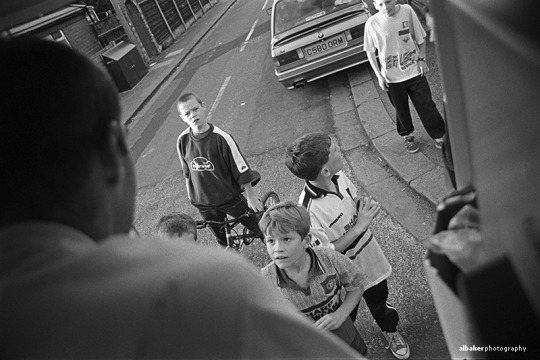
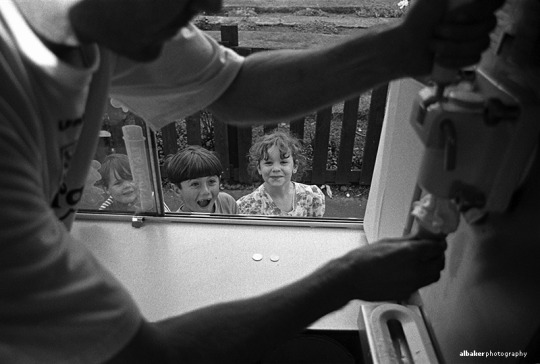
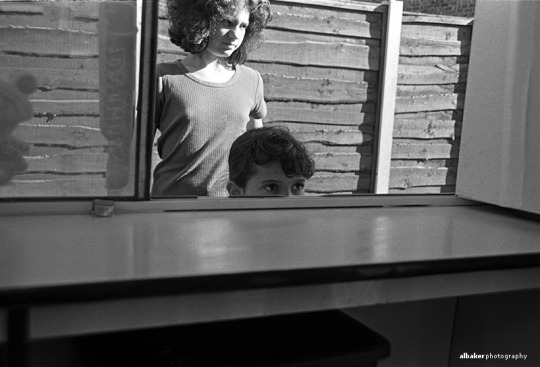
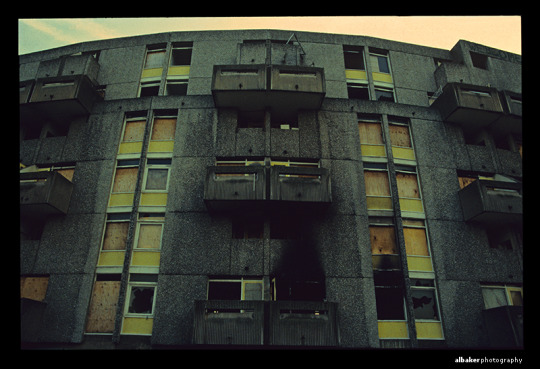
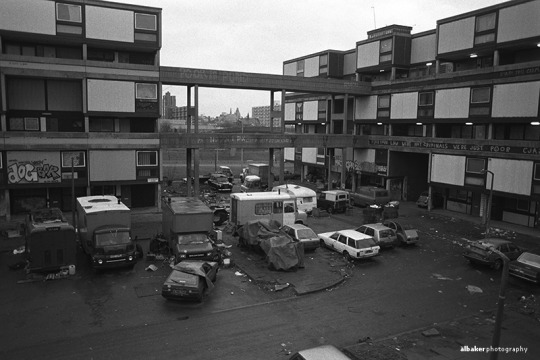
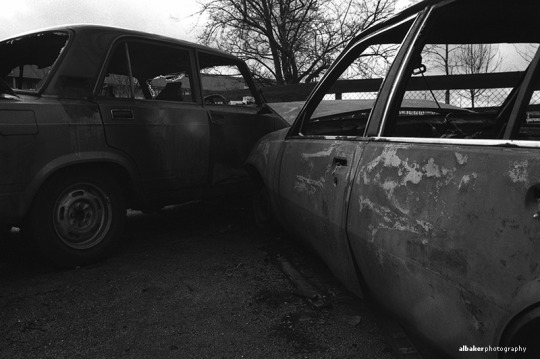
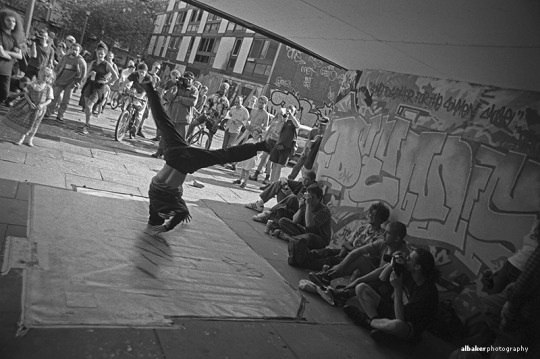
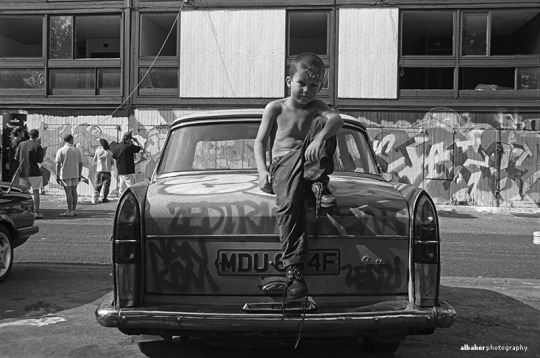
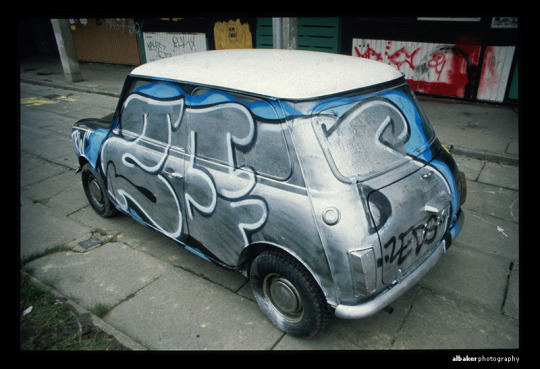
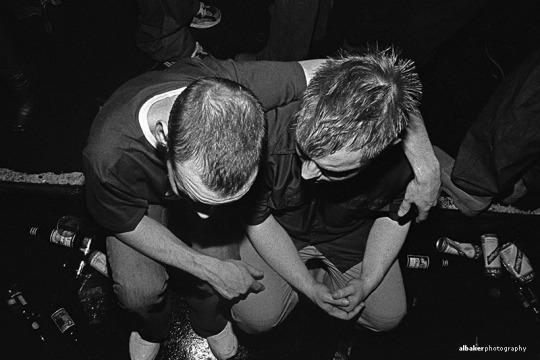
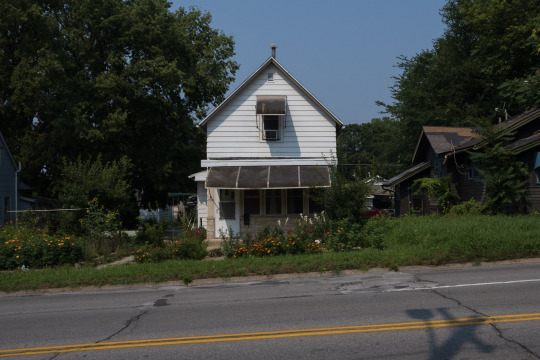
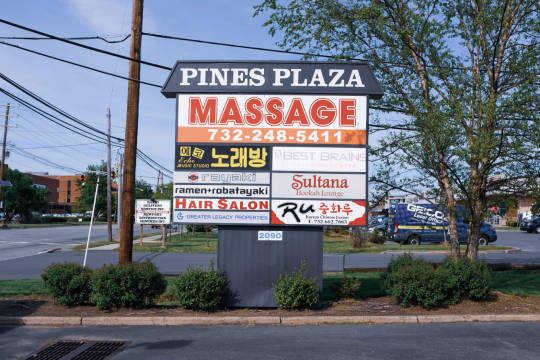
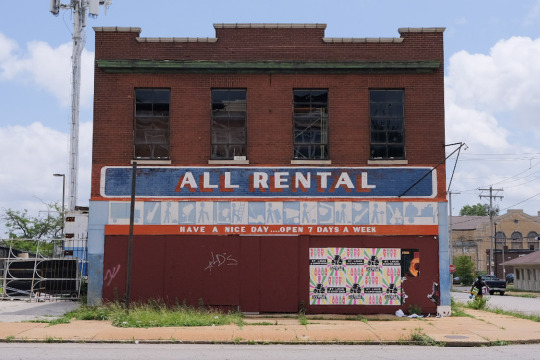
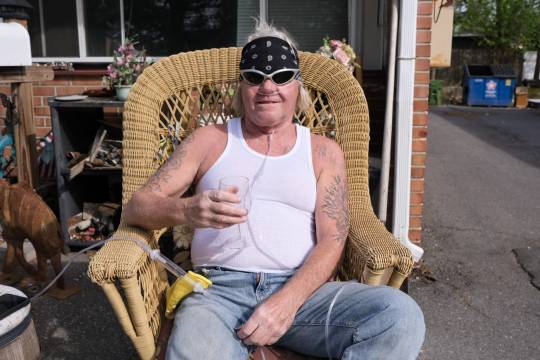
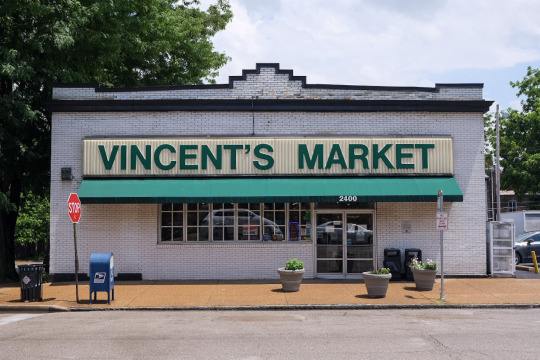
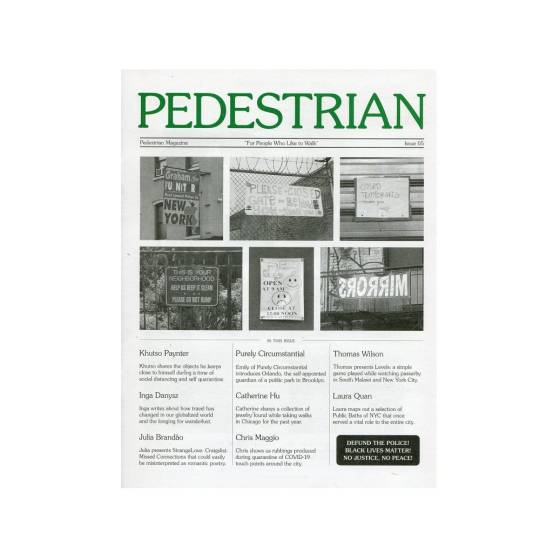

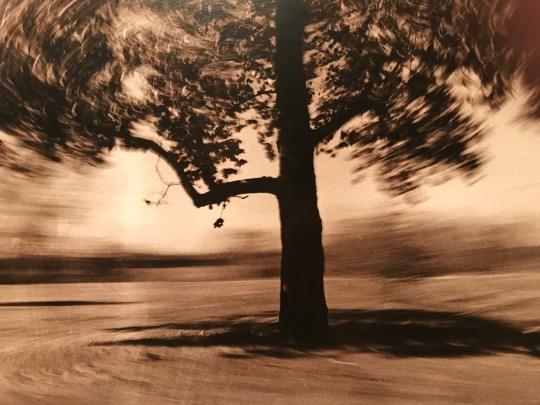
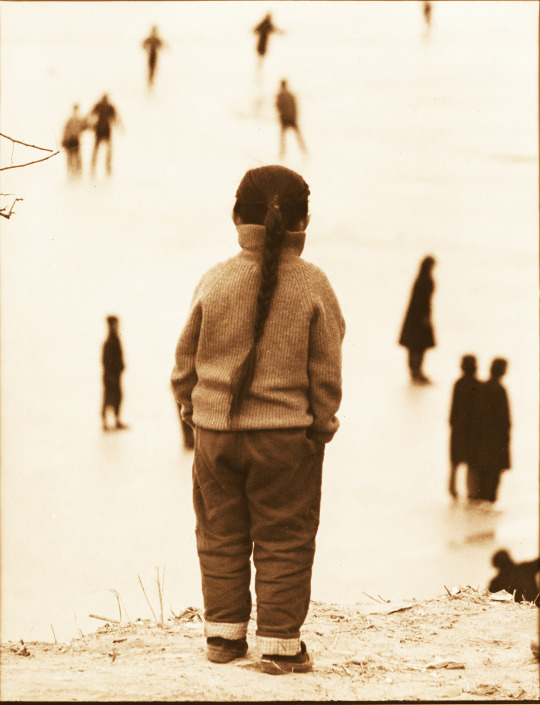


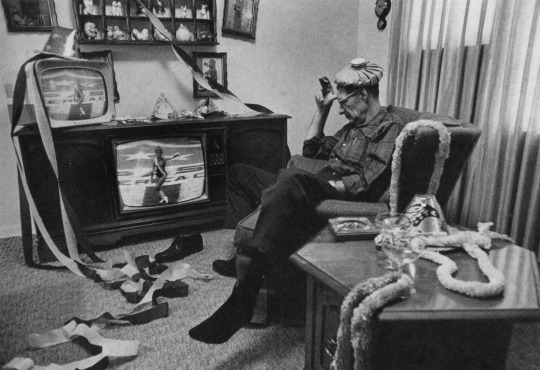
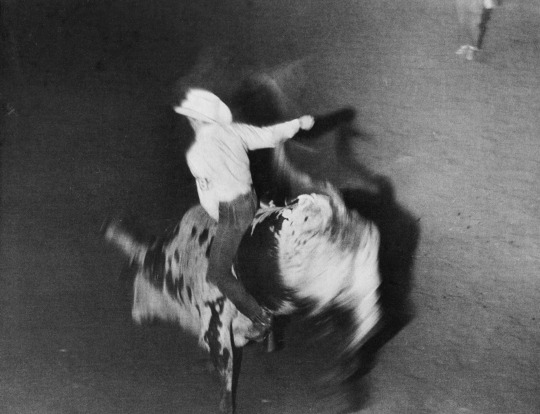
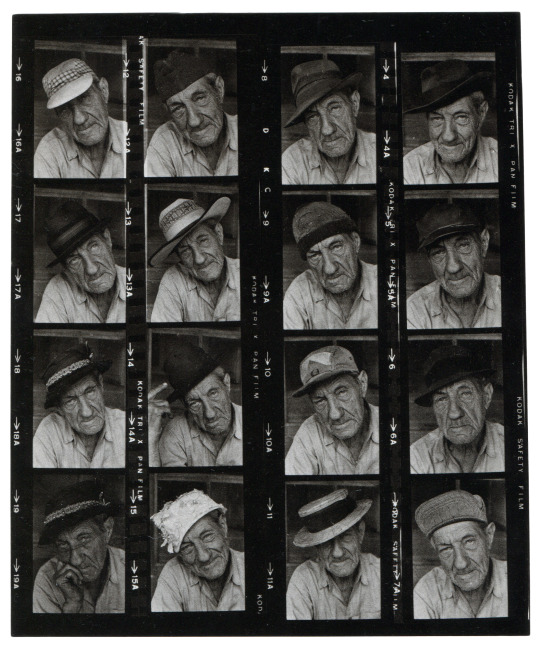


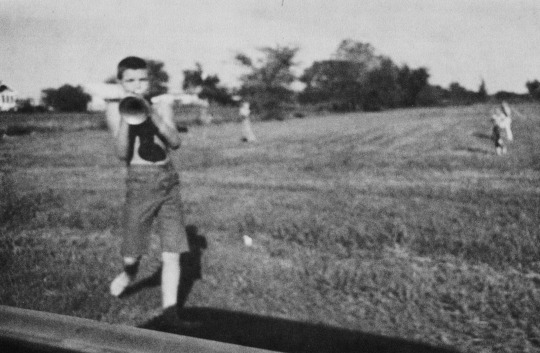
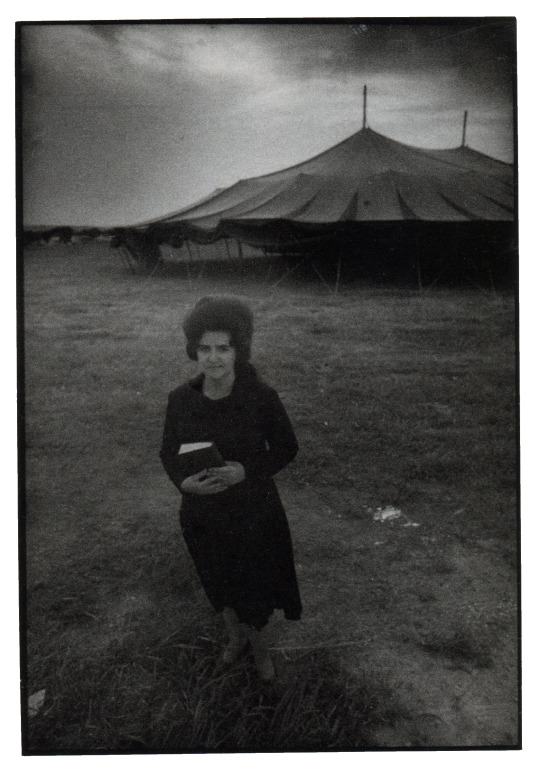
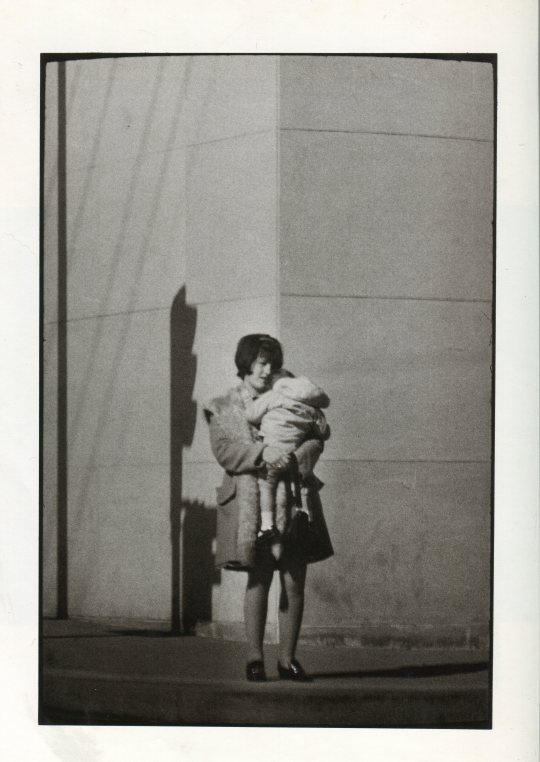


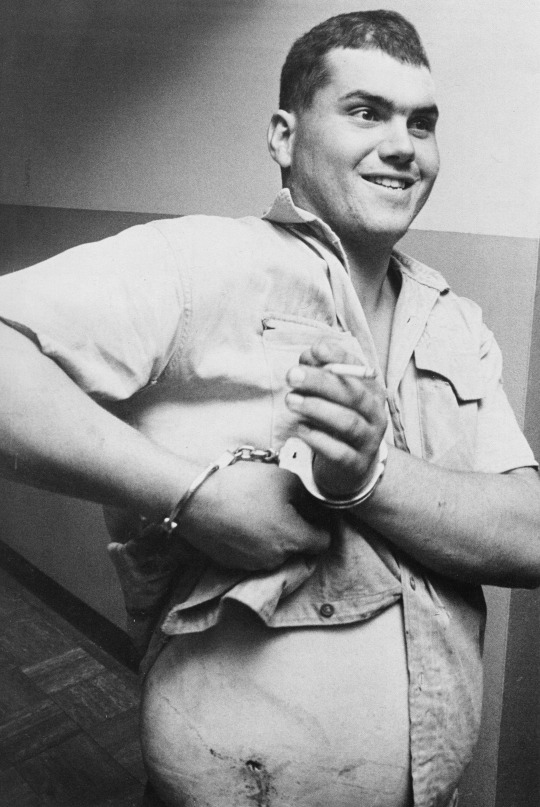


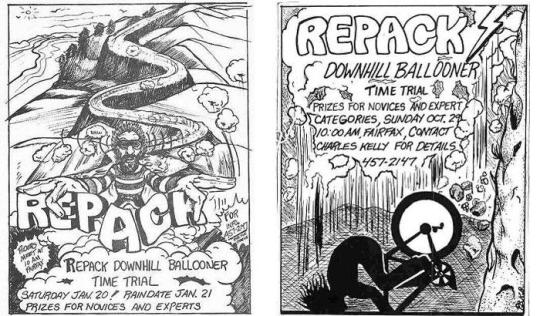
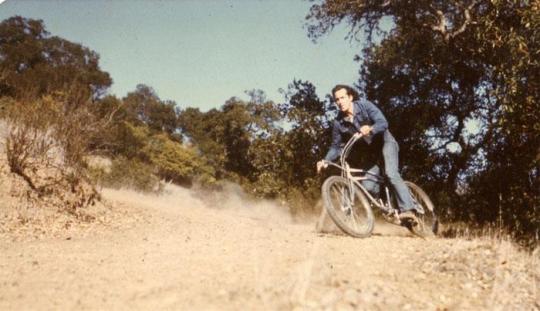

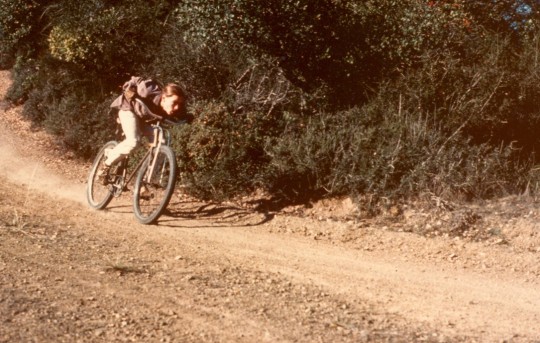
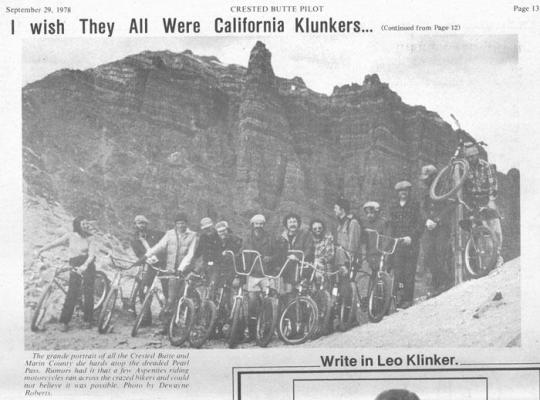
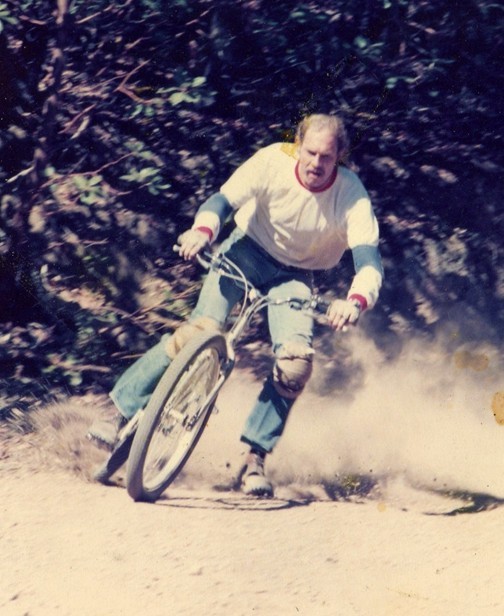
 Roman Candle Magazine