Roman Candle Magazine

    • Info
    • Interview Archive
    • Photo Overflow
    • Portraits
    • Stockists
    • Zine Archive
    • Films
  • Shop
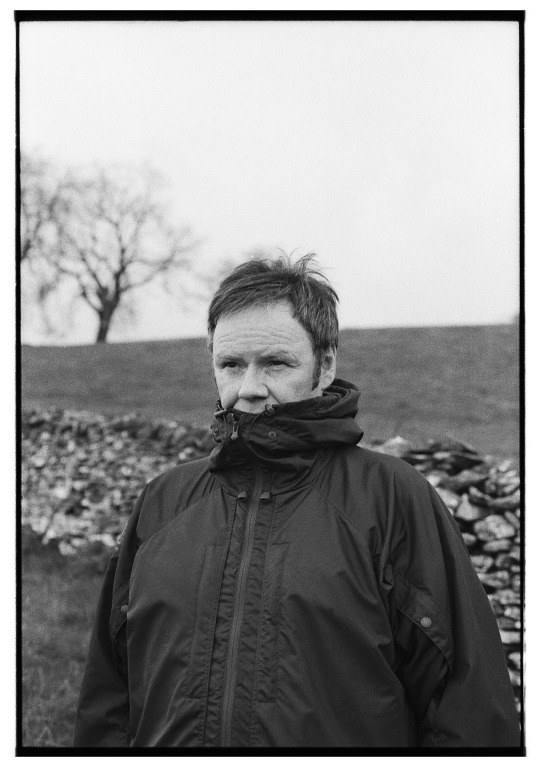
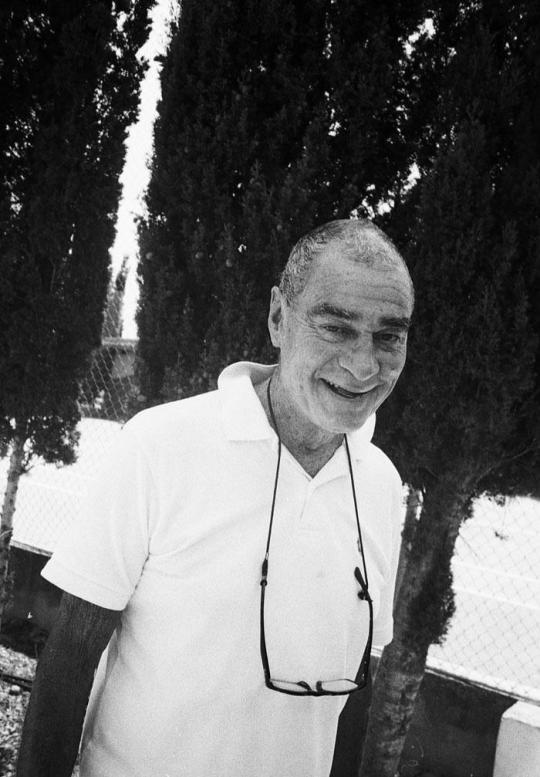
  • An Interview with Wig Worland

    image

    If you walked into a WHSmiths during the 1990s, then chances are that you will have seen the high-calibre work of Wig Worland.

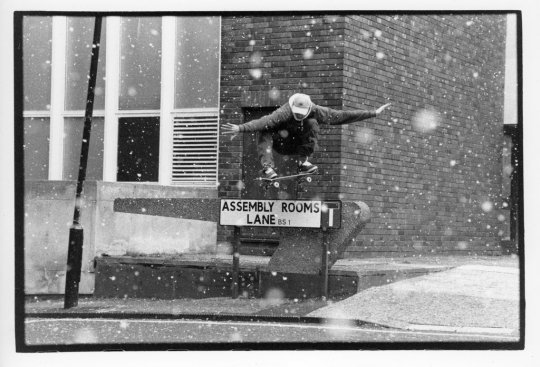
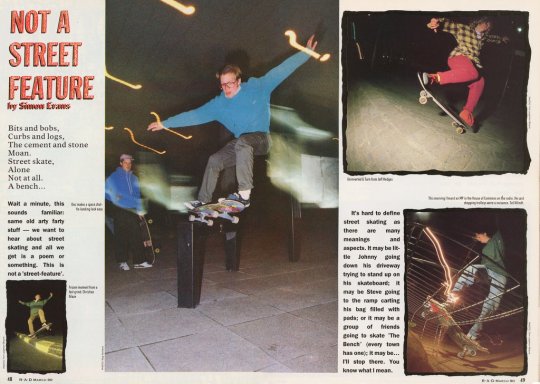
    As a photographer at seminal skateboard magazines like R.A.D. and Sidewalk, his sharp eye helped capture a relatable world of British skating, a million miles away from sun-drenched California schoolyards.

    First question – when did you start taking photos? Was there something that set you off with it?

    I started in school when one of the better teachers realised I wasn’t going anywhere academically and lent me her camera. I don’t think there was anything else I could have done to be honest. I started to assist photographers straight out of school.

    How did you end up doing skate photography? What was the camera set-up back then?  

    I grew up near an adventure playground. One day in the early ‘80s a quarter pipe with ‘Skatopia’ written on it appeared there. We would ride our BMX bikes on it. A few weeks later a guy called Wurzel appeared – he literally dropped over the fence.

    All of us, including Wurzel, rode bikes for a bit but as the world transformed around us we all got into skateboarding. One of my best friends at the time was London street skating legend Phil Chapman. He let me take pictures of him and I got better at it.

    It’s funny how when you’re young it just doesn’t occur to you that those are the formative years, even though that’s what every older person is saying to you at the time.

    My first camera was a Canon FTB with a 24mm lens – I couldn’t afford a fisheye lens. I then wasted more time and energy on a 17mm lens. It was really terrible, but I did get my first picture published in RAD using it.

    What was that?

    A guy called Doc with a chuck on handrail at the bus station in Milton Keynes in an article in R.A.D. in 1990. In the same article came my second and third published picture. It was such a pivotal moment in my life but just like buses, three came along at once.  

    image

    Do you remember the first photo you took where you thought, “I’m getting quite good at this”?

    Not any single shot, but I think when I got to shoot Manzoori or Channer or Wainwright, I was beginning to shoot people who were making great pictures all the time. The trips back and forth to the lab became less fuelled with anxiety and worry about what I was doing.

    So something must have been going right, maybe I knew enough about the dark art of shooting on slide film that I could relax into it. A bit anyway.

    The late 80s and early 90s are quite a while ago now. What are some things people forgot about that time?

    There was no Instagram! There wasn’t anywhere other than the monthly magazines (and of course books) to get any information about anything. It really is odd to say it now because we are all so used to finding anything out that we want to know immediately.

    My sister has a theory that technology is making us all more stupid. We simply don’t have to retain any information anymore. To get from place to place you don’t even need a sense of direction, just flick on ‘Waze’ or whatever and it tells you where to go.    

    How weird was it to be a skater or a rider in the late 80s? Obviously now skating is going through another ‘cool wave’, but how much stick did you get back then for it?  

    We got so much hassle from everybody at the time. It’s ridiculous when you think about how ‘cool’ it all is now. We didn’t care at all though. We knew what we were doing was way more important than simply school or fashion or T.V. or whatever else our other friends or peers were into. We were involved in making something happen.  

    R.A.D. was split fairly evenly between skating and riding. Was there much of a divide at the time? And what were your opinions on the other avenues of raditude?

    I’ll fully admit it; I went from BMX to skateboard. I was probably a little too young to catch the first wave of skateboarding in the UK. I was six or seven and my mum wouldn’t let me have a board, though my best mate at the time had much older brothers so I can claim to have ridden a Logan Earth Ski in the 70s.

    By the time BMX hit I was a little more in control of my life. I saved up my lunch money for an entire year so I could buy a Kuwahara ET. My friends and I had so much fun knocking about on those bikes in the 80s — it was amazing. Before I knew it I’d given up BMX ‘racing’ and was getting more serious about BMX ‘freestyle’ (which really is an oxymoron when you stop to think about it).

    Within a year or two I had switched to a GT Performer and I was entering freestyle ‘contests’ and wearing ever more dodgy clothing. Obviously we didn’t know it at the time but they really were the formative years of my life.

    A good friend from that time, Lee Reynolds moved to California and went on to become a very successful freestyle pro rider with Haro. Back then we all hung out at Mons ramp like one big happy family, and that’s where I started to meet more people.

    As BMX started to die, I just moved my attention to skateboarding. There was just so much to get into. You can do way more stuff with a skateboard than a bike! Sorry to the entire BMX community.  

    What were you looking at for inspiration back then? Even your early photos had a definite style.

    I was looking at BMX Action and BMX Plus from America that would appear periodically in the newsagents near my school. Then Freestylin’ and Transworld, and Thrasher when I could find it. Back then Thrasher wasn’t quite so appealing — it was half a music magazine with really cheap paper, and was scrappy compared to glossier titles of the day. It’s amazing how Thrasher has outlasted them all.  

    I loved Spike and Windy, and, obviously J Grant Britain, but I also really love TLB’s pictures. He really was an amazing complete photographer – properly trained and much better than me. Now I have had a chance to see the stuff in the RAD archive, I can’t begin to say how amazing it is. It might not have looked all that good in the mag but that was because of the awful print quality. When the book comes out you’ll see what I mean.

    image

    R.A.D. faded into the shortly-lived Phat in the early 90s. How did Sidewalk come about?

    Andy Horsely and I were doing a magazine called The System during the last days of TLB R.A.D. When R.A.D. was sold to yet another publisher that was out of town, Tim didn’t want to leave London. He thought it was a dead end. By a series of strange occurrences Andy Horsely and I managed to get ourselves in the door at R.A.D. There’s a bit more to this story, but the full version will be in the book hopefully.  

    Whereas early skate magazines had their fair share of day-glo high-top fashions and boned-out, high-zoot grabs, Sidewalk had a much more British look. Was this intentional? Or was this just a reflection of the times?

    It was absolutely intentional. We wanted it to look like a British skate magazine, and perhaps naively, we wanted it to feature all British people, in Britain. The US skate magazine culture was, and still is, so dominant, but we wanted to showcase the UK.

    At the time the world was beginning to see Rowley, Penny and Wainwright but we knew there was so much more. Making an all-British magazine was way more difficult than any of us imagined and I’m not sure how sustainable that idea was (and still is). We tried our very best given the resources we had.

    Was there things you wouldn’t photograph – maybe dodgy outfits or questionable moves?

    We had an unspoken ban on the Benihana at Sidewalk. Ha! I wonder if anyone else would admit to that. Everything else was totally fine. We even put Dan Cates in the mag with all his craziness for heaven’s sake!  

    image

    The mid-90s seemed like the real glory days of magazines. They were thick, they came out once a month, they had all sorts of mad stuff in them… and they could all be bought from WHSmiths for a few quid. Why do you reckon there were so many good mags around at this time?

    It was really the only way to communicate before the internet really took a grip. Nowadays, you put your tricks up on Instagram and let the world judge you. Back then, we shot the photo, we took it to the lab, and then it was sent off to be printed in cyan, magenta, yellow and black on paper.  

    After a lot of fuss and bother, the magazine hit the shelves and the rest of the world could see the moments that I had had all to myself. It really was an incredible moment. I’m not sure I’d go back to it though! It was pretty insular and created some difficult politics. It’s probably a bit more democratic now. If you don’t like what somebody is doing, you ‘unfollow’ them and that’s that.  

    What was a typical day like back in the early Sidewalk days? Was there a typical day?

    Probably wake up late and head to the office via the lab, to pick up the film from the previous day. Maybe pet the dog when I got there for a bit. Horse would invariably arrive later than me and we’d get lunch. After looking through some pictures on the light table I’d head out to shoot skaters in various parts of the country.

    One day I’d be in Hull, the next in Birmingham and the next in London. It was a pretty insane schedule to be honest.

    I’ve said this before in other interviews but I’ll say it again, I hated driving up and down the motorway system in the UK, but I loved the people I met along the way. I really don’t think there was anyone that I didn’t like — it was incredible. A good example of this is driving to Hull, which is a really long way from anywhere. But when I got there, there was Eggy and Banksy and Scott. Amazing people.  

    image

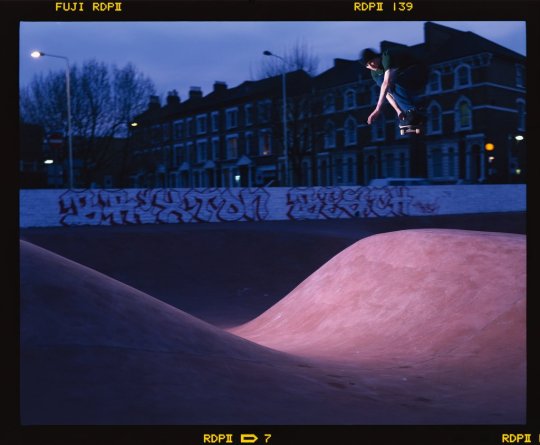
    This might be a bit of a camera tech guy question… but imagine I’m stood at the top of that flatbank hip at Radlands and a young Tom Penny is cruising towards me… how do I capture the action? Should I pan? Is my flash mounted on the top of my camera… or on a cable… or on a stand? What film should I use?

    If you’re at a comp it’s best that your flash is mounted on your camera, because if you’re trying to be clever like I was in the 90s trying to use an off-camera flash on a lead (Windy Osborn/Spike Jonze style) you’re going to miss a lot of shots. Yes, always pan with the subject if you can, it’s just better and I’d use whatever film you can afford. It’s really expensive and you only have 36 to 39 shots depending on how clever, or stupid, your camera is.

    If it’s not contest day then spend a little longer on your lighting. But not so long that you forget to shoot the scene, the look of the place and the informal portraits of the skaters. You’ll regret that later on if you don’t shoot that stuff. Ahem…

    Sidewalk did a very good job of making some fairly drab looking spots pretty good. That photo of a lad named Cookie gapping from a Carpet Right car park in the rain comes to mind… something like that could easily look pretty depressing in lesser hands. What were your tricks for making these fairly everyday places look decent?

    Bring your own sun — a portable flash. Oh, and a little jiggery pokery with the slide film we were using as well. Also, know what you’re doing, and how the film is going to react to the light. Photography is all about various kinds of lies to create the shot you want.

    I’m glad you remembered that Cookie shot because it is pretty special. He was such an amazing, positive person. Never mind my photograph, but how did a person stay positive when you had such terrible conditions to skate in! It’s not exactly California.

    Pretty much sums up how we should all approach life, the Cookie story…

    image

    I don’t know if I’m looking into this too much, but a lot of the Sidewalk stuff celebrated British culture rather than disguise it. I’m not sure where I’m going with this question, but do you think it’s important that people embrace their situation, rather than endlessly dream of California?  

    My entire life’s philosophy is to draw out what you can from the place where you are, rather than dreaming that somewhere else has the answer. This ridiculous dreaming is the reason that the air is so polluted these days with people crossing the world on long haul flights to wherever and with people driving from perfectly fine A, to almost certainly nearly the same B.

    Of course all this is fine for me to say, I don’t have a car but I live in London where there is a brilliantly sophisticated Public transport system. I grew up in Milton Keynes so it wasn’t a shock to get to California and see the state they’re in, but I truly believe the car has ruined a lot. Not least for our children who can no longer play in the streets primarily because of the number of vehicles on the road. Rant over.  

    Haha fair enough. What were some of the hassles of making a magazine back then? Any camera mishaps or blatant errors come to mind?  

    Radio slaves were terrible but they still are. That’s the nature of radio waves in a very wet country. There was some dodgy kit but you could usually spot it pretty quickly and pass it on. I did have all my cameras stolen from the boot of my car once which did feel like the end of the world at the time. Grant  Brittain  very  kindly  sent  me  one  of  his  old  cameras  and  a  fish  eye  to  start  me  off  again  and  Pete  Hellicar  rang  round  all  the  big  names  in  the  industry  in  the  UK  asking  for  donations  to  get  me  started  again. Really  kind,  amazing  people.  

    The problems were always with the printers or repro people. Handing over your precious photographs and layouts to people who aren’t as invested in the project shall we say. Having said that, there weren’t that many problems, only ever issues that the editor or I would notice.  

    image

    I’d say skate photography fits under the documentary category, but how far would you go to get a better photo? I know moving the occasional rucksack out of shot is fairly commonplace, but I’ve heard stories of photographers carrying around brighter clothes for people to wear so they stand out more.

    There are a few skaters who would bring their own brighter clothes for the shoot. Have a look through my shots and see if you can guess who they are for a fun game. I think this is brilliant.

    I don’t think that skateboard photography is documentary at all. It’s a collaboration between the skateboarder and the photographer to produce the best image they possibly can.

    What about the days when nothing happened? Surely there must have been a few afternoons when no one was feeling it, or did the fact you had a big camera bag egg people on a bit?

    It rains a lot in Britain, I’m sure you’ve noticed. On those days, if you were lucky, we’d sit about in the local Skateshop. If we were less lucky we’d get caught at the local indoor skate park and wait for the rain to stop. I remember thinking then that I would never get that time back, now of course if I had that time back I would do just the same thing. Amazing days.

    I’m sure people did feel motivated by having a magazine photographer in town to shoot pictures of them yes, but that just makes me wonder what it’s like now? You can literally shoot a picture whenever you like and upload it anywhere.

    Do you think these advances in technology have improved skate photography or not?

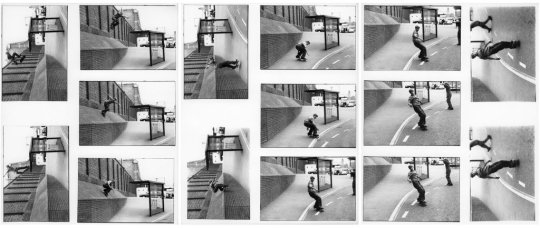
    I would have killed for a digital camera back when I was shooting skateboarding every day. I’d not only have been able to see what I had in terms of stills, but shooting sequences would have had a lot less pressure involved as well. A couple of people have said that seeing the used rolls of bails lining up on the stairs or pavement beside me gave them extra incentive to land the trick, but it made for some pretty heated sessions.

    The Chris Oliver kickflip off a bus stop into bank with another drop springs to mind. Fair play to the ginger genius though, he bloody landed it, and he can say he did it on film as well. So, so sick.

    image

    Did you enjoy doing sequence shots or was it just a case of documenting the new tech?

    I wasn’t really interested in shooting sequences to be honest, I always thought that was the job of the video camera. In some ways I wish I stuck with that attitude and concentrated on the style of the skater rather than the high tech that they could put down. I think that would have made for a more interesting back catalogue.  

    This is maybe another fairly camera-orientated question, but I’m interested, so the casual readers will have to suffer… you were maybe one of the first skate photographers to push the studio-lighting style out into the real world. What led to this development?

    Ollie Barton thinks I was the first to do the studio on the street thing. I guess other people had tried using flash slaves off camera before, but I made it my own. I was the first out there with portable studio flash which had more spread of light than the dedicated flashes made by camera manufactures. I’m sure I was responsible for keeping the Lumedyne brand going for a while. Lumedyne really are the most terrible looking lights that have ever come to market, made from bits bought from Maplin or Radio Shack, but they worked quite well and everybody had them in the early 2000s.

    Did setting up multiple flashes in ropey areas ever become a problem?

    It’s funny you know, I never felt odd about setting up lighting anywhere. If you’re prepared to pop a light out on a dodgy estate then you’re serious about getting something done. I think most people whoever they are respect that, some are even interested in it.

    There were a few hairy moments — like a car taking out a light in downtown Stockport while shooting late at night. But the light was in the middle of the street, so that one was on me. Nobody ever picked one up and legged it. Not once, but as I said they don’t look expensive so maybe that was enough.  

    image

    Maybe a bit of an obvious question, but do you have a favourite photograph you’ve taken? And are there any photos which you wish you took?

    As I rather flippantly alluded to earlier, I don’t feel I shot anywhere near enough incidental stuff. I was too interested in making the lighting right to capture the trick perfectly. If I could go back I’d have a point and shoot with me at all times and I’d use it constantly.  

    I don’t have a favourite photograph. There are just too many, of so many amazing friends and brilliant talented people. I couldn’t pick one above all others.    

    Today it’s easier than ever to take a photograph. Is this good or bad? Has the advent of phone-based camera gadgetry devalued the art (or at least the science) of photography?

    No, it hasn’t devalued it. Because more people have cameras, more people are interested in photography. If you want to lug around a huge old school view camera to shoot pictures then there are sub-genres of sub-cultures that can more easily facilitate that stuff nowadays. Of course more people think they can do it, but it’s still the case that only some people do it well.  

    image

    Have you got any wise-words you’d like to add?

    No, just enjoy life as best you can. We’re not all going to be famous or millionaires, so don’t believe anyone when they tell you to follow your dreams — real life might conspire to not let you get there. Life just happens to most people.

  • An Interview with David Patrick Kelly

    image

    Of all the scenes in all the films to have been made over the last 100 years, not many are quite as powerful (and downright mental) as the penultimate scene in The Warriors. After a long and arduous journey through New York City, the Warriors finally make it to their home turf of Coney Island, only to be confronted by a mad guy wearing a headband driving really slowly in a hearse whilst clinking some bottles together and shouting, “Warriors, come out to play-ay.”

    It may not sound like much when you try and describe it to people, but anyone who’s seen it will agree that it’s like nothing else on film — and it was improvised on the spot. As it turns out, the man with the bottles was David Patrick Kelly, a young actor and musician who was plucked from the stage after Warriors director Walter Hill saw him performing in a Broadway play.

    David has since gone on to be dropped off a cliff by Arnold Schwarzenegger in Commando and chow down on large Parisian sandwiches in Twin Peaks, along with countless other film, television and theatre appearances. 

    I don’t want to beat around the bush too much here David — the bit at the end of The Warriors where you’re rattling those bottles together and shouting, “Come out to play-ay,” is probably one of the best scenes of any film ever made. Where did the idea for this scene come from? Is it true that originally you were going to use dead pigeons instead of bottles?

    I knew that Walter Hill was giving me an opportunity when he asked me to improvise something. All I wanted to do was make something unique — all that was in my head at the moment was this has to be my own ‘voice’. That was around a lot in artistic circles — having your own sound, your own look, your own style.

    It’s always been important in film for me to try to use something that is actually present at the moment you are shooting the scene — whether it’s little bottles or some deceased pigeons (they were considered a nuisance on the boardwalk and were often poisoned). It was kind of a record of that moment in time beyond what was in the script.

    image

    Can you tell me a bit about the making of The Warriors? What was an average day making that film like?

    I remember working on The Warriors for about three months. I would wait every night to hear if I was working the next day. At one point my small apartment was robbed, I think by the gangster guy I got the idea for the sound of ‘come out to play’ from. I had to move out, put all my stuff in storage and live in various cheap hotels — one of which was across the street from the Chelsea Hotel when Sid and Nancy were living there. It was a crazy time in New York City.

    Who’s this gangster guy?

    He was my next door neighbour. I lived next to him for about four years. He had two little dogs he was always shouting at. If I did some home improvements he would be motivated to try that too but would only start the task before it would fall to the wayside.

    I don’t really know if he was a gangster, but sometimes you get a feeling that perhaps there is a life going on that you don’t want to know more about. So the sound you hear me making in The Warriors started from something he said to me and I took it up a few notches.

    The Warriors was your first film. How did you get the role?

    My life was saved by rock and roll. Because I could play I got the part in Working on Broadway that Walter Hill saw. I played James Taylor’s songs (ever listen to his guitar playing on Joni Mitchell’s “All I Want”? Astonishing). When we came to improvise the ‘come out to play’ moment Walter first asked me to sing something, but it came out like you hear it — one take.

    That’s brilliant. What led you to acting in the first place?

    In high school we did a play by J.M. Barrie called The Admirable Crichton. I had the role of a pompous Lord who was completely at a loss when shipwrecked on an island. I noticed that the other actors couldn’t keep a straight face while I was acting. It was a funny role and I guess that gave me an empowered feeling — a lightbulb clicked on for me.

    image

    How did you wind up in New York?

    It’s where great theatre was and I have always been a theatre dog. I had a kind of idea of what theatre should be and I have managed to do most of it — great productions of Shakespeare, avant-garde, adaptations of Chinese classics, rock and roll cabaret…

    You’ve lived in New York for a while now. How has it changed since the ’70s?

    New York, and the entire world, seems like a branded shopping mall now, but I’m kind of a Warholian optimist. Much is improved — although CBGB’s is now a John Varvatos store it smells much better. Transport around the city is much better with hybrid buses and taxis that actually go to where I live in Harlem. Areas are safer too — I live on a street named after a New York City gang called Young Lords Way.

    Before The Warriors you played with a band at some of New York’s most infamous venues — CBGB’s and Max’s Kansas City. These are places that are talked about a lot now, but as someone who was actually a part of the ’70s New York punk/art thing, what was it actually like to be there?

    When I first came to New York in the early ’70s one of my survival jobs was working as a staff member at Max’s Kansas City in the upstairs music room. There were only 150 seats but, for a time, it was the major showcase for anyone, with or without a new record.

    Springsteen, The Wailers, Charles Mingus, Television, Patti Smith, The New York Dolls, Suicide, Peter Frampton, Iggy Pop, Odetta, Dave Van Ronk, Andy Kaufman, Doc Watson, Merle Haggard… it was an incredible education and after a couple years I played there as well. I think I am the only one who staged a play there.

    Maybe this still happens now too, but it seems around that time everyone did everything… writers painted, actors sung songs and filmmakers made sculptures. Where did this freedom come from?

    Max’s and the artistic mentality that thrived there influenced a lot of the culture in New York at that time. The famous downstairs restaurant where Debbie Harry was a waitress was the meeting place for writers, filmmakers, painters, sculptors, actors. Everybody wanted to do everything. It was part of that Warhol ‘everybody is a superstar’ thing.

    That flowed directly into CBGB’s and that scene. It was a biker bar discovered by Tom Verlaine, Richard Hell, Richard Lloyd and Billy Ficca. I read a review of them playing there by Lenny Kaye and went down and signed on myself. It was a wonderful scene to be a part of.

    A few years ago you released an album called Rip Van Boy Man. What is a rip van boy man?

    I was an official part of the CBGB’s Summer of 75 Top 40 Unrecorded New York Rock Bands. The list included me, Talking Heads, Ramones, Blondie, and many, many others. A few years back I finally did a professional mix of a few tapes I had — I had a very talented band and I wanted to put it out there that there was more going on in that scene than is fully realized.

    I added three more recent songs from a play I wrote and starred in at a place called Here in NYC. The song “Rip Van Boy Man” is about suddenly being an older fella in a flash and knowing the best is still ahead.

    image

    I suppose the next thing I want to ask you about is Twin Peaks. David Lynch came up with Jerry Horne specifically for you. How did this come about?

    I met David Lynch for Wild at Heart. I brought in a prop made for me by the artist Joni Mabe. I was playing a stalker character — so I brought in a strange suitcase shrine to womanhood. After that meeting David wrote the character of Dropshadow for me, and when I was doing Wild at Heart he asked me to do Twin Peaks. I am one lucky guy.

    I always thought David’s work at that time had this Maginot Line between straitlaced ’50s and wild ’60s, so I asked the hairstylist to give me an extremely short sided haircut that was wild on top. I bought my suit at Agnes B. for Jerry’s first entrance.

    What’s David like to work with?

    David is a great guy to work with. He’s filled with joy and exactitude and serendipity.

    image

    Arnold Schwarzenegger dropped you off a cliff in Commando. Arnold’s strong, but according to my research you’ve been doing martial arts for years — who would win in a real fight?

    Arnold is surprisingly humble and encouraging and we had a great deal of fun. I wouldn’t want to fight him but if we were fighting on the same side… look out villains.

    From what you’ve said it seems a lot of what you do is about being in the moment. A lot of things miss this these days — stuff is too scripted, too planned. Why do you think this is?

    In the comedies from Hollywood there’s just enormous pressure because they must get laughs every few minutes or they are screwed. In something like Twin Peaks, Lynch truly didn’t care if it was funny or weird or scary — or sometimes all at the same time.

    I have always been allowed to improvise and add things from the moment into my film and T.V. projects. Whether it’s Louie or Flirting with Disaster or Commando — the directors have always trusted me.

    Apart from maybe Harry Dean Stanton, I don’t think I can think of someone who’s been in as many cult films as you. How come you’ve been in so many good things?

    Most actors cannot really choose where their career will go — you must make the best of what you’re given. But by simply keeping in my mind the things I wanted to do I have been able to act in science fiction, film noir, war epics, family dramas, comedies, Shakespeare, Chekov, Ibsen, great poetic avant-garde artworks. I’m very blessed.

    For someone whose work is based around spontaneity and the moment, is it weird that people like me are e-mailing you from across the ocean to talk about films from over 30 years ago?

    I’ve always said that art is a bet with history, and if my work can mean something or perhaps inspire somebody decades later that is extremely fun and rewarding.

    I think I’ve run out of questions now. Thanks a lot for agreeing to do this. Have you got any wise words you’d like to pass on?

    Encouraging words from Horace — “Nil desparandum!”

  • An Interview with Matt Weber

    image

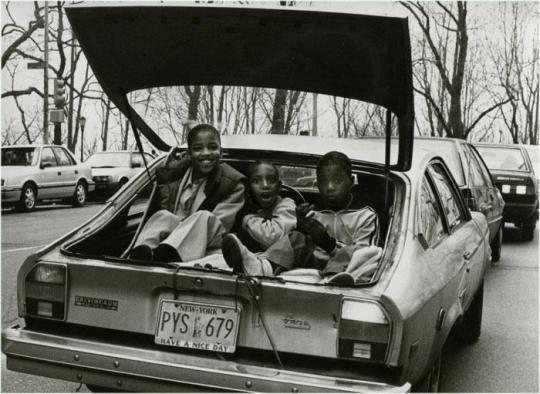
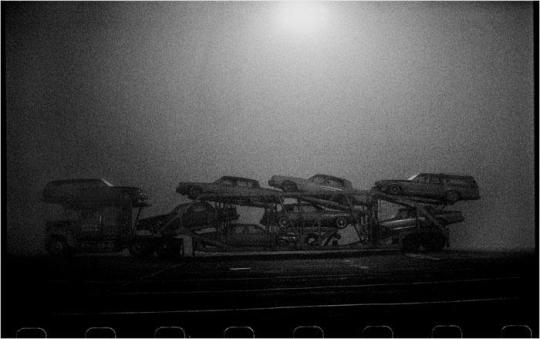
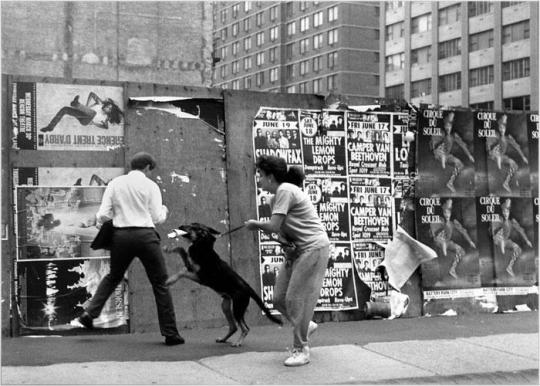
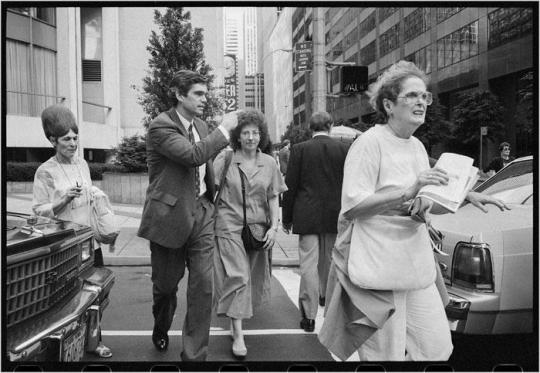
    The term ‘street photographer’ gets bandied around a lot these days, but most of the time all it means is someone who once took a photograph of a busker. Matt Weber, on the other hand, is one photographer who definitely does deserve that title. He’s been lurking the lesser-seen localities of New York since the early 1980s, and is just as active today as he was thirty years ago.

    Using the powers of the internet age I fired him over a few questions, and by some stroke of luck, he answered back. Here’s what he had to say on photography, driving taxis and why New York isn’t quite what it used to be…

    Alright Matt, how’s it going?

    I am OK… photography has been the best thing for me emotionally, but not financially. Most photographers these days are being hard pressed to find a way to make a decent living off of their work. The few who are doing well should count their blessings.

    When was it that you started taking photographs?

    As a kid in 1968, but then I took a twelve year break in 1972 and didn’t really get back into it till 1984.

    What was it that made you pick the camera up again in the 80s?

    I was tired of seeing amazing things and not being able to photograph them. I kept saying, “Man I gotta get a camera!”

    image

    You shot photographs for a long time whilst working as a taxi driver. How did you work this? Would you intentionally take fares to areas where you knew would be better for photographs?

    I took people anywhere and I never refused a fare unless they appeared very threatening. When I ended up in what was still considered a ghetto, I was on the prowl for pictures. Since I had been a wild driver (hot rods) when I was young, I didn’t mind being in any bad area because I would run ten red lights if necessary, and I had a bulletproof partition which helped me feel a lot safer if I had the wrong people in my car.

    Was the bulletproof partition ever put to use?

    Yes, but it’s difficult to be sure if I would have just been robbed or if it also saved my life.

    I’ve always thought being a taxi driver sounded like a pretty interesting job — a good way of seeing things and talking to people. Are my predictions right, or is it just another boring job?

    It is a very boring job, but I found the camera made it much better. I wasn’t only looking for the next fare to wave their arm in the air; I was looking for the next image!

    Where are your favourite places in New York to take photos?

    These days there are few places which haven’t been gentrified. Coney Island is always a fun place to shoot, but it is quickly losing most of its original flavour.

    image

    I don’t know much about New York but I’ve heard a lot of people say it’s changed a lot in the last twenty years — maybe a mix of Mayor Giuliani and 9/11. As someone who’s been there since the ‘80s, how do you think it’s changed?

    The main thing is that before 1985 anybody could afford an apartment in NYC. Now you need to be 100% bonafide with all your papers and money in perfect order. When I was young you just had to hand $150 to a landlord or super and he handed you a set of keys! It was just a handshake and you were a tenant. Therefore the city contained all sorts of characters and was a lot better to document, but it was dangerous too. Now it’s safe and dull. I’m not sure what is better sometimes.

    What was it like back when you first started taking pictures? Do you think people’s attitudes to being photographed are different now?

    No… New Yorkers are still uptight unless you approach them with a big smile, and then a good portion of them can be disarmed. Attitude goes a long way.

    You’ve photographed some fairly wild moments. Has anyone ever turned sour and gone after you?

    Yes, I have been attacked and threatened too many times to count. It can leave me doubting myself for a few hours or even a couple of days, but not longer.

    image

    What is it that you’re looking for when you’re walking around with your camera?

    If I knew I would tell you, but the beauty of the city streets is that there is always the possibility of something coming together at any minute.

    Are there certain things you wouldn’t photograph?

    I avoid shooting midgets and people with terrible birth defects, but I reserve the right to shoot anything. One has to be comfortable with what they do. If I see a person whose face has been badly burned, I would never photograph that person, unless the burns occurred in a newsworthy situation and I was doing a story on that.

    Do you go out intentionally to take pictures, or have you just always got your camera with you anyway?

    I have always had a camera since 1989… I have missed a few potentially epic images when I was unprepared.

    Do you follow other photographers much? Who else do you like?

    Due to the internet there are too many to mention. I watch the work of over twenty people, most of whom I have become friends with. The classic guys from the twentieth century are still the best teachers — Frank, Winogrand and Evans are the obvious ones.

    image

    Is it always New York? Do you take pictures anywhere else?

    I always have my camera with me, but I haven’t had a car lately so my road trips are less frequent, which is a drag.

    Do you ever think you’ll stop?

    Death or a major stroke could do the trick.

    What do you get up to when you’re not taking pictures?

    Watch too much football. Watch too many terrible movies on HBO while I scan my negatives each night.

    Wrapping this up now, have you got any words of wisdom you’d like to share?

    Shoot what you like otherwise the whole thing will be pointless…

    See more of Matt’s photographs over on his website.

  • New Stuff: Videoland by Andy Sturdevant (available at Antenne Books)

    New Stuff: Videoland by Andy Sturdevant (available at Antenne Books)

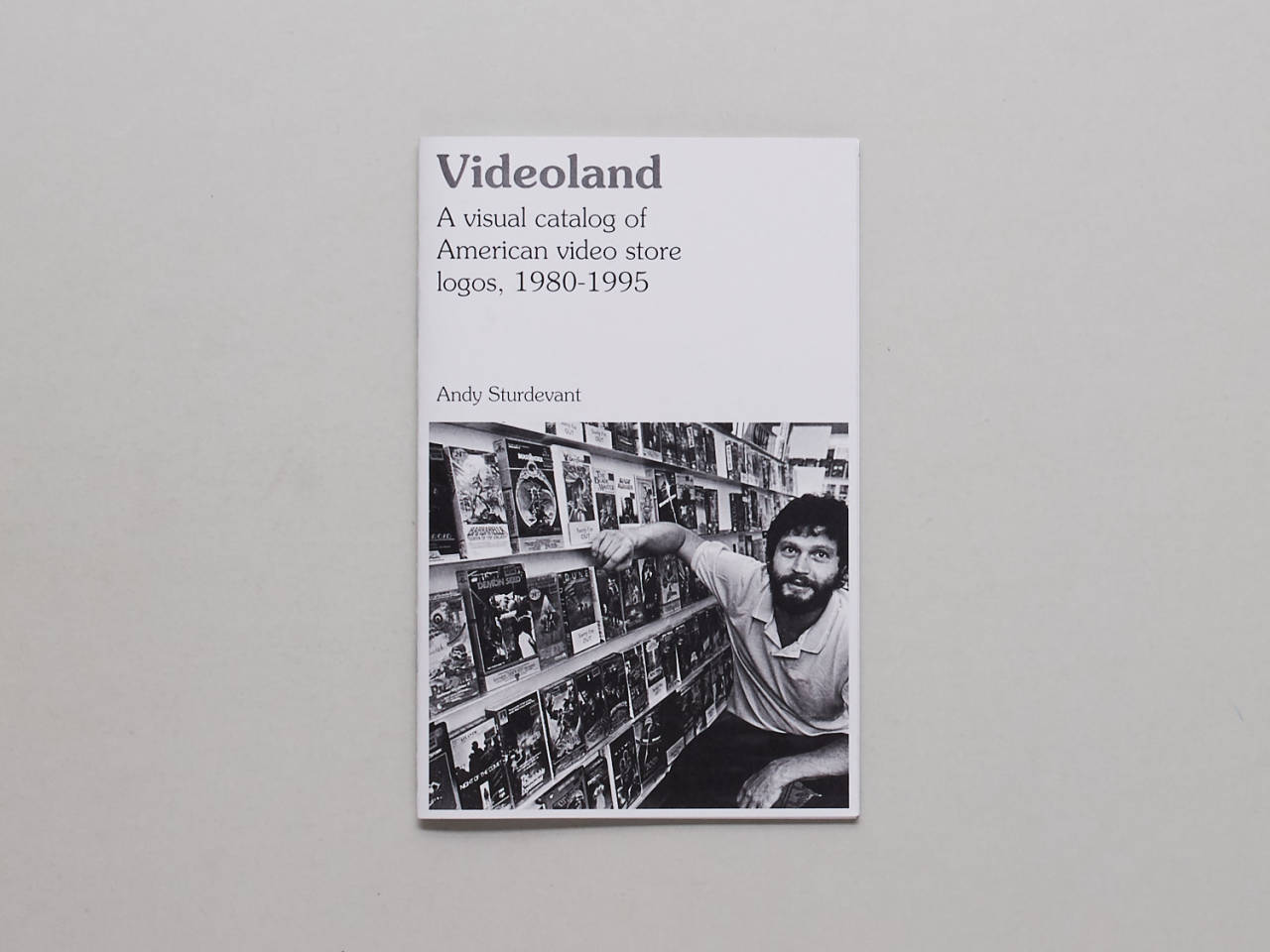
    Videoland – A Visual Catalog of American Video Store Logos, 1980-1995 is exactly what it says on the tin—28 pages of peak-era video shop logo design wizardry, collated by a man named Andy Sturdevant. 

    Mostly hoiked from old newspaper ads, the logos hark back to the salad days of independent video shops and their endless shelves of dodgy horror shlock.

    image

    Get it here.

    New Stuff: Videoland by Andy Sturdevant (available at Antenne Books)

    Videoland – A Visual Catalog of American Video Store Logos, 1980-1995 is exactly what it says on the tin—28 pages of peak-era video shop logo design wizardry, collated by a man named Andy Sturdevant. 

    Mostly hoiked from old newspaper ads, the logos hark back to the salad days of independent video shops and their endless shelves of dodgy horror shlock.

    image

    Get it here.

    New Stuff: Videoland by Andy Sturdevant (available at Antenne Books)

    Videoland – A Visual Catalog of American Video Store Logos, 1980-1995 is exactly what it says on the tin—28 pages of peak-era video shop logo design wizardry, collated by a man named Andy Sturdevant. 

    Mostly hoiked from old newspaper ads, the logos hark back to the salad days of independent video shops and their endless shelves of dodgy horror shlock.

    image

    Get it here.

  • NEW STUFF: RAVE FLIER ZINES AT RARE MAGS

    New Stuff: Rave Flier Zines at Rare Mags

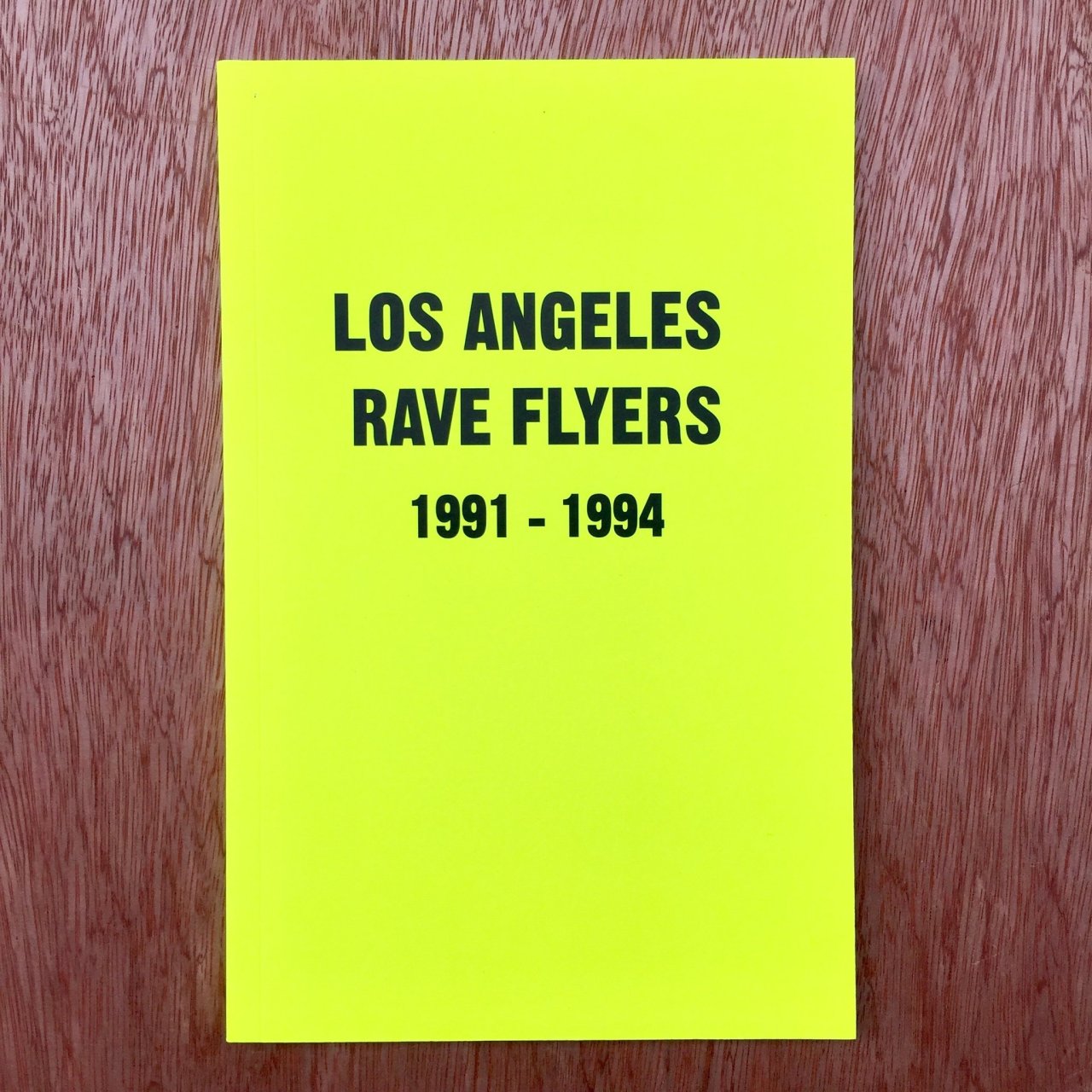
    Stockport’s Rare Mags have got their hands on these unreal fluro-covered collections of archive rave fliers from San Francisco’s Colpa Press. There’s a few different titles to be snaffled, from Los Angeles to the UK, but they all focus on the early 90s, and are all crammed with wild early desktop computer art.

    With the internet still a distant sci-fi dream for most at this time, the humble flier was the only way to get the message out about events like these, meaning each one needed to be full of info, and any attempt at minimalism was thrown right out the window. 

    In short, this means these old rave fliers are a pure treat to look at, and even a quick glance fills you with a good indication about what was going down at these things. Horseback rides during a three day bender at the ‘Ancient Temple of Imagination’? Apparently so.

    image
    image
    image

    Get them here.

  • NEW STUFF – TEN ‘TIL LATE BY MARK MCNULTY

    New Stuff – Ten ‘til Late by Mark McNulty

    Café Royal Books, Southport’s finest purveyors of staple-bound British documentary photography visuals, have republished Ten ‘til Late by Mark McNulty. Originally released back in 2013, this is a 28 page wander into the world of late 80s and early 90s club culture, complete with Vicks sweatshirts and a few loose bottom jaws. 

    Thanks to Mark’s high-class, up-close, flashed-out photos, this is a lot more than just a nostalgic look at a distant time, and is worth a look even if you’ve got zero interest in clubs and going out and all that — it’s rare that a subculture is shot with such skill. 

    Here’s what Mark had to say about the photos when I talked with him a year of so back…

    “It was all about finding the right place. Using the flash, you didn’t just want to photograph someone against a wall, because it didn’t look very interesting. You had to be in the middle to get all the flashing lights and everything. The people at the edge are usually just standing around, so you had to get involved.”

    Ten ‘til Late is available now courtesy of Café Royal Books

  • OLD STUFF: THE CARS THAT ATE PARIS (1974)

    Old Stuff: The Cars That Ate Paris (1974)

    You’re not meant to judge books by their cover, but does the same apply for DVDs? The Cars That Ate Paris was bought for approximately £3 on a whim after I clocked its sinister looking cover along a shelf of second-hand gems – and I’m pleased to say I most definitely was not disappointed with my flashy purchase.

    The film (directed by Peter Weir of Picnic at Hanging Rock and The Truman Show fame) is basically an Aussie version of The Wicker Man, with rusty looking cars instead of dodgy pagan rituals – and tells the story of a young man trapped in the remote outback town of Paris by a bizarre community of up-tight conservatives and bored, petrol-fuelled teenagers. Both parties rely on the slightly dubious trade of flogging old automobile parts from car accidents, which they cause by flashing bright lights in oncoming drivers faces. There’s also a fairly vague storyline about the local surgeon keeping injured survivors as guinea pigs for his experiments, but this doesn’t really come to much.

    To be honest, the film might be a load of rubbish – but like a lot of lesser-known films from the mid-70s, it’s a fully enjoyable watch. Even with a pretty daft storyline and some pretty naff dialogue, a film is always going to be good if it features tonnes of scrap metal, a dribbling village idiot character and a load of small town weirdness.

  • R.I.P. David Berman

    R.I.P. David Berman

    I’ve found myself listening to the Silver Jews a lot over the last year or so. It’s rare I take much notice of lyrics, but David Berman’s words always stood out as something worth listening to. Funnier than any so-called ‘comedy music’, with more potent imagery than most films, his songs were filled with strange American characters that could have been ripped out of the pages of a William Faulkner book.

    Not many other songwriters would sing about people wearing duct tape shoes and belts made from extension cords.

    It seems that being so sharp must take it’s toll.

    Here’s a video of the final Silver Jews show.

  • OLD STUFF – A LOUNGE LIZARD ALONE, ULLI PFAU, 1990

    Old Stuff – A Lounge Lizard Alone, Ulli Pfau, 1990

    Here’s a real gem found in the seemingly endless audio-visual
    abyss of Youtube. A Lounge Lizard Alone is a short film documenting jazz-cat
    and general man about town John Lurie as he prepares for a stripped-back gig
    somewhere on the continent.

    The performance, backed by the rhythmic din of famed subway
    tub-drummer Larry Wright, is decent, but the real gold is the everyday footage
    of John swanning about before the gig, buying dozens of plastic horns and
    musing on acting, the music business and fishing.

  • An interview with Eddy Rhead from The Modernist

    image

    The Modernist is a society/magazine, dedicated to spreading the word of Modernist design, well-thought-out architecture and bold and brave displays of concrete. 

    Seeing as they’ve just moved over to a fancy new exhibition space/shop arrangement in the centre of Manchester (a magnanimous move for an establishment that doesn’t trade in ‘quirky’ burgers and expensive pints), now seemed like an alright time for a quick e-mail chit-n-chat. 

    Here’s an interview with co-founder Eddy Rhead about the new abode and how the times have changed… 

    After ten years as a ‘society’, and eight years of making the magazine – you’ve decided to open up a fully-fledged Blofeld-esque HQ, complete with exhibition space and a shop. Maybe an obvious question… but what led to this bold move? Is it something you lot have wanted to do for a while?

    Yes – this has been a long time coming, but we’ve really struggled to find somewhere that fitted all the criteria. We have always had to beg and borrow spaces for exhibitions and events and people have been very generous in the past, but it takes a lot of energy and time to find venues. 

    That energy and time has meant we have let a lot of projects fall by the wayside or just never got off the ground. Now, with our space, that stress is lifted. If we want to stage an event or hold an exhibition then we are ready to go and can focus our energy on doing stuff instead of trying to find a place to do it.

    What’s going to be there? What sort of things are you planning to do?

    It’s a three storey building. On the third floor will be the boring stuff for running the Society and magazine – the offices and stockroom etc. On the first floor we would kind of like people to have access to our library of books and somewhere to just hang out and shoot the breeze with us. A bit like a hotel lobby. It will be somewhere we can have our own meetings, but if a small community group needs a space to meet they can use it too. 

    The ground floor will the main focus obviously. It will primarily act as an exhibition space but there will also be a retail element where we can sell our own publications and merchandise as well as a finely curated range of other products. 

    We’ll grow it over time and reveal more nearer the time but it will be design led products and stuff you can’t buy in the North West. It will also act as an event space – not only for our own events like talks and film shows, but if people want to hold book launches, product launches, etc, there then we would really welcome that.

    image

    Do you think it’s strange that there’s not more of these sorts of venues? There’s loads of buildings out there – but not many are for exhibitions or film screenings?

    I don’t know about strange – just very frustrating. I think, culturally, Manchester is losing its way a bit. The Manchester spirit has always been to just get on and do it and that is all very well, but there needs to be accessible spaces to take chances and experiment. 

    Sadly, as the city centre has become financially more prosperous, space for creatives, who are usually skint, has become impossible to find. We are a creative organisation ourselves and will continue to hopefully carry on what we are doing, but we really want to bring people along with us. 

    We have always been about collaboration and Manchester is amazing that for that. We have always had people offer their talents to us because I think they see what we doing and seen we aren’t taking the piss. We aren’t in this to make money – we just want Manchester to be recognised as a hugely creative city. 

    We know loads of hugely creative people doing great work, but they struggle to find spaces to put it out there. We hope to be able to, in quite a modest way, offer an opportunity for creatives to show off their work. This is a democratic space and because we are an independent organisation we can put on whatever we want. 

    Saying that, we are kind of relying on people wanting to put their work in it, but judging by the responses we have already had we will not struggle to find stuff to put in the space. We’ve already got enough ideas to fill it for the first year.

    I know you lot are having a shop in there – but the exhibition/gallery element seems at the forefront. Do you think it’s damaging that most buildings now are based around spending money and buying things? Do people need other stuff to do?

    Don’t get me wrong – this space will have to pay its own way. The publications and merchandise we sell pays to keep the Society going and we are going to expand our own range of products and also sell other products too. 

    But we aren’t going to sell any old crap – it will have to fit with our own ethos of good design and high quality. We want to blur the lines of what is for sale, what is an exhibit and what is just our own stuff that we have lying around; “Yes, that book is for sale, but that typewriter isn’t.”

    But, as you say, the exhibition is the prime focus on the ground floor. We want people to come and see the exhibitions we have on, hang around for a bit, have a chat, and if they buy something then that’s just gravy.

    We’ve spoken to a lot independents in Manchester – be they bar owners or retailers and you would not believe how many are excited about what we a doing. 

    The thing is, even though they have businesses to run, they understand that Manchester cannot just be bars and shops. They understand that people need more than to just drink and shop. Nobody else was offering what we want to do so we just thought, "Fuck it – nobody else is going to do it so we should do it.” 

    The problem is there are powerful ‘gatekeepers’ in Manchester – landlords, property developers, the council etc, who just don’t understand what we are trying to do. Luckily we have found a landlord who digs what we do and understands that we bring a new and interesting element to the area.

    image

    Were you annoyed you couldn’t be in a Modernist building? Or will you be fitting a Mitzi Cunliffe relief to the front?

    Yes – its kind of ironic we are going to be in one of Manchester’s oldest buildings. Ideally we would love an empty Modernist white cube but we just cant compete in that market. 

    Our building is a listed Georgian weaver’s cottage so couldn’t be further away from our own aesthetic but its a really nice spot, we have some great neighbours and we think its going to work for us. As I say the building is listed so I don’t think we’ll be putting a concrete mural on the outside (as much as we would like to).

    Changing subject a little, after a decade of the Modernist Society – how do you think peoples’ attitudes to this sort of design have changed? Do people appreciate it a bit more now?

    Without a doubt. When we first started we thought ourselves as just a bunch of cranks interested in some crazy, niche shit. We kind of laugh now about how much we sweated about doing our first MODERNIST badge and how nervous we were about ordering them – thinking that no one would buy it. We have now, literally, sold thousands of them and people keep buying them. 

    Stuff we were into 10 years ago is now pretty mainstream and you can buy £100 coffee table books about Brutalism and the like. I like to think we had a hand in people appreciating this stuff more – that’s kind of at the core of what we set out to achieve.

    It’s a bit of a double-edged sword and I have to hold my tongue sometimes when some mainstream magazine or newspaper rings up and asks us to name ‘The 10 Best Brutalist Buildings’ and they clearly don’t get it. 

    But saying that, it’s great that a new generation of people are getting into what we’re in to – they don’t have many of the preconceptions and prejudices about Modernist architecture that many people from a certain generation have.

    image

    And as a final question, do you think your attitudes have changed at all since you started out? Is there anything you weren’t into then that you now appreciate?

    Every day is a school day. We have been very lucky with the Society and the magazine to meet some super interesting people from all over the world and almost every day I’m finding out stuff I had no idea about. That’s what keeps it interesting and what keeps me doing it. 

    I have a pretty curious mind so am always keen to find out new stuff and I think we have only scratched the surface. 

    It’s been great setting up our other chapters in English cities but it would be great to take this international. There is so much amazing architecture and design around the world that I know nothing about and life is just too short. At this moment in time, in Britain, I think we need to making a real effort to be reaching out to our friends around the planet instead of becoming more isolated.

    As far as my own attitude, I’m slowing coming round to Post Modernism. I used to hate Post Modernist architecture but some of it is growing on me. 

    It’s like anything – there was a lot of crap but the cream rises to the top and some of it was pretty good. We may even put on an exhibition on Post Modernism at our new place if anyone is willing to curate it…

    The Modernist is now open at 58 Port St, Manchester, M1 2EQ

  • OLD STUFF – THE PHOTOGRAPHY OF HARM BOTMAN

    Old Stuff – The Photography of Harm Botman

    These photographs were scanned in from a fairly unassuming book about Dutch photography made sometime in the 80s. The book itself isn’t particular amazing – but these blurry, half-frame shots have always stuck in my head as a prime example of how photographs should look.

    According to the book, they were taken by a man named Harm Botman, but no explanation or blurb is given apart from this vague sentence… 

    “Harm Botman has registered in a succession of different images, a part of his youth which has left a particular impression upon him.” 

    A browse around the internet doesn’t give much away either. I managed to find out that Harm’s brother Machiel is also an esteemed photographer (with a similar penchant for loose black and white action) and that he died in 2012 at the age of 60 – but beyond that, information is sparse.

    To be honest I’m not really sure what more I need to know anyway. These mysterious shots stand up perfectly fine on their own.

    image
    image
    image
    image
    image
  • OLD STUFF: CLEAN, SHAVEN

    Old Stuff: Clean, Shaven

    Quite often it takes a while to appreciate something. I remember when I first watched Clean, Shaven — after finding an old copy on DVD for a few measly quid in a second-hand shop — I didn’t really know what to make of it. The scenery was nice, but it was short and not much really happened.

    After re-watching it late one night last week – it seems I used to be a bit of a moron. The film, (directed by Lodge Kerrigan, whose second film Claire Dolan is also worth a look) is in fact a true gem worthy of at least a few hundred words of positivity.

    The basic story is that a schizophrenic man called Peter Winter (played by Peter Greene before he got typecast as a ‘bad guy’) has been released from a mental institution and is trying to find his daughter. He also might have killed a small girl and stuffed her in a big orange bag in the boot of his car.

    Whilst it might be known to some as that film where Zed from Pulp Fiction tears off his own fingernail – this isn’t some daft gore-fest and, like the Marathon Man dentist scene or the bit with the drill in Pi, this infamous segment is just a brief slice of a film stuffed with potent imagery.

    Mostly shot on an island in Canada (Miscou Island, if you’re wanting to book a trip) – the film features such classic roadside visuals as pylons, cheap motels and various dilapidated houses – the likes of which wouldn’t look out of place in one of William Christenberry’s family holiday slideshows.

    Sound, the occasionally overlooked bedfellow of vision, also plays a huge part in showing Peter’s view of the world – with radio static and buzzing wires constantly invading his mind. The rusty vistas and scratchy sounds combine to make a fairly intense 72 minutes, and whilst it’s hardly lazy Sunday viewing – the best films often aren’t.

    The relatively ‘low’ budget also adds to the appeal.

    Usually when a film is described as ‘low-budget’, it turns out it was actually made for around ten million quid. To some bloated Russian oil baron that might sound like a drop in the heavily polluted ocean, but surely that’s still an absolute unattainable fortune that no one can ever imagine harvesting (never mind spending on vanity project like a film). That said, this film was reportedly made for around $60,000 dollars. That’s still a ridiculous amount of money – but it does seem slightly more every-day.

    As a side note – have any daytime television game-show winners ever pumped their prize-money straight back into making a bold and individual work of independent cinema? Could a good run on Catchphrase, Pointless or Tenable provide the lump-sum needed to make the next Eraserhead?

    But I digress. Clean, Shaven was made relatively cheaply and to be honest I don’t see how more money could improve it. I suppose the few practical effects could maybe have been done easier with a bit more dosh, but I don’t think they would have looked any better.

    And anyway – making a dead glitzy, high-gloss film about a schizophrenic man driving around the rusty corners of a remote island in a bashed up old car with smashed in windows in search of his daughter would probably be a bit strange.

    Clean, Shaven is available on DVD via Criterion.

Previous Page
1 … 6 7 8
 

Loading Comments...
 

    • Subscribe Subscribed
      • Roman Candle Magazine
      • Already have a WordPress.com account? Log in now.
      • Roman Candle Magazine
      • Subscribe Subscribed
      • Sign up
      • Log in
      • Report this content
      • View site in Reader
      • Manage subscriptions
      • Collapse this bar